
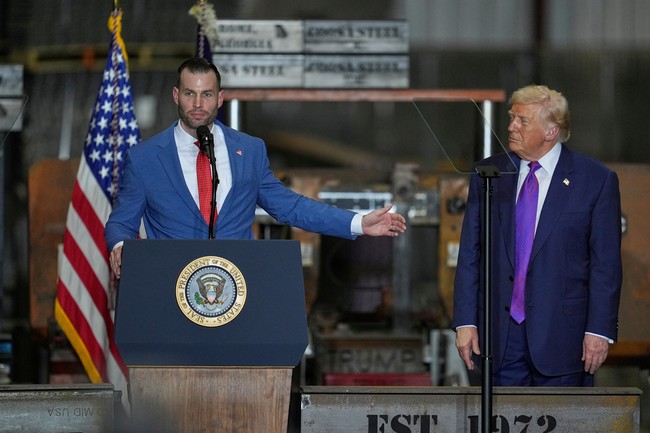
The special election in Georgia’s 14th Congressional District to replace Marjorie Taylor Greene is underway, with a crowded Republican field, a Trump endorsement for DA Clay Fuller, the potential for an April runoff, and live results being tracked as polls close tonight.
It is a busy Tuesday for conservative watchers in Georgia as 17 Republicans, three Democrats, a Libertarian, and an Independent vie for the seat in the 14th District. This district stretches across ten counties from Atlanta’s outer suburbs to the Appalachian foothills near Tennessee, and it remains a key piece of ruby-red Trump country. The sheer number of candidates makes a majority win unlikely, so a runoff in April is a real possibility if no one tops 50 percent.
President Trump has publicly endorsed Lookout Mountain Judicial Circuit DA Clay Fuller, a move that carries real weight with the Republican base in the region. Endorsements from national leaders still move voters here, especially in districts that prioritize law and order and conservative principles. With so many Republican hopefuls, consolidation behind a proven vote-getter would be sensible, but the crowded field complicates any quick coalescing.
Campaign dynamics in special elections are different from general cycles; lower turnout and concentrated ground efforts decide outcomes more than high-dollar TV buys. Local name recognition, endorsements from conservative leaders, and strong get-out-the-vote programs matter immensely in this setting. For Republicans, protecting the seat is essential, because losing it would undermine momentum heading into the midterms and weaken the president’s legislative hand.
The presence of three Democrats, along with a Libertarian and an Independent, means the top-two rule could send two non-Republicans to a runoff in the unlikely event of a split conservative vote. Special elections like this are risky precisely because the rules allow the top two vote-getters to advance regardless of party, so tactical voting and turnout strategies become vital for the GOP. That structural reality explains the alarm among conservatives who want a decisive, single-party victory.
The sprawling 14th Congressional District covers 10 counties stretching from the Atlanta suburbs to the Appalachian foothills along the Tennessee state line.
It’s ruby-red Trump country but with enough Democrats and independents to cause heartburn for Republicans in a special election that sends the top two vote-getters — regardless of party — into an April runoff if no candidate wins over 50%.
“If Georgia 14 turns blue, it would be a tragedy for the president’s agenda,” Fuller told CNN. “We as a party need to start having an honest conversation about that.”
Local issues and cultural identity play big roles here, and candidates who lean into conservative priorities tend to do best. Economic concerns, public safety, and opposition to overreaching federal policies resonate, especially when framed as protecting families and local values. Voters in this region expect representatives who will fight for the president’s agenda and resist D.C. bureaucrats and woke mandates.
Campaign messaging has emphasized toughness on crime, fiscal restraint, and defending constitutional liberties, themes that align with the district’s conservative electorate. Candidates are also mindful of national optics; a loss here would be spun by Democrats as a sign of weakening Republican influence in the South. That possibility fuels urgency among party leaders to avoid vote-splitting and to get supporters to the polls tonight.
Because turnout patterns in special elections favor those who are organized and motivated, the candidate with the best ground game can outperform expectations. Republican activists and local party committees are crucial in a district with many small towns and rural precincts, where door knocking and neighborhood relationships still deliver votes. The diversity of the district—from suburban outskirts to rural communities—requires tailored outreach rather than one-size-fits-all messaging.
Polls close at 7:00 PM Eastern, and election watchers will be glued to results as they come in from across the ten counties. Local reporting combined with data from established counting partners will paint the clearest picture as precincts report, and tonight’s returns will show whether Republicans have managed to concentrate support. Live tracking will be available for those following the contest closely.
This contest isn’t just about filling a vacant seat; it’s a test of conservative unity in a district that could have national consequences if mishandled. Winning here keeps momentum for conservative priorities and sends a clear message about the durability of the GOP coalition in states like Georgia. For voters, the choice will come down to who best articulates a vision for protecting local values while delivering results in Washington.


Add comment