
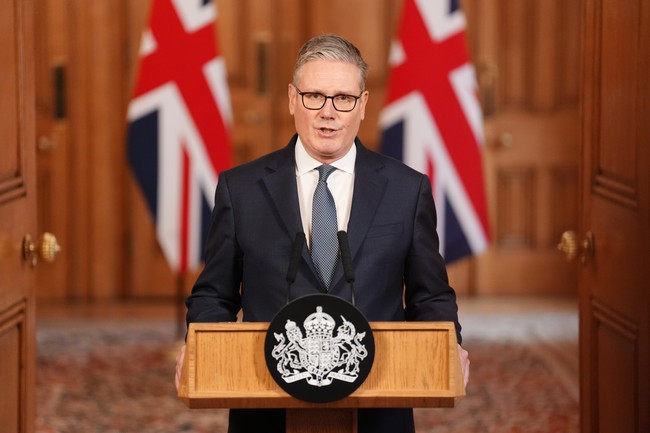
This piece examines a violent street attack in Belfast and the official response that followed, focusing on immigration, public safety, and political reaction, with attention to statements from Prime Minister Keir Starmer and parliamentary exchanges about how details are being handled.
There was a brutal assault in Belfast that has sparked outrage and raised tough questions about immigration and public safety. Witness accounts and reports describe a savage attack on a young man, and authorities have cautioned against sharing footage while they investigate. The raw nature of the incident has pushed this debate back into the headlines, and it’s forcing people to ask how such an individual entered the country and under what circumstances. For many on the right, the outrage is not just about this one event but about broader immigration policy and enforcement failures.
The UK’s Prime Minister, Kier Starmer, . Authorities also placed an embed nearby for the public record: . Many people welcomed Starmer’s blunt words condemning the violence, but they want more than statements. They want clarity on how the suspect arrived in the United Kingdom and whether existing asylum and border systems failed. Officials urging the public not to circulate footage has only amplified suspicions among those who believe transparency matters in restoring confidence.
https://x.com/townhallcom/status/2064319779863712229
KIER STARMER: Belfast stabbing was “sickening.” Irish officials and law enforcement have urged the public not to circulate footage of the African migrant, citing concerns of unrest and “misinformation.” PM Keir Starmer called the attack “horrific” and “sickening,” saying he had “absolutely no tolerance” for violence like this.
There is a pattern people point to: violent incidents in European cities are frequently blamed on individuals who arrived through lax asylum or immigration channels. Critics argue that when you admit people from failed or fragile states without rigorous screening and integration, you import risks along with humanitarian burdens. That argument may sound harsh, but it’s rooted in calls for common-sense policies that protect communities while still offering refuge to genuine victims. Conservatives see this as a predictable consequence of weak border controls and muddled asylum rules.
In parliament, Northern Ireland secretary Hilary Benn faced repeated questions about the suspect and how they entered the country, with a clear reluctance to go into specifics. He emphasized that the Police Service of Northern Ireland must verify facts before any details are released, a typical line from officials who want to avoid fueling unrest. That cautious posture, however, can be read as evasive by a public already skeptical of official explanations. People want forthright answers, not procedural delays that feel like stonewalling.
The tension here is twofold: public safety and trust in government. When authorities ask people to refrain from sharing footage, they may be trying to prevent the spread of false information or incitement, but the move can also appear as if officials are protecting the narrative instead of being transparent. Republicans and law-and-order conservatives argue that the priority must be protecting citizens and ensuring that immigration processes do not undermine safety. They call for tougher vetting, faster deportations where appropriate, and accountability for agencies that fail to secure borders.
On the ground, residents in Belfast and elsewhere worry about the normalization of extreme violence in public spaces. A brutal, apparently random attack damages a sense of safety that communities rely on for daily life. Local leaders and national governments should be working together to restore calm and to explain, clearly and honestly, what happened and how similar incidents will be prevented in the future. That means practical, enforceable steps rather than platitudes.
There is also a cultural argument being made by conservatives: countries are shaped by the values and social trust of their populations, and mass immigration from low-trust, conflict-prone regions poses integration challenges. This is a sensitive topic and one that demands careful policy work, but it cannot be ignored when violent crimes are involved. The policy response should balance compassion with rigorous enforcement so that admitting people in need does not come at the expense of public safety.
Public debate will continue to center on transparency, enforcement, and the kind of immigration system Britain and other nations are prepared to tolerate. Officials owe the public clear information on how suspects arrived and what gaps allowed this to happen, while also taking steps to rebuild community confidence. Until then, anger and fear will be fertile ground for political arguments about who pays the price for current policy choices.
Editor’s Note: The American people overwhelmingly support President Trump’s law and order agenda.



Add comment