
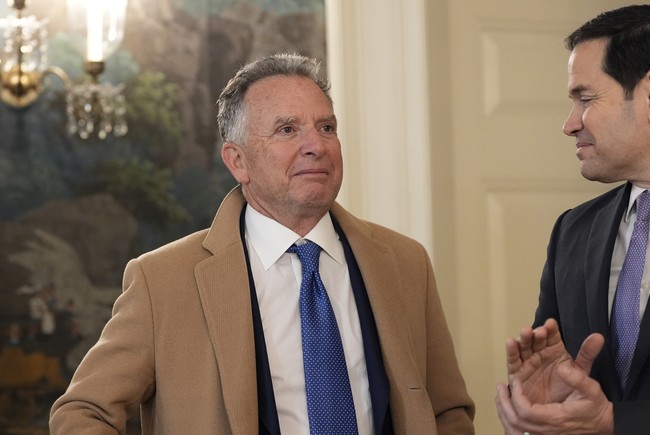
Secretary of State Marco Rubio, Special Envoy Steve Witkoff, and others have been quietly moving pieces on a possible Russia-Ukraine settlement, with Witkoff set to travel to Moscow next and talks framed as a chance to end a grinding war while protecting Ukrainian sovereignty and opening the door to prosperity.
Talks aimed at ending the Russo-Ukrainian War are showing signs of movement, and that’s worth watching closely from a conservative perspective that prizes peace through strength. On Sunday, Secretary Rubio, Jared Kushner, and Special Envoy Steve Witkoff met with Ukrainian delegates in Florida, a meeting described as preparatory and serious. After those sessions, Secretary Rubio .
The Secretary of State said:
The end goal is obviously not just the end of the war, obviously, see, that’s central and fundamental, to want to see the end of the war, and the death, and the suffering, and I’m sure the Ukrainian side do as well, they want peace. Because it’s always about the end of the war, that leaves Ukraine sovereign, and independent, and with a solid opportunity at real prosperity.
So this is not just about ending a war. This is about ending a war in a way that creates a mechanism and a way forward that will allow them to be independent and sovereign and not have another war again, and will create a prosperous people. Not just rebuild the country, but to enter an era of extraordinary economic progress. It’s a country with… Ukraine is a country with extraordinary economic potential.
Ukraine has tremendous for true prosperity. You can’t do that in the middle of a war like this. But ending a war alone won’t achieve that. This is not just about peace deals. This is about creating a pathway forward that will leave Ukraine sovereign, independent, and prosperous. And so we expect to make even more progress today.
Rubio’s words are measured and political leaders should stick to them: peace must preserve sovereignty and create conditions for economic renewal, not merely pause hostilities. The details remain intentionally vague in public remarks, which is normal for delicate diplomacy where exposure can sabotage negotiations. Reports indicate a proposed peace framework has been revised several times and is circulating among the parties, with this round of talks meant to refine the terms.
The next phase moves Special Envoy Steve Witkoff toward Moscow, where he is expected to meet Russian officials to push the discussions forward. The trip signals a willingness from the U.S. side to engage directly with Moscow on terms that could produce a durable resolution, and it reflects the administration’s desire to convert talks into concrete outcomes. For Republicans, this kind of practical diplomacy—aimed at ending a costly conflict while protecting American and allied interests—fits a realist approach.
Steve Witkoff, the U.S. special envoy to the Middle East, will travel to Moscow on Monday, a U.S. official tells Fox News.
The trip comes as peace talks between Ukraine and Russia show signs of progress, with the White House pushing a peace plan to end the nearly four-year-long war.
The Donbass region looks destined to be the centerpiece of any hard bargaining, given Russia’s claims and the area’s ethnic composition. Ukraine has publicly insisted it will not cede territory, and that stance remains a major barrier to any agreement unless credible security guarantees are included. Leadership in Kyiv, particularly under President Volodymyr Zelensky, remains firmly opposed to territorial concessions, while the Kremlin appears interested in formalizing gains it already controls.
Political reality matters: President Trump has expressed support for negotiations that could end the conflict, and members of his team, including Secretary Rubio, are positioning the administration to claim credit for a successful settlement. If a deal that secures Ukrainian independence and opens economic opportunity can be achieved without compromising essential security interests, it will be hailed here as a significant foreign policy win. But if talks collapse or produce an outcome that leaves Ukraine exposed, critics will rightly demand accountability.
For Ukrainians and Russians exhausted by years of fighting, any credible pathway to peace would be welcome; conservatives want that peace to be durable, enforceable, and to restore Ukraine’s ability to prosper independently. The central question remains whether Zelensky and Putin are prepared to make the necessary trade-offs and whether mediators can craft guarantees that both sides can accept. The coming days and Witkoff’s Moscow trip will test the seriousness of all parties involved.
This process cannot be rushed, and it should not trade away core principles for a quick headline. Republican supporters of the administration’s effort expect tough negotiation, clear security guarantees, and follow-through that ensures any agreement is more than a pause. The outcome will shape regional stability and the political capital of those who negotiated it.

Add comment