
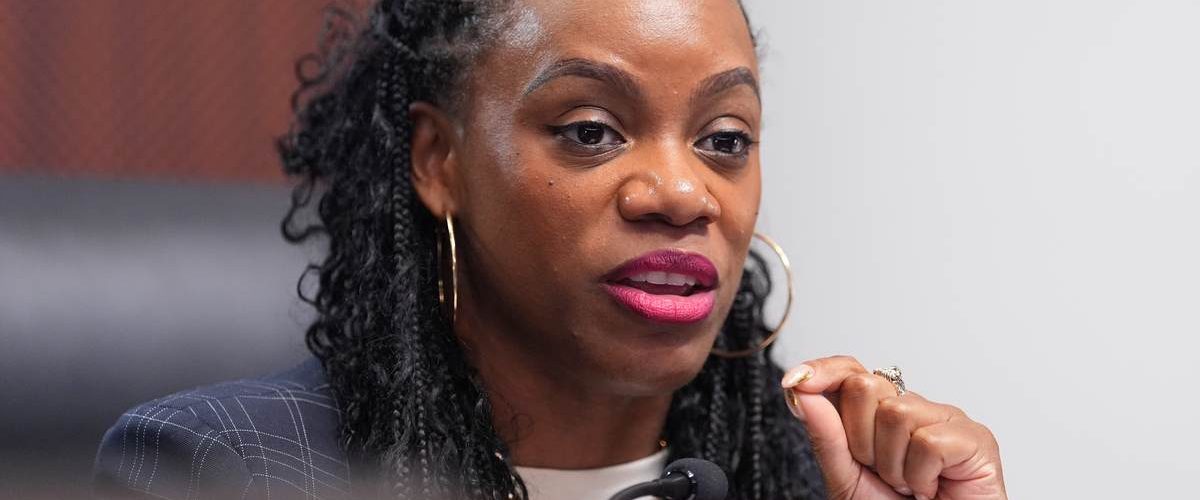
The House Judiciary subcommittee hearing on sanctuary policies turned into a blunt display of priorities and political posture, with Republican members and affected families calling out Democrats for what they see as indifference to crimes by illegal immigrants and a refusal to act. Testimony from victims’ relatives and exchanges on the floor highlighted sharp disagreements about public safety, enforcement, and the human cost of sanctuary policies. Lawmakers sparred over responsibility and accountability while several Democrats defended their approach or questioned the premise of aggressive enforcement. The hearing and related panels underscored how immigration will shape messaging and voter arguments ahead of critical elections.
At the hearing, parents who lost or saw family members gravely injured spoke with raw emotion about preventable tragedies. Marcus Coleman described the lifelong injuries his young daughter suffered after an 18-wheeler driven by an illegal immigrant allegedly caused a multi-vehicle wreck. He rejected what he portrayed as rote or performative sympathy from Democrats, saying, “I reject your guys’ sympathy, to be honest. There’s no way you are sorry. Not one of you guys has ever called me. Not one of you guys has ever reached out to me.”
That rejection struck a nerve with Republicans on the committee who pressed for tougher enforcement and accountability for jurisdictions that shield people from federal immigration actions. The debate framed sanctuary policies not as abstract legal theory but as a practical question about public safety and whether local governments should cooperate with federal immigration authorities. Republican members argued that ignoring criminality by illegal immigrants undermines law enforcement, erodes trust, and leaves victims without recourse.
Democratic responses at the hearing often emphasized civil liberties, due process, and community trust with police, which they say are harmed when local authorities partner closely with immigration enforcement. Some Democrats questioned whether removing individuals from communities was the best path to safety, and warned that cooperation with federal immigration agents could deter immigrants from reporting crimes. Those points prompted sharp rebuttals from conservatives who said that public safety must come first and that victims’ voices deserve priority.
Representative Summer Lee offered perspective that contrasted with Republican priorities, arguing that booting criminal illegal immigrants off the streets was not the automatic route to safer neighborhoods. That exchange prompted strong pushback from committee Republicans who contended that Lee’s stance overlooked the victims sitting in the hearing room.
Another moment of contention came when Representative Deborah Ross criticized the decision to hold the hearing at all while families affected by crimes sat before the panel. Republicans interpreted that criticism as dismissive, especially given the emotional testimony from Angel Families and others seeking change. The presence of those families and their stories became a focal point for GOP messaging about compassion rooted in accountability.
Earlier months offered parallel clashes, such as remarks from Representative Pramila Jayapal that Republicans have seized on in their critiques of the Democratic approach. These past exchanges were cited during the hearings to argue a pattern of priorities that, from a Republican viewpoint, elevates ideology over victims.
https://x.com/RNCResearch/status/2094828906901578173
Beyond the sanctuary city discussion, the House Oversight Subcommittee on Federal Law Enforcement held a separate roundtable addressing unaccompanied alien children, sexual exploitation, and organ harvesting. Notably, no Democrats attended that session, a fact Republicans highlighted as evidence of a partisan lack of interest in confronting these problems head on. The absence became a political talking point for conservatives pressing for tougher oversight and deterrence policies.
Representative Eli Crane put the sentiment plainly in committee, saying, “I don’t really think they care much.” That blunt assessment captured the tone of Republican criticism: that Democrats are more interested in defending permissive policies than in addressing the victims and enforcement gaps those policies can create. GOP members argued those clips and moments should inform voters about which party will prioritize border security and victim protection.
For Republicans, these hearings are more than procedural fights; they are evidence used to press for concrete legislative and administrative changes. The contention centers on the idea that sanctuary policies create safe havens for criminals, and that changing those policies requires clearer rules, stronger local-federal cooperation, and accountability for jurisdictions that obstruct enforcement. Those proposals remain central to the Republican platform heading into the next election cycle.
Meanwhile, affected families and advocates who testified called for reforms that will prevent future tragedies and ensure that immigration status does not become a shield for criminal conduct. Their stories are the human core of the dispute, and GOP members say the hearings demonstrated why enforcement and victim-centered responses should guide policy decisions. The political and policy conflict over sanctuary cities and immigration enforcement looks set to remain a defining and heated issue as campaigns ramp up statewide and national contests.



Add comment