
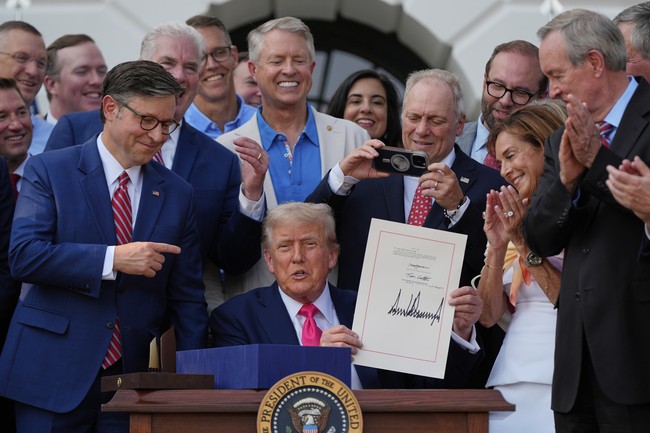
On the one-year mark since President Donald Trump signed the One Big Beautiful Bill into law, this piece walks through what that law delivered, how officials and members of Congress are talking about its effects, and some of the less obvious provisions now unfolding across farming, small business, energy, and higher education.
It still feels like a whirlwind, but on July 4, 2025, the One Big Beautiful Bill became law and brought major tax relief to working families and businesses. Republicans kept promises made on the campaign trail, and that has translated into concrete changes people can feel in their wallets and their communities. Leaders across the administration and Capitol Hill have been highlighting the wins and reminding voters what this law actually does.
Acting Labor Secretary Keith Sonderling has been one of the voices pointing back to those 2024 commitments, emphasizing the tax provisions intended to help workers and families. The message from officials has been steady: broad, across-the-board relief that targets taxes, investment, and opportunity. Social media and press clips have been full of examples meant to show voters the practical results hitting Americans now.
There are obvious headline items, but the OBBB also tucked in quieter reforms that matter in specific industries. One of those smaller-sounding changes relates to modernizing how farmers interact with government programs, and it came up during a recent Agriculture Department hearing. I ran into comments from Rep. Tracey Mann explaining USDA steps to streamline acreage reporting and the broader One Farmer One File idea that will affect how producers manage filings and payments.
That One Farmer One File plan has already led to a tech contract to build a single digital profile for each farmer, allowing applications, data submissions, and payments in one place without repeated in-person trips. The project will phase in over several years and aims to cut red tape, reduce delay, and make federal assistance more accessible to growers and ranchers. For Republican lawmakers who want less bureaucracy and more productivity, a digital file that simplifies paperwork is a practical win.
Officials in the administration and GOP members have also been meeting small business owners to talk about the immediate business-side tax changes in the bill. The Working Families Tax Cuts included a provision allowing businesses to deduct 100 percent of qualifying equipment and investment costs right away. That provision is meant to incentivize reinvestment, speed growth, and get more Americans back to work in higher-paying roles.
https://x.com/Sonderling47/status/2069517370666758403
Senator James Lankford and others have been on the road explaining how immediate expensing works, and why it matters for local shops, manufacturers, and service firms. Senator Lankford spelled out the outcome in public remarks that underscore a core conservative point: when entrepreneurs keep more of what they earn and can reinvest it quickly, the economy grows faster and workers win. That simplicity is central to why many Republicans call these changes a victory.
They call this “winning.”
Energy and cost-of-living relief has been part of the conversation, too, with House members pointing to lower household bills as a direct result of policy shifts tied to the administration’s approach. Rep. Dan Meuser highlighted savings for seniors and workers, and he shared numbers intended to remind voters what tangible relief looks like at the pump and in summer cooling costs. Those figures are the kind of talking points Republicans will use heading into fall campaigns.
Republicans are also spotlighting the new Trump Accounts initiative aimed at expanding savings and investment opportunities for families, another forward-looking piece that began rolling out on July 4, 2026. Senators and House members pitching the accounts stress future-focused reforms that put more control and choice in families’ hands rather than locking them into one-size-fits-all federal solutions. It fits a conservative agenda of empowering citizens, not expanding permanent program dependence.
Higher education reform was tucked into the package as well, and Republican committees point to significant savings and accountability measures that change the incentives at colleges and universities. Key talking points from lawmakers focus on holding institutions accountable for outcomes, protecting taxpayers from runaway student debt, expanding career-driven pathways, and simplifying repayment systems. Those moves are pitched as a way to better align education with real-world job markets while cutting long-term fiscal liability.
One post captured the spirit plainly: “Lower taxes = more liberty.” That phrase sums up the Republican case for the One Big Beautiful Bill — less tax burden, more freedom for families and businesses to decide how to spend, save, and invest. As the anniversary rolled around, GOP officials made a point of reminding voters that lawmaking should deliver clear benefits, and they argued the OBBB did exactly that.
The chatter this week from elected officials and agency staff wasn’t only for show; it’s part of a narrative Republicans are promoting about results and choices, about cutting red tape, and about putting more money back into everyday American hands. On the ground, that looks like refunds, immediate business deductions, tech modernizations for farmers, and policy changes in energy and education designed to produce long-term improvement in opportunity.


Add comment