
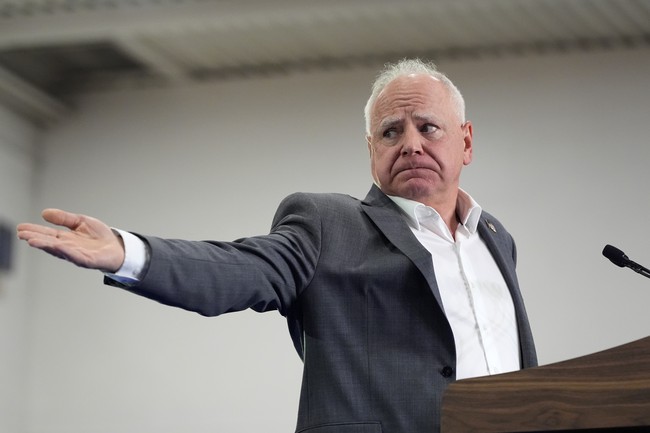
The Minnesota Democratic–Farmer–Labor Party moved in unison to block a Republican impeachment push against Gov. Tim Walz and Attorney General Keith Ellison, sparking sharp GOP criticism and social media backlash about alleged fraud and partisan double standards.
Minnesota Democrats showed exactly what many conservatives expect: solidarity at every turn when one of their own is threatened. Republicans in the state pushed for a formal impeachment investigation into alleged fraud, subpoenas, and oversight tools, but the DFL used committee numbers to shut that effort down. That outcome left GOP lawmakers and voters angry, convinced that political power is being used to protect allies rather than to pursue accountability.
Conservatives on social media erupted with outrage Thursday after Democratic lawmakers in Minnesota united to block a Republican effort to investigate further and impeach Gov. Tim Walz and Attorney General Keith Ellison.
A resolution taken up by the Minnesota House Rules and Legislative Administration Committee to launch an impeachment investigation and allow the committee to hold hearings, issue subpoenas and further investigate the massive fraud scandal was blocked after all eight Democrats on the committee voted against it, Fox 9 Minneapolis reported.
The lawmakers deadlocked 8-8 on a straight party-line vote.
The sheer predictability of the vote is part of the outrage. When power is concentrated, it tends to protect itself, and the DFL’s unified rejection of the resolution looked like protection, not prudence. Republicans argue this is not about politics for politics’ sake but about taxpayers and rule of law, and they see a cover-up where Democrats see party loyalty. The contrast in how accountability is pursued depending on which party holds power is what’s fueling the anger.
Democratic committee members dismissed the impeachment effort as unserious political theater, and DFL Rep. Michael Howard put it plainly: “This is a fundamentally unserious proposal by a fundamentally unserious party who isn’t interested in governing.” That line landed with conservatives as emblematic of a party reflexively defending its members even when serious questions remain. For Republicans, it’s not enough to label criticism as unserious when allegations of fraud and mismanagement have been raised.
Republicans contend the allegations involve tens of millions in misspent funds and widespread program failures that harmed people and drained public coffers. The push for subpoenas and hearings sought to follow paper trails and compel testimony, not stage a partisan circus. Blocking that pathway shut off a formal fact-finding avenue and left many voters convinced that accountability was being stalled on purpose.
On top of the committee fight, critics pointed to political messaging that some Democrats used to dismiss the effort. “Gas prices are rising because of Trump’s illegal war in Iran. Health care, housing and childcare costs are spiking. We have hospitals closing, yet this is what we’re going to do today? A bill that’s absolutely going nowhere, dead on arrival.” Those comments framed the impeachment push as a distraction rather than a legitimate inquiry, which only increased Republicans’ frustration that substantive concerns were being sidelined.
Local conservatives and commentators flooded social platforms with calls to remove Walz and to pursue criminal referrals if the alleged fraud proves out. Townhall columnist Dustin Grage took to his X account to : Those online responses were unvarnished and often blunt, reflecting a broader national sentiment among GOP voters who feel the rules are being applied unequally.
Supporters of the investigation warned that letting the matter die in committee would leave system-wide vulnerabilities unexamined and allow bad actors to escape responsibility. “They’re panicked and don’t want anyone finding out how this was allowed to happen. REMOVE WALZ FROM OFFICE and start the criminal proceedings for complicity!” read one of the more forceful reactions shared in conservative circles. The rhetoric shows just how high the stakes feel to people concerned about government waste and corruption.
DFL leaders, however, appeared content to close ranks and move on, betting that blocking the inquiry would blunt the political damage. Republicans see that strategy as an abdication of oversight and a signal that partisan protection will trump transparency. That calculation plays into a broader GOP argument about restoring checks on governing parties and ensuring public trust in state institutions.
Even with the committee having rebuffed the impeachment resolution, the dispute is unlikely to fade quickly. Calls for fuller investigations, audits, and criminal reviews will keep this issue alive, and grassroots pressure from voters will continue to shape how legislators respond. For conservative activists watching closely, the episode is a case study in why political power must be balanced with independent oversight and why party solidarity should not be allowed to shield alleged misconduct.
The debate in Minnesota is a reminder that when partisan loyalty blocks inquiries into potential wrongdoing, it damages public confidence and gives critics easy ammunition. Republicans will keep arguing that accountability should not be negotiable, and many voters on the right will treat this committee vote as proof that the system needs stronger safeguards against partisan self-protection.
Add comment