
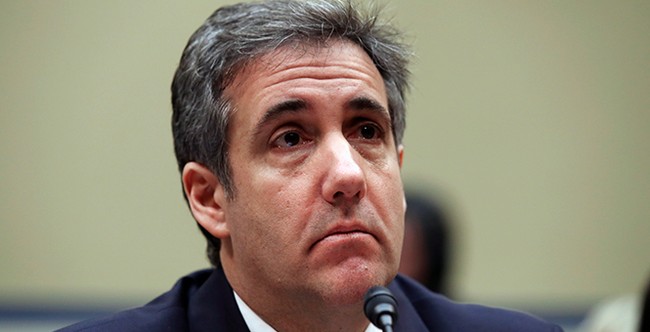
I’ll explain Michael Cohen’s recent claims that he was pressured to testify against Donald Trump, detail what he wrote about prosecutors in New York, note reactions and implications for the cases, and place this in the wider political context.
Michael Cohen, once President Donald Trump’s personal lawyer, has stepped back into the headlines with a blunt charge: he says both the Manhattan District Attorney’s office and the New York Attorney General’s team pushed him to deliver testimony that fit their prosecutions of Mr. Trump. He frames his actions as the product of coercion, saying he felt he couldn’t give anything but answers that aligned with what investigators wanted. This is a striking reversal from the years when Cohen was a central witness in prosecutions and public attacks on Trump.
“I felt compelled and coerced to deliver what they were seeking,” Cohen wrote in a Substack post. “Letitia James and Alvin Bragg may not share the same office or political calendar, but they share the same playbook.” [….]
“From the time I first began meeting with lawyers from the Manhattan DA’s Office and the New York Attorney General’s Office in connection with their investigations of President Trump, and through the trials themselves,” Cohen wrote on his new platform, “I felt pressured and coerced to only provide information and testimony that would satisfy the government’s desire to build the cases against and secure a judgment and convictions against President Trump.”
Those are heavy words and he doesn’t shy from repeating them. He asserts prosecutors in the Bragg case sought “testimony from me that would enable them to convict President Trump,” and he claims trial tactics crossed the line into manipulation. For someone who used to be a go-to witness for government lawyers, this about-face is intended to undercut the credibility of key evidence used against Trump.
“When my testimony was insufficient for a point the prosecution sought to make, prosecutors frequently asked inappropriate leading questions to elicit answers that supported their narrative.”
For the James case, Cohen also alleged that the Empire State attorney general’s team “made clear that the testimony they wanted from me was testimony” that “would go after President Trump.”
From a Republican perspective, Cohen’s claim fits a familiar storyline: prosecutors pick a target and shape the facts to match. He directly accuses career officials of shaping testimony to produce convictions against a political opponent, and that accusation fuels long-standing concerns among conservatives about politicized prosecutions. Whether courts will treat his retrospective statements as meaningful new evidence is a separate matter, but politically the claim lands with force.
Cohen stops short of offering detailed examples that would immediately alter appellate records, which limits how useful his current statement might be in court. He says he felt coerced and pressured, but he doesn’t lay out specific instances with transcripts or new sworn affidavits tied to discrete interrogatories. That makes his assertion more of a narrative salvo than a procedural bombshell, at least for now.
Still, the timing matters. Cohen released this after trials and convictions in New York, and he says he’s motivated by seeing how evidence was gathered and used. He argues broadly that when prosecutors choose a target first and then shape the story to secure convictions, “public trust erodes; not just in individual cases, like mine and Trump’s, but in the system itself.” That line is meant to play to those who already distrust high-profile prosecutions of political figures.
“When politics and prosecution become indistinguishable, public trust erodes; not just in individual cases, like mine and Trump’s, but in the system itself.”
Reaction from Trump was predictable and pointed. The former president has long characterized the investigations as politically motivated and called the proceedings a sham. He said the actions were a “set up from the beginning,” and claimed they “could not let this pass.” He warned that “radical left people” should pay a “big price for this.” Those words will resonate with supporters who view the justice system as weaponized against conservatives.
Legal observers will watch appeals closely to see if Cohen’s new framing changes any judicial calculations, but appellate courts typically focus on the trial record, not later commentary. Cohen’s statements could prompt renewed interest in whether questioning methods or witness handling at trial met legal standards, but absent new sworn evidence that directly contradicts testimony used at trial, shifting appellate outcomes is an uphill task.
Politically, the piece contributes to the broader debate about fairness in high-profile prosecutions. For Republicans, it reinforces the claim that prosecutorial discretion has been used in a partisan way. For opponents, Cohen’s credibility remains bruised by his history and prior admissions, so his new account will be weighed against that backdrop. Either way, his comments add fuel to an ongoing fight over how justice is administered in politically charged cases.
The cases involving Bragg and James are both currently under appeal.


Add comment