
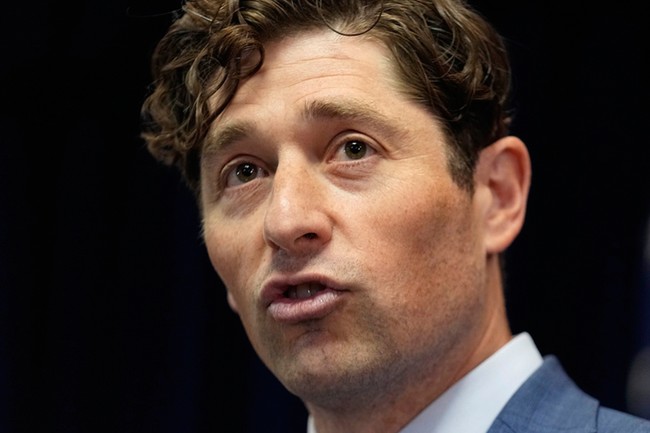
This article examines Mayor Jacob Frey’s response after the ICE shooting involving Renee Good in Minneapolis, argues his remarks inflamed the situation, and describes subsequent protests and attacks on law enforcement and hotels. It critiques Frey’s dismissal of the agent’s injury, highlights inflammatory language directed at ICE, and links that rhetoric to violent street actions. The piece keeps quoted remarks intact and places the original embeds where they appeared. It aims to present a conservative view that Frey’s comments worsened an already tense situation.
Mayor Jacob Frey called the incident “murder” immediately after the ICE shooting and followed that up with profanity directed at ICE, telling them to “get the f**k out” of the city. Those remarks landed while facts were still emerging, and many saw that as stoking anger rather than calming it. A mayor’s first duty in a volatile moment is to restore order, not to inflame passions.
The initial cellphone footage raised questions that deserved a careful, fact-based response instead of political theater. Critics argue that Democrats and local leaders leaned into a narrative that ignored parts of the video, while opponents say Frey’s language encouraged protesters. Either way, the rhetoric mattered: words from public officials can shape crowd behavior and escalate conflicts.
Some media posts emphasized one side of the footage and omitted the moment the agent appeared to be struck, which fed accusations of selective storytelling. That kind of one-sided presentation deepened public distrust and made it harder for investigators to get a fair hearing. When elected officials and activists share incomplete images, they risk turning citizens into mobs before investigators can examine what happened.
What Mayor Frey said on Friday suggested to critics that Democrats weren’t engaging with the full set of facts. While he appeared to accept the agent was hit by “Renee,” his subsequent comments minimized the injury and the rule of law. That attitude looked to many like a dismissal of the safety of federal agents performing lawful duties.
Frey’s mocking line about the agent’s injury landed hard: “I mean, the ICE agent walked away with a hip injury that he might as well have gotten from closing a refrigerator door with his hips.” Those exact words were repeated widely and became a focal point for criticism. He went on to say, “He was not injured,” and “Give me a break…He walked out of there with a hop in his step.”
Those phrases read as derisive and dismissive of the potential harm an agent suffered while doing his job. Observers pointed out that you don’t have to be critically injured to be the victim of an assault and that self-defense can be lawful long before anyone is seriously hurt. A leader who jokes about an injury runs the risk of signaling tolerance for physical attacks on law enforcement personnel.
It’s reasonable to question the extent of the agent’s injury, but that does not excuse the act of striking an officer. If the agent was lucky enough to escape severe harm, that does not retroactively make the encounter acceptable. The idea that someone has to be mortally wounded before force can be condemned is dangerous and inconsistent with basic public safety norms.
Many readers and residents reacted to Frey’s comments with disbelief and frustration, calling the mayor’s tone “twisted” or worse. That reaction reflects deeper tensions between city leaders, federal authorities, and activists who see each other as opponents rather than partners. When elected officials appear to take sides against law enforcement, community stability suffers.
Protests in Minneapolis after the shooting turned destructive in places, with anti-ICE demonstrators storming hotels and harassing staff as they searched for agents. Reports described mobs damaging property and chasing police while throwing objects. Such confrontations show how volatile the environment became once inflammatory rhetoric spread.
Those actions were not isolated to minor disturbances; they included direct attacks on officers and attempts to intimidate federal employees doing their work. The cycle is predictable: a charged statement from a public official, amplified by social media, fuels angry crowds, and then violence follows. The community ends up paying the price when leaders fail to cool things down.
A mayor can condemn misconduct and demand accountability while still insisting on peaceful protest and respect for the law. That balance requires restraint, clarity, and a commitment to public safety for all residents, including federal agents. The alternative is a political climate where mobs feel emboldened and public servants feel abandoned.
Minneapolis has a history of unrest and rebuilding, and many residents want leaders who prioritize security and clear information over partisan posturing. Words matter in crisis moments, and critics of Frey argue his words made a bad situation worse rather than helping to resolve it. City leadership should focus on facts, de-escalation, and protecting everyone in the community.


Add comment