
I’ll argue that NASA’s Artemis program should prioritize America over bureaucracy, call out costly delays and rising bills, note the arrival of private-sector leadership at NASA, insist on clear goals tied to national interest and technology, and point to concrete reforms needed to stop politicized mission framing.
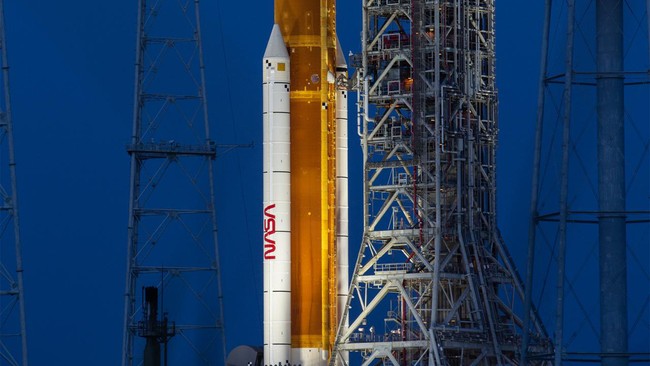
The sight of the new moon rocket on the pad in Florida is stirring, but spectacle is not a substitute for results. Big federal projects tend to expand in cost, slip on schedule, and drift away from practical purpose, and Artemis has been no exception. Americans deserve a program that delivers real returns for national security, technology, and the economy rather than endless ceremonial milestones.
Artemis II is now set to carry four astronauts on about a ten-day trip around the Moon as early as February, marking the first crewed lunar flight since 1972. That mission will not orbit low over the surface or land; it will loop around, validate systems, and return to Earth. Those are necessary steps, but they should be honest steps toward sustainable capability, not costly dress rehearsals that keep getting delayed.
The schedule has slipped repeatedly: the crewed fly-around moved from 2024 to 2025 and now sits in 2026, while a landing that was once aimed for 2026 is now pushed to at least 2027. Safety and testing are valid explanations, especially after the 2022 flight exposed heat shield issues requiring extended reviews and new modeling. Still, repeated slips without tighter accountability feed the perception that the program rewards delay more than performance.
Costs remain strikingly high. Independent watchdogs put the cost of each Artemis launch at roughly $4.2 billion, and Orion alone has consumed over $20 billion across two decades of development. Those numbers matter because the taxpayer is footing them, and comparable commercial ventures are aiming to deliver capabilities at lower cost and with faster iteration. If NASA is to lead, it must do so while adopting discipline and cost-conscious practices from the private sector where appropriate.
One direct response to ballooning expense and bureaucratic inertia is a change in leadership and approach. Jared Isaacman’s presence signals an attempt to tether NASA more closely to practical outcomes and fiscal discipline, and conservatives should welcome reforms that make missions accountable to taxpayers. The goal should be to preserve national leadership in space while pruning the parts of the enterprise that function as perpetual job programs or political theater.
That last point matters because political framing has crowded out operational clarity. NASA has publicly highlighted milestones such as carrying the first woman and the first person of color on a lunar mission, which are noteworthy on their own but cannot be the primary justification for spending tens of billions. Space policy must be rooted in strategic and economic goals, not press-friendly talking points that substitute symbolism for substance.
A sensible conservative test for Artemis begins with three plain questions: does the program push technology or security capabilities the private sector cannot, does it enable sustained exploration and economic activity rather than one-off stunts, and will NASA reform a cost-plus culture that rewards delay instead of results? The current answers are mixed, and that uncertainty is exactly why reforms are overdue. Real reform means measurable milestones, transparent budgets, and benchmarks tied to national interest.
Americans rightly feel pride at seeing a new rocket roll out, but pride must be earned. Artemis will justify its price only if it produces concrete achievements, tighter accountability, and a clear sense that the mission serves the nation’s long-term interests. If NASA refocuses on outcomes, embraces competitive commercial solutions where sensible, and stops using missions mainly as political showcases, the Moon program can be a genuine national success.



Add comment