
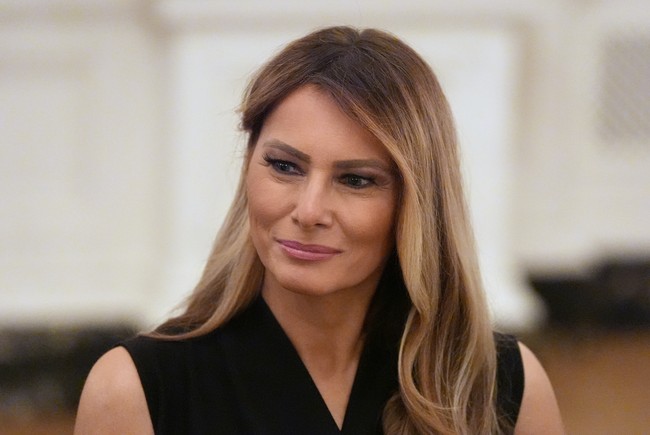
The First Lady issued a clear denial of any connection to Jeffrey Epstein and asked Congress to hold a protected public hearing for survivors; her statement prompted an immediate and sharp rebuke from a survivors’ coalition, and the clash exposed how quickly politicized responses can drown out offers to help victims. This piece lays out what Melania Trump said, how the survivors’ representatives reacted, and why the pushback looks misplaced from a perspective that wants victims heard and respected. It examines the core claims, preserves the exact words quoted in the original statement, and highlights the broader dispute over accountability and political framing.
Melania Trump released a formal on-camera statement strongly denying ties to Jeffrey Epstein and urging Congress to give victims a secure forum to speak under oath. “I’ve never been friends with Epstein. Donald and I were invited to the same parties as Epstein from time to time, since overlapping in social circles is common in New York City and Palm Beach,” she said. “To be clear, I never had a relationship with Epstein or his accomplice, [Ghislaine] Maxwell.”
She went further in the same statement, stressing she had no knowledge of Epstein’s crimes and that she had never visited his island or flown on his plane. The First Lady also noted she had not appeared in court documents or FBI interviews connected to the case, described Epstein’s actions as “repulsive,” and demanded an end to what she called false narratives.
Using her platform, she asked Congress for a specific remedy: a public hearing centered on survivors that would allow sworn testimony and ensure those accounts enter the congressional record. “I call on Congress to provide the women who have been victimized by Epstein with a public hearing specifically centered around the survivors,” she declared. “Give these victims their opportunity to testify under oath in front of Congress with the power of sworn testimony.”
“Each and every woman should have her day to tell her story in public, if she wishes. And then her testimony should be permanently entered into the congressional record,” she added. “Then, and only then, will we have the truth.”
Hours after that plea, representatives for a coalition of Epstein survivors and family members pushed back with a joint letter that dismissed her remarks as inadequate and politicized. The group alleged her message was “a deflection of responsibility, not justice,” and argued the move shifted burdens onto survivors while protecting institutions and officials with power.
Specifically, the letter claimed that “First Lady Melania Trump is now shifting the burden onto survivors under politicized conditions that protect those with power: the Department of Justice, law enforcement, prosecutors, and the Trump Administration, which has still not fully complied with the Epstein Files Transparency Act.” That accusation turned an offer to amplify survivor testimony into an attack on motives.
From a viewpoint that supports accountability, the reaction from the coalition looks puzzling. The First Lady did not attempt to minimize victims’ claims; she called for them to testify publicly and under oath, which is a direct route to fact-finding and public record. The letter’s framing suggests a rush to politicize rather than a careful engagement with the proposal to give survivors a forum.
Observers noted the contradiction in calling for accountability while rejecting a mechanism that would create sworn, public testimony in Congress. The response read like a political reflex: instead of evaluating a concrete proposal that would make survivor statements part of the official record, the coalition framed the gesture as diversionary. That strikes many as unfair and even counterproductive.
Commentators on social platforms reacted with incredulity at the coalition’s immediate condemnation. “She offered to help them. She said they should be heard. She advocated for them. This is such a bizarre response,” one commentator wrote, capturing a common reaction from those who expected survivors’ groups to welcome opportunities for sworn testimony rather than dismiss them out of hand.
Regardless of political loyalties, the central issue should be survivors getting an undistorted chance to speak and have their accounts entered into the record. The First Lady’s call for hearings was a straightforward proposal to create that space and to preserve testimony for posterity and oversight. Labeling such an offer a “deflection of responsibility” seems to reverse priorities and risks sidelining the very people the coalition claims to represent.
The dispute underscores how quickly debates about victims and accountability can become entangled in broader partisan narratives. When advocacy groups or their spokespeople reflexively politicize offers to expand formal, sworn testimony, the consequence can be less transparency, not more. If the goal is truth and justice for survivors, then procedures that bring sworn statements into the public congressional record deserve serious consideration rather than instant dismissal.

Trump Derangement Syndrome strikes again. It cannot be a diversion to have victims speak under oath and then publish it in the Congressional Record for all to see. The writer of the letter should be embarrassed,