
The Education Department says it has stopped $1 billion in federal student aid fraud after reversing lax Biden-era rules, and this crackdown highlights a broader push to tighten identity verification, protect taxpayer dollars, and restore integrity to federal programs.
The story begins with a stark claim: the Department prevented $1 billion in student aid theft since January 2025 by reintroducing stronger identity checks for first-time applicants. Officials say the fraud included “coordinated international fraud rings and AI bots pretending to be students,” a phrase that underlines how sophisticated the abuse had become. This action followed complaints from colleges and universities that the Free Application for Federal Student Aid process had been exploited. The new controls are being framed as a necessary correction to policies that opened the door to widespread theft.
The U.S. Department of Education (the Department) today announced that it has prevented $1 billion in Federal student aid fraud since January 2025. Earlier this year, the Trump Administration implemented enhanced fraud controls governing how institutions of higher education distribute financial assistance, including mandatory identity verification for certain first-time student applicants. This effort has halted more than $1 billion in attempted financial aid theft by fraudsters, including coordinated international fraud rings and AI bots pretending to be students.
From a Republican standpoint, the story reads as both vindication and proof of a simple principle: rules matter and weak rules cost taxpayers. Critics of the prior administration argued that requiring identity checks for financial aid applicants would be common-sense protection for taxpayer money. The Department’s announcement is being presented as confirmation that those critics were right and that modest verification steps stop large-scale, organized theft. That argument is central to how conservatives view the mission of federal agencies: prevent waste and restore accountability.
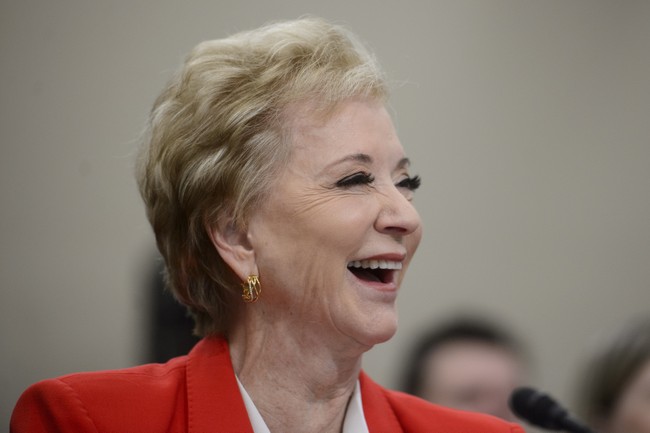
Secretary Linda McMahon put the case bluntly, tying the problem to Washington choices and calling for practical standards in disbursement of funds. Her remarks focus on the absurdity of a system that made it easier to get government money than to rent a car or buy a plane ticket. The point here is about consistency: if citizens must show an ID for routine transactions, they should also when accessing tens of thousands in federal aid. That framing appeals to taxpayers who expect fairness and common-sense safeguards from government programs.
The Biden Administration’s decision to require identity verification from less than one percent of students created a prime opportunity for fraudsters to exploit the Free Application for Federal Student Aid (FAFSA®) process and steal taxpayer funds. Colleges and universities across the country reported being under siege by highly sophisticated fraud rings and requested the Trump Administration for help.
“American citizens have to present an ID to purchase a ticket to travel or to rent a car – it’s only right that they should present an ID to access tens of thousands of taxpayer dollars to fund their education,” said U.S. Secretary of Education Linda McMahon. “From day one, the Trump Administration has been committed to rooting out waste, fraud, and abuse across the federal government. As a result, $1 billion in taxpayer funds will now support students pursuing the American dream, rather than falling into the hands of criminals. Merry Christmas, taxpayers!”
Beyond the political rhetoric, the Department has also taken operational steps to help students and families identify scams and fake schools, adding resources aimed at preventing victims rather than just chasing criminals after the fact. That consumer-protection angle is important because fraudsters often target the most vulnerable and exploit confusion around legitimate aid programs. Providing clear information and lists of bogus institutions helps households avoid traps and reduces the pool of successful fraud attempts. Prevention is cheaper and less disruptive than remediation, and the Department’s new guidance is designed to do both.
The announcement also rekindles a larger debate about the size and role of the Department of Education itself. Republicans who favor shrinking federal involvement in K-12 and higher education see this as evidence that the agency can be reformed or reined in. Some argue that sending money through fewer federal channels and demanding accountability would cut opportunities for abuse across the board. Others focus on technical fixes like better identity verification and smarter data checks, arguing those steps can achieve significant savings without dismantling institutions.
What the public should take away is that policy choices have consequences, and in this case loosening verification standards invited fraud on a massive scale. The reversal of those policies brought taxpayer protections back into focus and produced a tangible result: $1 billion in aid blocked from being stolen. That outcome will be used by conservatives as an example of how restoring common-sense rules protects both public funds and legitimate students who deserve real help.



I just came across this amazing way to earn $6,000-$8,000 a m0nth 0nline! No selling, no struggle—just a simple system that anyone can follow. Kelly Richards did it, and so can you! Don’t miss out on this life-changing 0pportunity.
Here is I started_______ EarnApp1.Com