
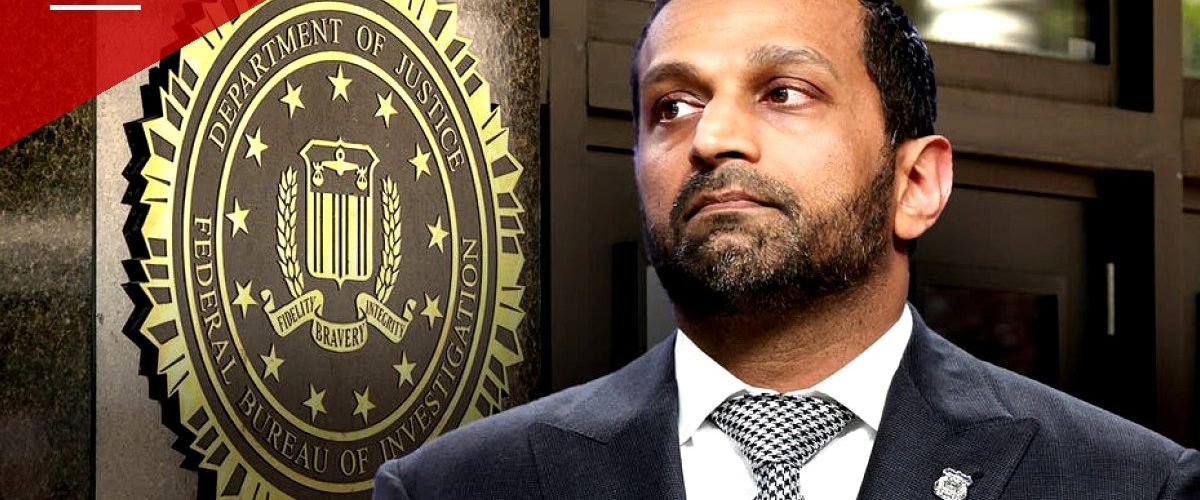
FBI Director Kash Patel is pushing back against reports that the bureau manipulated its Most Wanted fugitive list, arguing that career staff—not political leadership—decide who lands on it and when arrests are announced.
The dispute resurfaced after an MSNOW report from May quoted FBI officials saying the agency had been placing fugitives on the Most Wanted list whose capture was already imminent. That report circulated again this week, prompting Patel to respond directly to Fox News Digital.
“Look, it’s really simple,” Patel said. “The FBI’s Most Wanted list and any other campaign we’re putting on has been going on for at least 75 years. The career staff at the bureau manage that list. They look and say, ‘Who’s the target of opportunity? Who can we get? Who’s the worst perpetrator who’s been on the run?’ and then they announce it. I literally don’t have anything to do with it.”
Patel said critics were trying to “denigrate the work of the bureau” and suggested the backlash stems from discomfort with the administration’s record.
“I just think that those critics out there are super unpleased with the fact that the Trump administration and this FBI delivered on what used to be an apolitical mission of keeping law enforcement at the top and protecting our American citizens,” Patel said.
In September, Patel announced that all 10 individuals on the FBI’s Most Wanted list had been captured during President Trump’s second term.
Summer Heat 2.0 figures
Patel tied the dispute to what he described as a broader restructuring of the bureau, including the permanent relocation of nearly 2,000 FBI personnel out of Washington and into field offices nationwide. He said that shift underpins the results of “Operation Summer Heat 2.0,” the second run of a nationwide enforcement surge against violent crime, gangs and drug trafficking that ran from June through August.
According to the FBI, the operation produced:
- More than 8,900 arrests, up 3% from last year’s Summer Heat
- 5,013 weapons seized, a 120% increase
- More than 1,400 children identified or located, up 34%
- 687 fentanyl seizures, up 63%
“So from last year to this year, we wanted to run that playbook for Summer Heat 2.0, and the only thing we did a little differently was we added even more bodies to the field,” Patel said. “So the enterprise-wide lift, shift, focus, and pivot was: we’re not on defense anymore. In order to catch violent criminals and defend the homeland, you have to go on offense.”
Patel said the approach has produced measurable results beyond the operation itself, citing a nationwide drop in violent crime.
“Last year for the first time, America saw 1.1 million fewer violent aggravated assaults, rapes, robberies, and homicides,” Patel said. “That’s 1.1 million fewer victims across the country because of what the federal government, the Bureau, and our partners were able to bring to bear across the country.”
Patel said the bureau intends to keep the field-focused posture permanent rather than treating it as a seasonal campaign.


Add comment