
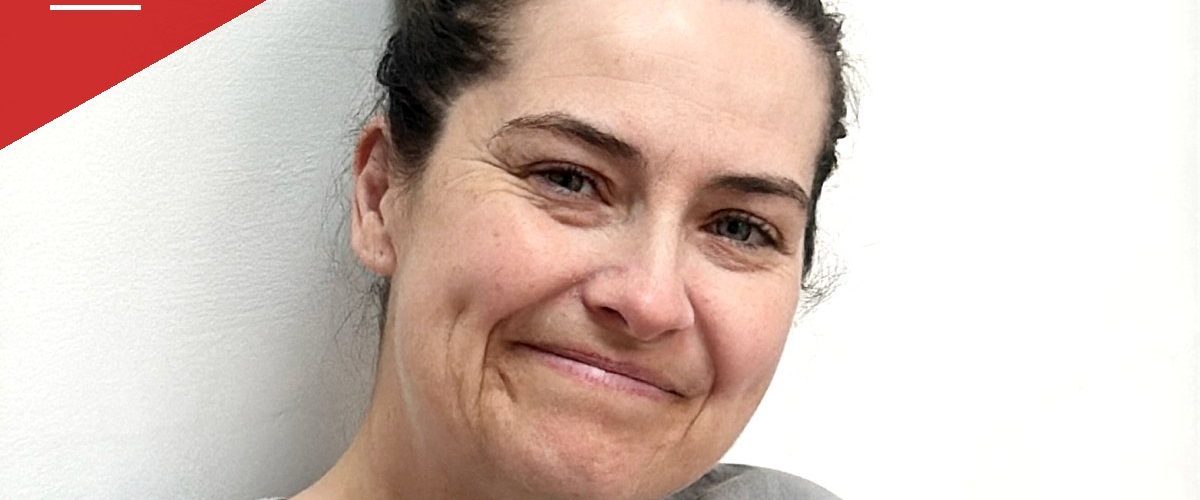
A 43-year-old mother from Northern Ireland says doctors repeatedly dismissed her pain, bleeding and abdominal swelling as perimenopause and anxiety before an exceptionally rare cancer was finally discovered growing in her body.
Nicola Crymble told Talk to the Press that medical staff told her “it was all fine and that it was all in my head” during months of worsening symptoms. By the time a mass was removed from her abdomen, the cancer had already spread to her liver and vaginal vault, ruling out further surgery.
Crymble’s symptoms began after she had a copper IUD fitted. She was doing mission work in Kenya at the time and had the device removed there after experiencing pain and bleeding. “I was doing mission work in Kenya at the time and had to have the coil removed out there,” she said.
The problems didn’t stop once she returned home to Northern Ireland. Doctors attributed the ongoing pain and bleeding to perimenopause, the onset of menopause, and anxiety. Ten months later, by December 2024, her condition had deteriorated further.
“I was constantly bleeding, there was so much pain,” she said. “I decided, right, I can’t take this anymore. I was rubbing my stomach and then I felt something.”
The growing mass eventually prevented her from zipping up her jacket, and she said strangers assumed she was pregnant. Doctors again suggested a benign explanation, telling her it was likely constipation. “But I knew it wasn’t,” she said.
A scan eventually found a growth near her cervix, which doctors initially described as probably just a cyst, telling her it would be removed by Christmas with no lasting problems. Crymble had the mass removed in February 2025, opting to have her ovaries and fallopian tubes taken out at the same time. “I just said to them, if you’re going to open me up, remove everything that needs to be removed,” she said.
A Diagnosis Almost No One Gets
A month later, Crymble learned she had a Female Adnexal Tumor of probable Wolffian Origin, known as FATWO — a cancer arising from remnants of the Wolffian duct, a structure present during fetal development that normally disappears as girls grow. Doctors told her it was “one of the rarest cancers with only 150 cases ever recorded” worldwide.
The hysterectomy did not clear the disease. Before a planned six-month scan, Crymble experienced sudden, severe pain under her ribcage. “I couldn’t talk… I couldn’t move, but when I got to the hospital, they said it was wind,” she said. A subsequent scan showed the cancer had spread to her liver and vaginal vault, and doctors determined the growths were too close to other organs to operate.
Most FATWO tumors do not spread, making Crymble’s case unusual even within an already vanishingly rare diagnosis. Her husband, Andrew Crymble, said doctors treating her had never encountered anything like it. “We just want to get Nicola’s story out there in case it reaches someone that knows something about this cancer,” he said.
Chemotherapy and an Uncertain Future
With surgery no longer an option, Crymble began chemotherapy on October 13 and is scheduled for six rounds of treatment.
“It’s been extremely difficult as a mother,” she said. “Last night I cut my hair. I didn’t want it to fall out, I didn’t want to wake up with clumps, and I needed to manage how my girls saw me, too.”
She has stopped working as a result of her illness. “I’m trying to manage their expectations and stay brave, keeping my head above water, but it’s so difficult,” she said.
Her family is now trying to reach anyone with knowledge of the disease, while also working to secure their daughters’ financial future after discovering their life insurance coverage had lapsed.


Add comment