
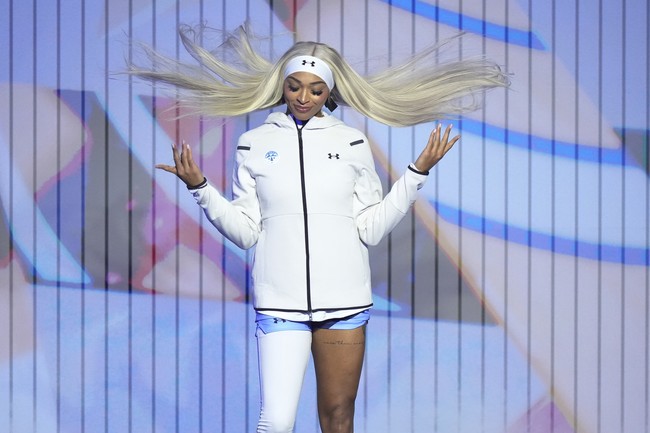
The WNBA incident in Chicago turned ugly when DiJonai Carrington knocked Sophie Cunningham to the floor and was ejected, and the aftermath—on-court confrontation, a social post reading “white privilege,” and loud commentary from national personalities—has pushed the league into a fresh controversy about violence, accountability, and culture in women’s pro basketball.
Saturday’s game exploded into a moment nobody wants to see in a professional sport: a hard foul on a layup that looked more like a cheap shot than a basketball play. Sophie Cunningham went to the rim and absorbed a hit that sent her tumbling, and the reaction from both benches and the crowd made it clear this wasn’t a standard play. Referees called it a Flagrant 2 foul and tossed DiJonai Carrington from the game for what the rulebook labels “unnecessary and excessive.”
Fans and pundits immediately debated intent versus accident, but the footage hardly reads as ambiguous. The sequence felt deliberate and over the line, a physicality that belongs in another sport and not in a league trying to build credibility and safe competition for athletes and families. When one player takes a run at another with that kind of force, officials have to act decisively or risk normalizing violent behavior.
What made the incident worse was what followed: both players confronted each other at center court, words were shouted, and tensions flared in a way that pulled the game beyond coaching points and into national headlines. DiJonai Carrington’s social media post that read “white privilege” and tagged Cunningham added a charged racial and political layer to the altercation, turning a foul into a culture-war moment. That post is now part of the story that won’t go away.
https://x.com/BrickCenter_/status/2086179057872638333
Accountability has to be more than an eject-and-forget response. A Flagrant 2 call and immediate ejection are warranted in the moment, but the league should follow up with transparent discipline that matches the severity of a play that could have caused serious injury. Fans and players deserve consistent standards so everyone knows that taking someone out of a game with force carries real consequences.
There’s also an optics issue for the league. The WNBA has been campaigning for mainstream respect and viewership, and episodes like this feed narratives that the product is chaotic or unsafe. When on-court fights or dangerous plays get attention, it distracts from the sport’s growth and from the players who are out there to compete cleanly. The league’s credibility hinges on enforcing rules firmly and evenly.
Some defenders will argue that the collision was accidental or an overreaction by Cunningham, and sports are full of collisions that don’t lead to ejections. But video and slow motion often expose intent better than quick commentary, and this sequence looked like contact placed with excessive force. Allowing that to slide would be a disservice to players’ safety and to fans who expect a professional standard of conduct.
The incident also reopened conversations about how off-court politics bleed into sports. Cunningham previously drew attention for her public stance on protecting women’s sports, and that context has made every contact and exchange around her more combustible. When the political lens gets dropped onto a physical play, the whole episode stops being just about basketball and starts reading like a proxy for larger cultural fights.
Prominent voices piled in after the game, amplifying outrage and calling for consequences. Some used the moment to critique the league’s consistency on discipline, while others framed it as another sign of the WNBA’s management failings. Regardless of angle, the core issues are simple: safety, fair officiating, and consistent penalties so players and teams know where the line is drawn.
Another problem is how quickly a single action becomes a defining narrative for players’ reputations. One hard foul, one post, one heated exchange can be replayed as evidence of a broader character judgment. That relentless spotlight makes it all the more important for the league to handle investigations cleanly and for commentators to avoid turning every incident into a permanent scar on a player’s name.
Fans want to watch clean, competitive basketball. Players want to compete without fear of dangerous hits or escalating vendettas. The league should treat this episode as a test: impose a proportionate penalty if warranted, review officiating standards, and communicate clearly about steps to prevent repeat incidents. If they fail to act, the predictable consequence is a degradation of the product and a loss of trust from viewers and sponsors alike.
In short, the hit on Sophie Cunningham and the social-media flare-up around it are a messy reminder that sport can’t be insulated from politics or poor sportsmanship. But those complications make it even more essential that the WNBA enforce rules, protect player safety, and manage optics so that the league can grow rather than become known for fights and controversies.



Add comment