
I’ll explain why Diego Garcia matters to U.S. security, what the U.K. is doing with the Chagos Islands, how that move risks empowering China, the blunt reactions from President Trump and Sen. John Kennedy, and what the treaty’s hidden problems mean for American strategy.
Diego Garcia is a remote atoll with outsized value for U.S. military operations across the Middle East, Central Asia, and the Indo-Pacific. The facility can support nuclear submarine reloads, aircraft carriers, and strategic bombers, and plays a role in Space Force missions. Its location in the middle of the Indian Ocean gives forces a protected staging area for power projection. Losing reliable control or guaranteed access would be a strategic headache for American planners focused on China’s expanding navy.
The Chagos archipelago is currently under U.K. administration, but a recent plan would transfer sovereignty to Mauritius while preserving a lease for the military base. That lease is the linchpin proponents point to, but leases are only as strong as the political will to enforce them. If Mauritius drifts under significant Chinese influence, that arrangement could become a thin, brittle safeguard rather than a durable guarantee of American access. Strategic access that depends on fragile assurances is a liability in peacetime and a potential liability in crisis.
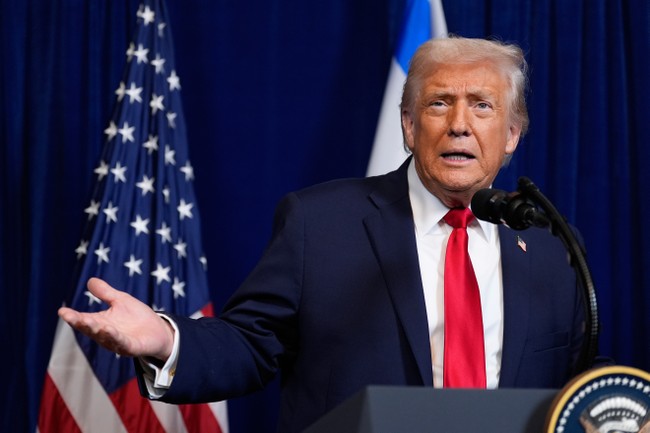
President Donald Trump described the decision as an act of “great stupidity,” warning that China and Russia would read the move as weakness. His blunt assessment framed the handover as a security blunder rather than a diplomatic gesture. That reaction resonated with many conservatives who see any erosion of basing guarantees as a direct threat to deterrence in the Indo-Pacific. The risk is simple: if control weakens, competitors gain leverage over logistics and reach.
The strategic community has been raising alarms about the practical risks in the treaty text. Analysts point out so-called “poison pills” that could limit long-term U.S. military freedom of action or create ambiguous responsibilities. A lease can include constraints, conditional renewals, or clauses that invite interference—none of which fit well with the need for clear, reliable basing. When a forward base becomes subject to political games, its utility in real-world contingencies declines fast.
The Diego Garcia base, known colloquially as the “footprint of freedom,” is one of the few outside the United States that can reload nuclear submarines, port aircraft carriers, and base and launch strategic bombers, and is critical for Space Force operations.
Diego Garcia supports operations in some of the most strategically and economically important parts of the world—from the Middle East to Central Asia to the Pacific Ocean—all while being protected by the vast “moat” of the Indian Ocean. It is key to US power projection in the Indo-Pacific and to deterrence of China’s growing naval threat.
Sen. John Kennedy put the politics and the practical problem together with his characteristic provocation, arguing that the U.K. deal effectively hands the island back to another nation while the United States still foots infrastructure and operational costs. He warned that America could end up paying to retain access to a site we helped develop and protect. His line, “This kind of stupid takes a plan,” captured both the frustration and the disbelief many conservatives feel about surrendering strategic advantage.
Kennedy also used a memorable turn of phrase to skewer the decision, saying, “Put down the bong!” as a way to highlight what he viewed as irrational policy-making from the British prime minister. That zinger reflected deep skepticism that the promised lease would withstand future diplomatic pressure. U.S. lawmakers are rightly wary of relying on uncertain legal arrangements when forward defense depends on predictable logistics and basing. Policy should prioritize guaranteed access, not optimistic assumptions about future political alignment.
There’s another practical problem: Mauritius’ level of influence from Beijing. If Mauritius becomes dependent on or aligned with China economically or politically, then a lease on paper may not mean much in practice. Geopolitical influence can translate into restrictions, permissions, or covert pressure that erode operational freedom long before any formal treaty is breached. That kind of quietly shifting control is exactly what commanders dread because it can undermine plans without a single headline-making violation.
U.K. domestic opponents, some displaced islanders, and commentators have highlighted legal and human-rights questions tied to the deal, alongside the security concerns. Critics argue that island residents were not properly consulted and that the deal could perpetuate injustices. Mixing human-rights remediation with strategic handovers complicates any simple narrative about sovereignty and basing. The bottom line for U.S. defense planners is that political gestures should not impair military readiness.
Britain’s opposition Conservative Party leader Kemi Badenoch weighed in to agree with Trump on the Chagos islands, saying the “terrible” deal weakened UK security.
“Paying to surrender the Chagos Islands is not just an act of stupidity, but of complete self sabotage,” she posted, adding that “unfortunately on this issue President Trump is right”.
Some Chagossians, many of whom ended up living in Britain after being removed from the archipelago, have also opposed the deal on the grounds that they were not consulted. A U.N. committee said in December the deal risks perpetuating long-standing violations of Chagossians’ rights.
The United States still has options to protect access to Diego Garcia, but they would require decisive diplomatic and legislative moves. Relying on goodwill or ambiguous legal promises is not a substitute for firm basing arrangements and contingency planning. Policymakers who care about deterrence need to treat forward access as a strategic imperative, not as a side negotiation. The island’s value to American security demands nothing less.


Add comment