
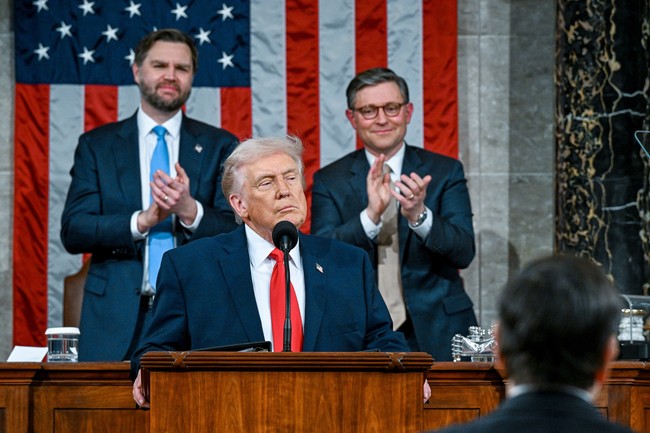
James Braid, the White House director of legislative affairs, is resigning this fall after playing a key role in advancing the Trump administration’s agenda with Congress, and his departure has prompted public statements from President Trump, Speaker Mike Johnson, White House press staff, and Braid himself about the record of achievement and working relationships on Capitol Hill.
James Braid has overseen a string of legislative victories credited by allies as major policy wins for the administration. He is leaving the White House in September, a move that marks the end of a tenure deeply tied to the push for America First priorities. Republican leaders are framing his exit as the loss of a skilled operator who helped navigate tight margins and contentious negotiations.
President Trump announced the departure directly, highlighting the work Braid did with Congress during a busy stretch of governance. Trump praised the pace and scope of confirmations and legislative action, putting Braid at the center of that effort. The president wrote: “James Braid, our Director of Legislative Affairs, will be leaving the White House in September. James has played a critical role in our many accomplishments with Congress, including THE ONE BIG BEAUTIFUL BILL, beating the Democrats in two shutdown showdowns, passing the GENIUS Act, defeating a record number of War Powers resolutions, and the confirmation of my Cabinet at the fastest rate in decades.”
https://x.com/trumptruthsbot/status/2090433920605266417
The president added praise for the broader congressional effort and thanked Braid for his service. That message underscored a narrative Republicans want to carry into the near term: that cooperative work between the White House and Congress produced concrete results. Trump concluded, “This has been, and will continue to be, the most successful Republican Congress in History. Thank you, James, for your service to our Nation!”
White House Press Secretary Karoline Leavitt, who has her own transition plans, publicly affirmed Braid’s value to daily operations and briefings. Her comments emphasized how central legislative coordination can be to the work of the press office. Leavitt’s acknowledgement framed Braid as a dependable source for both policy detail and political coordination.
Braid himself responded with measured gratitude, listing accomplishments and thanking the team he served with. His statement reflected pride in the administration’s policy achievements and in the relationships built with lawmakers. He wrote, “I am profoundly grateful to President Trump and Vice President @JDVance for the opportunity to be a part of this extraordinary team,” he wrote, “and to serve in an administration that has worked with the Congress to deliver the largest tax relief in American history, the resources necessary to secure the border and build the wall across two reconciliation bills, the fastest confirmation of the cabinet in twenty years, and defeating two Democratic shutdowns.”
Speaker Mike Johnson offered formal thanks and framed Braid’s work as essential to passing the America First agenda. Johnson highlighted the difficulty of moving legislation with narrow majorities and credited Braid with steadying that effort. He added that Braid’s friendship, commitment, and work ethic were central to the House and Senate being able to produce results for voters.
Johnson’s statement described Braid’s office as an engine for cooperation and delivery, particularly under pressure. The speaker wished Braid and his family well as he steps away from government life. That public sendoff aligns with a pattern of Republican leaders publicly amplifying wins tied to the administration.
Speculation circulated that tensions existed between the president and Senate leadership, specifically around Senate Majority Leader John Thune. Those rumors suggested miscommunication or strategic disagreements at the top levels of GOP leadership. Braid pushed back on that narrative in interviews, calling suggestions of a rift “nonsense” and underscoring routines of communication and coordination.
For Republicans watching, this resignation is both a personnel shift and a reminder that legislative management is a grind job few outside the Capitol appreciate. Replacing a director of legislative affairs mid-cycle forces an internal scramble while each side of the aisle sizes up leverage and timing. The GOP message publicly centers on continuity: the policies and momentum will continue despite the personnel change.
Inside the White House, staff departures like this are seasonal but consequential, and Braid’s exit is being framed as part of a broader personnel shuffle rather than a fracture. Members of the administration and congressional allies are emphasizing the record: confirmations, tax relief, border measures, and blocking Democratic shutdown efforts. They intend to point to those outcomes as proof that strong legislative management matters.


Add comment