
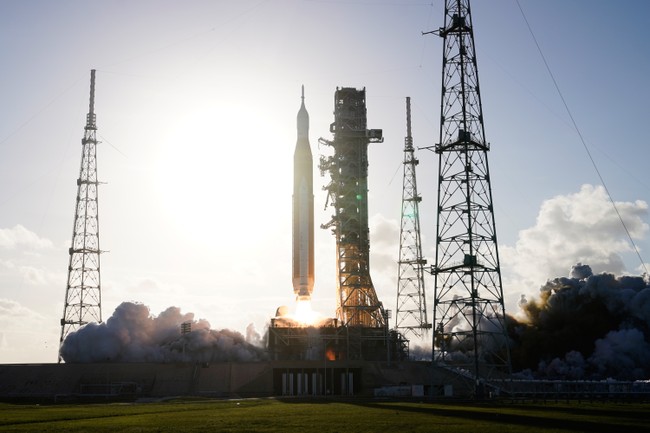
The Biden administration’s NASA shake-up is meant to speed up America’s push to the Moon by reorganizing mission lines and leadership, while debates over funding, long-term human health on low gravity worlds, and strategic goals for space resources are already shaping the conversation.
NASA announced a broad internal realignment this week to focus the agency on its highest-priority objectives and to speed decision-making. The move centralizes mission directorates under the administrator and adjusts senior roles so technical and programmatic lines report more directly to top leadership. Officials framed the change as necessary to deliver on an aggressive space agenda that includes returning Americans to the lunar surface and building sustained operations there.
NASA announced Friday an agencywide realignment to increase mission focus and move out on the National Space Policy. These changes position the agency to better deliver on the nation’s highest‑priority objectives with speed and efficiency.
During the Ignition event in late March, NASA Administrator Jared Isaacman and agency leaders outlined the most pressing objectives to deliver on the next chapter of American leadership in space. President Trump’s Executive Order Ensuring American Space Superiority, otherwise known as the National Space Policy, directed NASA to focus talent and resources on objectives including accelerating the Artemis program, establishing a Moon Base, developing a nuclear space reactor, igniting the orbital economy, and expanding missions of science and discovery.
On paper the plan sounds sharp: streamline layers, tighten accountability, and push decision authority closer to the administrator. In practice, execution will depend on funding and the ability to coordinate dozens of industry and international partners. If Congress funds the priorities and the private sector keeps innovating, the reorg could shave years off development timelines.
The restructuring comes as NASA faces a contested budget request in Washington. The White House has proposed cutting the agency’s budget from $24.4 billion to $18.8 billion – a 23% reduction – while the House Appropriations Committee has advanced legislation keeping funding flat, rejecting the administration’s request.
Under the changes, mission directorates will now report directly to Isaacman rather than through the associate administrator, a move the agency said would streamline decision-making and improve coordination across NASA’s centers and international partnerships. The associate administrator will also serve as NASA’s chief engineer under the new structure.
Yes, Congress is squabbling over dollars. That tension matters because a moon base is expensive even in a scaled plan that relies heavily on commercial partners. The administration argues that tighter organization makes it possible to “do more with less” by cutting bureaucratic drag and leveraging industry capabilities, but skeptics point out that real progress still needs stable, predictable funding streams.
The scientific and human-health challenges of a sustained lunar presence are huge and underappreciated. Lunar gravity is roughly 16.6 percent of Earth’s, which means long-duration stays will require rigorous countermeasures to protect bone and muscle. The agency will need to prove that crews can live and work safely and productively for months at a time, not just for short sorties.
Biological unknowns complicate the “permanent” label. We do not know how reproduction, fetal development, or childhood growth would fare under low gravity, and any offspring raised on the Moon could face severe barriers to ever living on Earth. Those realities suggest early lunar outposts will be operational hubs with rotating crews, not family colonies.
Strategically, the Moon is less interesting for its surface than for what it enables: a logistics node, a testing ground for deep-space systems, and a potential source of materials and fuel to support missions further into the solar system. Mining the asteroid belt or staging Mars missions from lunar orbit are the sorts of goals that drive the policy conversation, and that is the broader strategic rationale behind the reorganization.
For the near term, much of this remains conceptual, which is fine. Ambitious national projects often begin with a clear goal, messy implementation, and gradual refinement as technology and budgets permit. If the administration and Congress can align priorities with funding and industry can deliver reliable hardware, the Moon can become a platform for American leadership in space.
The tone from agency leaders is bold and unapologetic about national interest in space. That political clarity helps marshal civilian, commercial, and allied effort behind shared objectives. As NASA reorganizes, the practical work now is turning those objectives into validated systems, sustained budgets, and safe, repeatable human operations on the lunar surface.



Add comment