
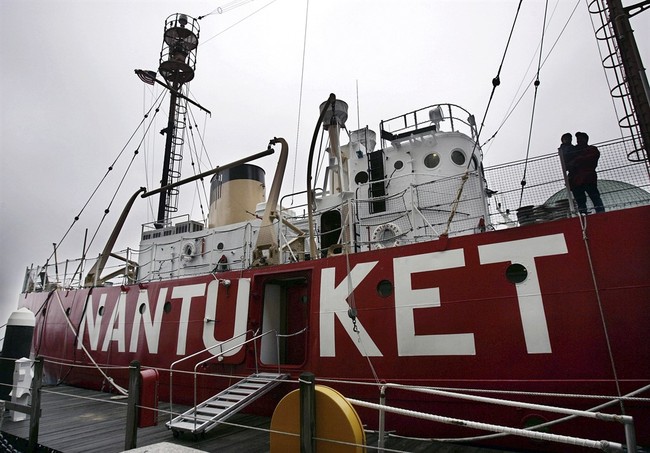
The Nantucket Unitarian congregation’s decision to cancel its traditional Fourth of July reading because of a desire to “better understand our own whiteness” has ignited sharp criticism and raised questions about public displays of patriotism, elite coastal vacation circles, and how national milestones should be observed as America approaches its 250th birthday. This piece looks at the controversy, the reactions it prompted, and the wider cultural moment that frames the debate around identity, history, and public ceremony.
The cancelation came from a congregation on an island long associated with well-heeled politicians and cultural elites, a place where prominent figures have vacationed for years. That background matters because it frames the move not as a grassroots reflection but as a symbolic gesture from a place many see as insulated from everyday American life. When institutions that have hosted public rituals for decades suddenly step away from them, it creates a spectacle that invites pushback. People expect continuity from civic traditions, and abrupt changes invite scrutiny and skepticism.
The church’s letter linked the decision to a broader national context and a specific Supreme Court ruling, framing the cancelation as part of a moral reckoning. Here is the verbatim text the congregation cited about the connection to recent legal decisions and an ongoing internal process: “We came to this decision in large measure because of the recent gutting of the 1965 Voting Rights Act by the Supreme Court,” Rev. Erin Splaine and the group’s board of trustees wrote in a letter to the Nantucket Current news outlet on Thursday. ” A celebration without context and the centering of the fullness of our American Story only perpetuates the harm, injustice, and anti-democratic process.”
The letter continued in full, explaining the congregation’s motivations and aims with identical wording: “Our cancelling the 4th of July celebration this year reflects the deep concern we are feeling since the Supreme Court decision,” the letter continues, “as well as an on-going process within the congregation to better understand our own whiteness and how we can be part of changing an inherently unfair system which has been in place for 250 years.”
Those direct statements have driven the controversy, prompting people on all sides to weigh in. Some see the cancelation as a sincere attempt to confront historical injustices and to avoid ritualizing a narrative that excludes parts of the American story. Others view it as an unnecessary self-flagellation that smacks of performative guilt and alienates the broader community. The debate centers on whether confronting history should be private work or part of public celebrations designed to unite.
Voices from conservative corners were quick and pointed, using blunt language to characterize the move. One reaction reproduced the congregation’s core rationale in a shorter, more incendiary tone: “Wtf. Erin Splaine, the “Reverend” of the woke Unitarian Universalist Church in Nantucket, just canceled July 4th celebrations because White people are “privileged” and honoring American history “perpetuates the harm, injustice, and anti-democratic process.” She then forbids anyone from contacting her on social media about her decision.” That quote captures why the story spread: the juxtaposition of historical ritual and modern identity politics makes for a combustible mix.
There’s also a personal element to the story tied to the island’s famous visitors, which colors how the decision is perceived. The fact that prominent liberals have long enjoyed Nantucket as a vacation spot complicates the optics when the island’s institutions opt out of national symbolism. Critics argue that elites unplugging from a national celebration while enjoying the trappings of American life sends a contradictory message. People who pay attention to these cultural signals see a disconnect between rhetoric and lifestyle that fuels resentment.
Supporters of keeping traditional observances say national rituals like Fourth of July readings of founding documents foster civic literacy and common ground, that even imperfect history deserves to be read aloud so people can argue about it with all the facts on the table. The meeting-house reading had been a local ritual for a quarter century, a public act that tied the community together. Its suspension therefore reads to many as not just a policy choice but as a break in the civic fabric.
https://x.com/libsoftiktok/status/2060425772574359664
At the heart of the controversy is a question of public purpose: are ceremonies meant to celebrate and educate or to atone and exclude? For an island congregation to choose the latter, especially in a place so associated with influential visitors, turns a small local decision into a national headline. That amplification is what makes this more than a parish matter—now it is a cultural marker that will be debated on talk shows, social feeds, and in local coffee shops for weeks.
As this debate unfolds, emotions run high and the lines are drawn. Some view calls to preserve tradition as blind nostalgia, while others see the retreat from ritual as a sign of cultural surrender. Either way, the cancelation became a flashpoint in a broader fight over how Americans remember and mark their history as the nation approaches a major milestone.
One more detail sealed the story’s reach: people compared the island’s choices to broader political personalities associated with Nantucket and similar enclaves, noting the irony of elite retreats denouncing parts of the national narrative they still enjoy in private. That tension between private life and public principle is the engine driving much of the reaction, and it helps explain why this local cancelation landed so squarely in the national conversation. The controversy shows how symbolic acts on small stages can reverberate across the country when they involve identity and the story of the nation itself.


Add comment