
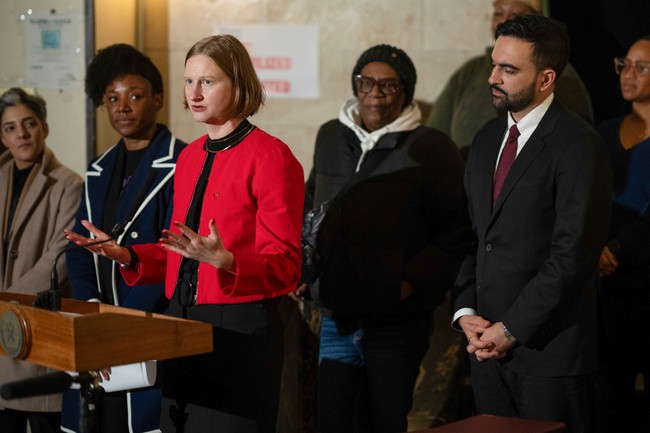
I’ll lay out why Zohran Mamdani’s celebration of a government-backed apartment complex falls flat, show the tenant complaints and violation counts that undermine his argument, explain how rent controls and heavy regulation discourage maintenance, and point to practical reforms that actually help residents without expanding state control. The focus here is on the facts from the Sedgwick Avenue property visit and why public ownership or heavy subsidy didn’t solve the problems Mamdani used to justify his agenda.
Zohran Mamdani used a press appearance to push a political point: private landlords are to blame and government-backed housing is the answer. He praised a city-subsidized, 102-unit complex on Sedgwick Avenue as an example of success connected to his new housing commissioner, Dina Levy. The building was earlier stabilized with a $5.6 million HPD loan that Levy and her nonprofit helped broker, and Mamdani framed that intervention as proof public action works.
Reality, however, is messier. Inspections show the Sedgwick Avenue property has more than double the dangerous “Class C” violations compared with another privately owned building Mamdani highlighted days earlier. That simple comparison undercuts the narrative that public or nonprofit control automatically produces better outcomes for residents.
Tenants at the subsidized building describe persistent problems that funding alone did not fix. One renter reported routine lack of heat and hot water, crumbling bathroom and kitchen facades, and rodent infestations that they felt forced to address themselves. Those on-the-ground accounts matter because policy should be judged by results, not by political talking points delivered in front of cameras.
Levy did this with help from a $5.6 million HPD loan she and her own nonprofit, the Urban Homesteading Assistance Board, brokered to stabilize the building’s finances and maintain its “affordable” rental status, recalled Mamdani.
“Dina will no longer be petitioning HPD from the outside,” the mayor touted. “She will now be leading it from the inside, delivering the kind of change that can transform lives.”
The quote from Mamdani shows the administration’s confidence, but the numbers tell a different story. Investigations found the city-backed complex accumulated a long list of violations and maintenance complaints after the nonprofit took over management. If a publicized success story performs worse on basic health and safety metrics than a comparable private property, the policy case needs re-examining.
However, the 59-year-old building isn’t the success story Mamdani and Levy claim it to be, The Post found.
It has more than double the dangerous “Class C” violations racked up at 85 Clarkson Ave., a dilapidated, privately owned 71-unit complex in Prospect Heights, Brooklyn, Mamdani showcased three days earlier as a poster child for everything he believes is wrong with the city’s publicly-subsidized housing stock.
That contrast matters because it speaks to incentives. When landlords face price controls and layers of regulation that cut margins, they have less ability and less incentive to invest in repairs and staffing. But the same dynamic can hit nonprofits and government-managed properties when funding and oversight fail to align with accountability and operational competence.
Residents described delays in maintenance and a lack of basic building services like porters or prompt pest control. One long-term tenant said the building deteriorated after the nonprofit took over and that persistent complaints went unanswered. Those kinds of failures are what produce the unacceptable living conditions Mamdani said he wanted to prevent.
There are reforms that actually improve living conditions without expanding state control or rewarding poor management. Eliminating counterproductive rent controls that choke investment, streamlining regulations that make repairs costly and slow, and enforcing clear accountability for any owner—public, private, or nonprofit—would make a real difference. Incentives and accountability, not slogans, drive durable improvement.
Mamdani’s rhetoric leans on a simple story: private greed, public virtue. But the facts from this episode show the story is more complicated and that public backing is not a guaranteed fix. If the mayor wants better housing outcomes, policy needs to focus on real levers that improve maintenance, increase supply, and hold managers accountable regardless of ownership model.



Add comment