
The arrest of Isaac Melendez-Carranza for selling fentanyl near a Loudoun County high school exposes repeated failures at the border and in immigration enforcement, and it raises urgent questions about public safety, accountability, and the cost of lax policies.
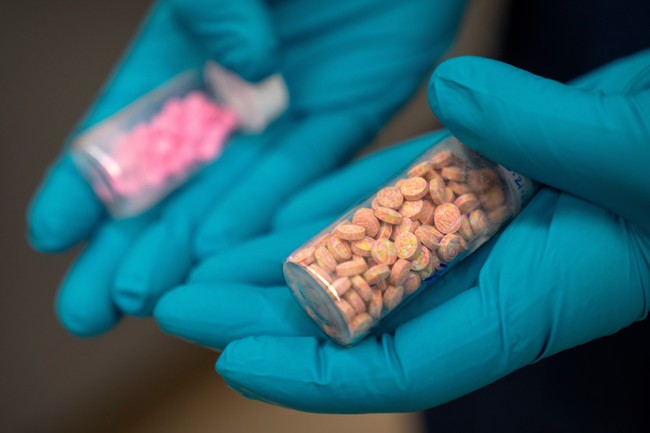
Local law enforcement in Loudoun County arrested Melendez-Carranza after linking him to fentanyl sales that contributed to student overdoses at a high school. Deputies reportedly recovered around 100 fentanyl pills during a search of his residence, and he faces charges for distributing controlled substances near school property. This case did not happen in a vacuum; it’s wrapped up with prior encounters at the border and a deportation order that, critics say, was not enforced.
Officials allege Melendez-Carranza was first caught entering the United States in 2016 after crossing the Rio Grande near Hebbronville, Texas, and was released on bond. Later, an immigration judge ordered him removed in July 2024, and DHS records show he was “encountered” in August 2024, yet no removal took place then. Those gaps in enforcement allowed someone with a deportation order to remain here and, according to prosecutors, sell deadly drugs within walking distance of students.
https://x.com/BillMelugin_/status/2092036644467618013
Community members and local leaders are right to be furious when enforcement failures result in harm to kids. Law-abiding residents expect governments to secure the border, follow through on removal orders, and keep dangerous substances away from schools. When those basic duties are neglected, the victims are often the most vulnerable: students, parents, and teachers who now must deal with the fallout.
Federal and local officials have pointed to coordination failures between agencies as part of the explanation for how Melendez-Carranza remained at large. The Department of Homeland Security reportedly filed an ICE detainer for him, and local authorities say they complied with detainer procedures. Still, the timeline shows encounters that did not lead to prompt removal, and that gap matters when fentanyl can be distributed in a matter of hours.
The facts show a troubling chain: initial illegal entry, release, a later deportation order, another encounter with DHS, and then alleged distribution of highly potent fentanyl near a school. That sequence underlines the need for consistent enforcement of immigration law and better communication among federal, state, and local agencies. Public safety cannot be a political afterthought when children’s lives are at stake.
Residents of Sterling and the surrounding neighborhoods deserve a straightforward answer about why someone with a deportation order ended up accused of selling fentanyl to students. Law enforcement says Melendez-Carranza was identified as a dealer tied to overdoses at Park View High School in May 2026, and he was taken into custody on Aug. 20 after search warrants were executed. Local authorities maintain he is being held without bond as the criminal process moves forward.
Beyond criminal charges, there’s a policy angle that cannot be ignored: what does this incident say about broader immigration policy and border security? From a Republican perspective, the predictable outcomes of weak enforcement include avoidable crime, taxpayer expenses, and communities left to pick up the pieces. Voters expect lawmakers to fix the system so cases like this do not repeat.
Police reports indicate that during the searches authorities also seized U.S. currency alongside suspected narcotics, strengthening the case that this was not simple possession but active distribution. Virginia law treats distribution of controlled substances near schools as an especially serious offense, and those charges carry stiff penalties designed to protect students. Prosecutors will pursue the available statutes to hold the accused accountable.
Accounts circulating online and shared by journalists included a post that tied together DHS encounters and the deportation timeline. The quoted post reads exactly as published and details the alleged sequence of encounters, the deportation order, and the charge that he was selling fentanyl to students. That post became a focal point for critics demanding answers and immediate action to prevent similar incidents.
BREAKING; DHS confirms to @FoxNews that a suspect arrested by police in Loudon County, VA on Thursday for selling fentanyl to students near a high school that had overdoses is a Salvadoran illegal alien who was caught and released at the Texas border during the Obama administration in 2016 and has had a deportation order since 2024.
Isaac Melendez-Carranza is charged with distributing fentanyl within 1,000 feet of a school and is being held without bond. Deputies found 100 fentanyl pills when they searched his home.
The Loudon County Sheriff says investigators ID’d him as a dealer connected to overdoses of students at Park View High School in May 2026.
DHS says despite getting a deportation order in July 2024, the Biden admin DHS encountered him weeks later in VA in August 2024, but took no enforcement action against him.
The community response will shape political pressure in the weeks to come. Parents and neighbors will push for transparency on how law enforcement and immigration agencies handled earlier encounters. Elected officials who favor stricter border enforcement will use this case to call for reforms that prioritize rapid removal of deportable individuals and better safeguards around schools.
There are criminal proceedings to resolve in Loudoun County, and the justice system will determine guilt and punishment under Virginia law. At the same time, lawmakers and administrators must answer whether policy and practice allowed a dangerous situation to form. The question for voters and officials is simple: will we accept repeated enforcement lapses that jeopardize children, or will we demand a system that protects communities first?
Community leaders, parents, and public safety officials now face the immediate task of supporting affected students and tightening local prevention efforts. Meanwhile, the larger policy debate about border control and immigration enforcement has new urgency. The consequences of inaction are visible in the headlines and felt in neighborhoods where parents expect their schools to be safe.
Turns out that Isaac Melendez-Carranza had a long history with the
On Aug. 20, Melendez-Carranza was taken into custody after executing search warrants. During the searches, authorities seized suspected narcotics and U.S. currency.
Melendez-Carranza, who is originally from El Salvador, faces two counts of distribution of a controlled substance under Virginia Code 18.2-248 and one count of sale of drugs near certain properties under Virginia Code 18.2-255.2.
He is being held at the Loudoun County Adult Detention Center without bond.



Add comment