
Checklist: cover the runoff matchup and stakes, describe polling and debate moments, note endorsements and campaigning, explain turnout and timing, highlight what a win means for the general election.
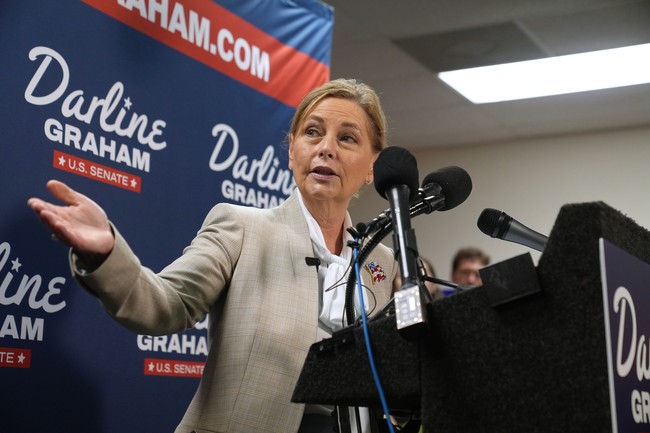
Tuesday night will decide who carries the Republican banner for South Carolina’s Senate seat, and the race between Darline Graham and Rep. Ralph Norman is razor close. Graham, appointed to finish the late Sen. Lindsey Graham’s term, is campaigning for a full six-year term, while Norman is pushing his conservative record as he seeks to advance to November. The runoff is the immediate test, with both candidates making their final appeals to voters ahead of polls closing. Whoever wins will face a Democratic opponent in the fall and shape the state’s voice in Washington.
Recent polling shows Graham and Norman in a statistical tie, leaving little room for complacency on either side. A Trafalgar Group survey found the two candidates nearly even among likely GOP voters, a snapshot that underlines how divided the primary electorate remains. For Republicans, that split reflects real choices about experience, style, and loyalty to core conservative priorities. The contest has become a referendum not just on the candidates but on what Republican voters want in the Senate.
Sen. Darline Graham and Rep. Ralph Norman are neck and neck in a new survey, as voting concludes Tuesday to determine which Republican will be on the ballot in South Carolina’s Senate race.
The poll, which the Trafalgar Group conducted from Saturday through Monday, found that 47.9 percent of 1,031 respondents backed Graham, whom South Carolina Gov. Henry McMaster (R) appointed to complete the term of her late brother, Sen. Lindsey Graham (R-S.C.).
Norman’s conservative credentials are well-known, but his 2024 endorsement of Nikki Haley over former President Trump gave some voters pause. That decision has been noted by party leaders and activists as an unusual move in a state where Trump-style loyalty still matters to many. Meanwhile, Graham has leaned on her family legacy and on endorsements from senior Republicans who believe she can carry forward conservative priorities in the Senate.
The August 18 debate added heat to the race when Graham struggled on a national security question about China and Taiwan. Her answer—frank and self-deprecating—prompted concern among voters who expect the next senator to be fluent on global threats. “I’m just going to be honest here. I’m not, on national security, I’m not that informed on national security, so, but I do support the military,” she said, noting her family’s service and stressing her commitment to the armed forces.
Asked whether Taiwan and the South China Sea are important national security issues facing the U.S., Graham answered: “I’m just going to be honest here. I’m not, on national security, I’m not that informed on national security, so, but I do support the military.”
She added: “My brother was in the Air Force for 33 years, so I will do everything I can to support the military. My dad was in the Army. I’m not a polished politician up here. National security is not my thing, not my area of expertise. But I do support the military.”
The answer drew concerns from some Republicans about Graham’s readiness to govern on national security and foreign policy issues — which were of pre-eminent concern for her brother, the late Sen. Lindsey Graham, R-S.C. — if she’s elected to a full term.
Despite that moment, Senator Tim Scott threw his support behind Graham and publicly backed her as the person he wants alongside him in the Senate. His endorsement framed Graham as the safe, reliable choice for South Carolina in the upper chamber, emphasizing continuity and teamwork on conservative priorities. President Donald Trump also endorsed Graham and rallied for her in person, bringing national attention and a final burst of momentum to her campaign.
WATCH:
https://x.com/Acyn/status/2092060476591210582
At events this weekend, Graham highlighted her positions on being pro-life, defending the Second Amendment, and pushing to pass the SAVE America Act as key promises if elected to a full term. Those talking points reflect the core issues motivating many Republican primary voters and serve as clear contrasts with the broader field. Norman, meanwhile, has leaned into consistent messaging on conservative governance and local representation.
WATCH:
Early voting has been under way since August 18, and polls will close at 7:00 PM Eastern, putting turnout and enthusiasm front and center. In a race this tight, every vote matters, and the level of Republican turnout will be the key determinant of the result. Betting markets give Graham a favorable edge, but in a dead heat the final count can defy expectations.
The winner will take on Dr. Annie Andrews, the Democratic nominee, in November, with the outcome in South Carolina carrying implications beyond state lines. For Republicans, keeping this seat means reinforcing support for an America First agenda in the Senate and protecting conservative policy priorities. The runoff is a short, decisive contest that will send a message about the party’s direction heading into the midterms.



Add comment