
Checklist: Replace Army vice chief; explain backgrounds of James Mingus and Christopher LaNeve; outline timing and implications of the move; present the relevant quoted reporting; note broader pattern of sudden senior changes.
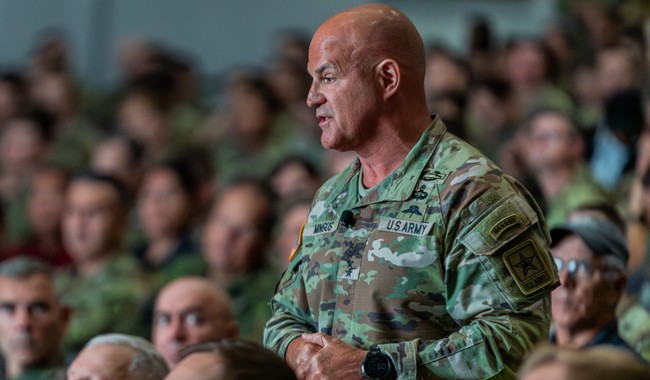
Secretary of War Pete Hegseth has quietly moved to replace the Army’s number-two officer, surprising observers because the change comes well before the typical tour completion. Army Vice Chief of Staff James Mingus was named vice chief in January 2024 and would normally have expected to serve for about three years. Instead, Hegseth has tapped Lieutenant General Christopher LaNeve, who currently serves as Hegseth’s senior military assistant, to take Mingus’s billet. If LaNeve is promoted and confirmed, he will leapfrog several senior officers to reach that station.
The timing of the move raises immediate questions about motive and message inside the Army’s senior ranks. Mingus has a long record rooted in the National Guard and then active-duty infantry leadership, with troop command experience at multiple levels and a reputation tied to elite units. He led a long-range surveillance company and had command roles connected to the 75th Ranger Regiment’s Special Troops Battalion, credentials that on paper align with a combat-proven leader. Given those credentials, being shifted out of the vice chief job halfway through his expected tenure looks abrupt and notable.
LaNeve’s official résumé is less deeply documented in public reporting, though he has held significant posts such as commanding Eighth Army in Korea and serving with the 82d Airborne Division. He currently holds three stars and functions as Hegseth’s senior military assistant, a role that places him very close to the secretary’s daily operations and decision-making. Moving an aide into the number-two spot sends a strong signal about whose perspective will be most influential at the top of the service. It suggests Hegseth wants a close collaborator in that role rather than an independent-minded senior officer.
There is a broader context to consider: this is not the first sudden senior exit inside the military leadership this month. High-profile changes, including the abrupt retirement of a regional combatant commander, have left observers wondering whether personnel moves are becoming a pattern rather than isolated events. When multiple senior leaders are repositioned or leave unexpectedly, it reshapes institutional continuity and can undercut the normal expectations of tenure and succession planning.
On paper, Mingus should have been on track for continued senior roles, but the administration passed him over for a different major command earlier this year. It was widely reported that he was “passed over” for the USCENTCOM job in a decision that fed rumors about political and personal dynamics at the highest levels. One persistent line of speculation held that his association with former Chairman of the Joint Chiefs Gen. Mark Milley worked against him in the eyes of some in the current leadership. That background helps explain why observers see the vice chief change as more than routine personnel movement.
Here is the exact passage from contemporary reporting that has circulated about the earlier CENTCOM decision: “Defense Secretary Pete Hegseth is backing a Navy admiral as his preferred choice for a key role commanding U.S. military operations in the Middle East, passing over an Army general who had been widely presumed to be the top contender amid an ongoing naval war in the region, according to defense officials and others familiar with the issue. Vice Adm. Brad Cooper is Hegseth’s recommendation to head U.S. Central Command over Gen. James Mingus, the officials said, speaking on the condition of anonymity to discuss the Trump administration’s personnel considerations. Several officials familiar with the issue said Mingus may have lost out on the Central Command job because of his association with retired Gen. Mark A. Milley, the influential former chairman of the Joint Chiefs of Staff whom Trump and Hegseth have repeatedly cast as a political adversary.”
Removing a four-star from a key post when he is halfway through his tour and moving another officer associated with the secretary directly into that vacancy carries institutional consequences. It interrupts continuity at the vice chief slot and potentially signals a reshaping of priorities at the top of the Army. Military readiness, personnel morale, and long-term planning can all be affected when senior leaders are rotated out earlier than expected for reasons that look tied to alignment rather than routine succession.
For those watching civil-military relations, the episode is worth attention because it sits at the intersection of personnel policy and political preference. The appointment of an aide to a high billet suggests a preference for trusted alignment over independent senior judgment. Whether this reflects a temporary alignment for a specific agenda or a longer-term shift in how senior military leaders are selected remains to be seen, but the immediate consequence is a noticeable rearrangement in the Army’s leadership roster.
This personnel change will now move to the confirmation phase if LaNeve is nominated formally for promotion, and the Senate will have a role in deciding whether that leap is appropriate. In the meantime, the Army faces the operational reality of leadership turnover at a high level, which will require managers down the chain to adjust to new leadership priorities while maintaining mission focus. The move is a clear statement about who will carry the secretary’s priorities forward inside the service.



Add comment