
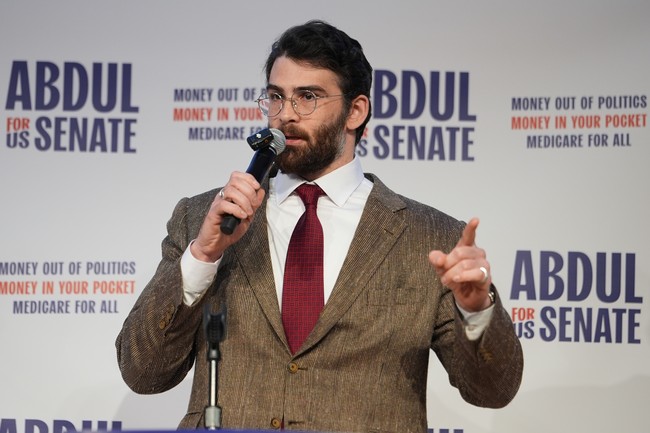
Hasan Piker’s recent live performance of the “We Are Charlie Kirk” meme song sparked widespread backlash, forcing questions about how Democratic candidates and media will respond, and adding fresh controversy to his public profile.
Democrats linked to Hasan Piker have already faced criticism, and this new incident has only intensified scrutiny. The clip from his “Fear & LIVE” tour shows him leading a crowd in a mocking chant aimed at Charlie Kirk, a moment many found offensive. The reaction online was swift and fierce, with commentators on the right calling it egregious and morally wrong.
Far-left streamer Hasan Piker was seen and heard singing the meme song “We Are Charlie Kirk” at a stop of his “Fear& LIVE” tour over the weekend, drawing a strong reaction online.
Leading a cheering crowd, , “We are Charlie Kirk, we carry the flame. We’ll fight for the Gospel, we’ll honor his name,” while his co-hosts could be seen laughing on stage. At one point, Piker could appear to be heard saying it was one of the most surreal moments of his life.
Video and audio snippets, now circulating widely, were followed by more embeds of the live show and audience reaction. The visuals included a stylized coat that some mocked as an ill-fitting Mao suit, which only added to the ridicule. The performance blends provocation with theater, but in this instance the stunt landed as a political liability.
https://x.com/Awk20000/status/2091121121672466842
Many on the right labeled the act as cruel and malicious, demanding answers from anyone associated with Piker. That anger will ripple into campaigns and media coverage, where candidates connected to controversial influencers will be pressed about whether they condone such behavior. It’s a simple political reality: association matters and opponents will exploit moments like this.
Salem Media radio host Hugh Hewitt argued that candidates should be forced to take a stand and suggested the mainstream press might downplay the episode. Whether outlets give this the same play as other controversies is an open question, but the story will be used in messaging and in ads. The optics of a performer mocking a political figure in a religious register won’t sit well with many voters.
There’s also a broader point about performative left-wing media personalities and their influence on candidates. Piker’s reach gives him the power to shape narratives and drag allies into controversy without warning. That influence forces campaigns to choose between distancing themselves and risking backlash from his audience.
The exchange between Charlie Kirk and Piker from years earlier still circulates and has been reintroduced to the conversation as a reminder of their ideological clash. In that older back-and-forth, Kirk challenged Piker on socialist claims while Piker acknowledged his own earnings and the limits of redistribution arguments. Those moments provide context for why the new stunt touched a nerve.
Piker has built a persona that mixes sharp political commentary with shock tactics, and that combination breeds viral moments. Some of those moments land as critique or satire, but others cross lines that provoke moral condemnation and political fallout. The current episode falls into that second camp for many observers.
As campaigns move forward, every candidate with any perceived tie to Piker will face questions: Did they approve of this behavior, did they know about it, and what do they say now? Those are fair questions in a political season where optics and associations are weaponized quickly. The answers will matter in debates, ads, and voter conversations.
Beyond the immediate scandal, this episode highlights the tensions between modern influencer culture and traditional campaign strategy. Political figures once had clearer control over their messaging and the company they kept; now a single viral moment can force a campaign to respond on the fly. That disruption reshapes how campaigns vet endorsements and engage with media personalities.

Add comment