
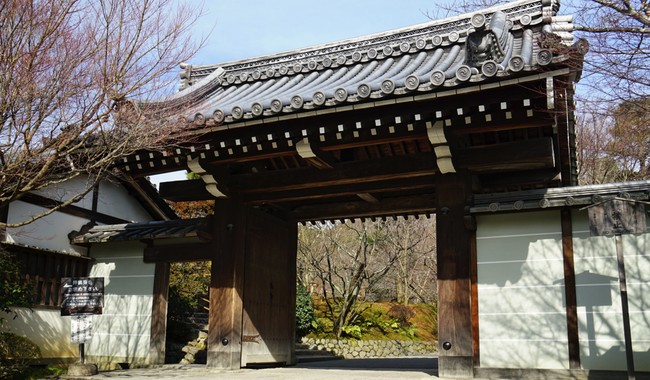
I spent years living in Japan as a foreign correspondent and kept a running list of small, odd, and revealing observations about daily life there; this piece collects those memories—strange customs, polite evasions, tiny acts of service, and cultural puzzles that made the country endlessly fascinating and often baffling to a Western mind.
Curiosity drove me there: my father was an industrial engineer and every night he nudged my imagination toward faraway places. That appetite for how things work and why people behave the way they do eventually put me on a plane to Japan for a permanent posting, where routine acts of politeness and restraint met practical, sometimes humorous surprises.
One of the first lessons was about gifts: do not open them immediately if you receive one. The quickest way to offend is to inspect a present on the spot, which signals judgment about its value instead of gratitude for the gesture. This small rule hinted at a broader cultural code where implication and context often speak louder than direct words.
Service standards were striking in their efficiency and attention to detail. A stranger dropping off a box of cookies was likely apologizing for a crew starting construction nearby the next day, while gas attendants in crisp shirts would leap out to pump, wash, vacuum, and polish without being asked. A dentist once phoned three days after a crown procedure to check my comfort, which felt both remarkable and reassuring.
Daily life held practical inversions that kept me on my toes: bargain basements up on rooftops, movie theaters in deep sub-basements, and steep staircases built to conserve space. Doors tended to slide rather than swing, and subway cars could be so packed that station staff sometimes pushed passengers to make the doors close. Yet avoidance of eye contact often kept tensions low in crowded situations.
Language and understatement mattered everywhere. Blunt refusals are rare; the polite dodge is “That is not necessary.” My language tutor’s repeated concern for my children’s warmth turned out to be less about temperature than a discreet hint—she put on a sweater herself, and the implication landed. It was an education in reading between lines rather than waiting for explicit statements.
Humor and translation occasionally collided with delightful oddness. English on signs sometimes meant something playful rather than literal, like a neighborhood salon that read “Hello Have a Nice Weather.” I bought T-shirts with an American president and the phrase “Rinconil’s Birthday,” and I learned to expect surprising snack flavors at cinemas, including squid chips that my sons declared a taste adventure.
There were cultural rules of communal policing I found both clever and unnerving. I once set out trash the wrong way and returned to find one solitary soda can left on the curb as a public correction; everyone knew about my mistake before I did. Neighborhood social enforcement like that felt like a form of crowd-shaming, where silent norms carry as much weight as written rules.
Small kindnesses were almost ritualized. An acquaintance could phone a nearby shop and have a fresh umbrella delivered within minutes during a rainstorm, and store owners would notice a heavy shopping bag and offer to deliver it on schedule. Even mundane errands often revealed a network of consideration that prioritized punctuality and respect for others’ time.
Some things stayed stubbornly mysterious. In a Justice Ministry office, two colleagues of twenty years could not name one another’s given names. In a cinema showing an English film, subtitles turned 25 miles into “40 kilometers” and provoked uproarious laughter from the crowd. And the language itself guarded access: foreigners who spoke flawlessly on TV were sometimes asked to make a few mistakes, because mastery could be unsettling to native viewers.
The country’s ancient layers revealed themselves in sudden flashes. Ryoanji Temple’s rock garden, where you can never see all 15 stones at once, and hidden waterfalls heard but not seen taught me to value partial glimpses. Those fleeting illuminations—small exposures of a deeper pattern—made living there feel like solving a puzzle that I enjoyed even while knowing I would never finish it.
Food experiments were part of the adventure and occasional horror. I tried ice-cream with bean curd interior and learned to appreciate most dishes, though a Kagoshima inn once served sea slugs the size of a child’s fist. We smiled and said “Arigato” until the hostess left, then quietly flushed our portions down the toilet, and when she returned eager to offer more, I reverted to the polite reflex: “That is not necessary.”



Add comment