
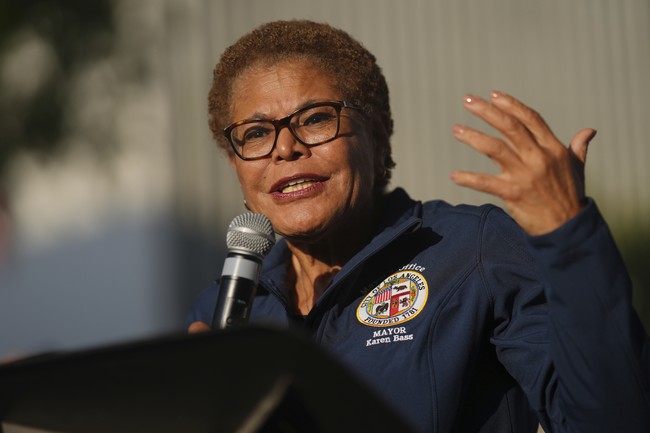
I’ll show how federal forces stepped into Los Angeles’ MacArthur Park, contrast that action with Mayor Karen Bass’ earlier statements and subsequent local attempts at cleanup, relay official quotes and arrest figures, and highlight what this enforcement operation means for public safety in the neighborhood.
Last July, a high-profile immigration sweep at MacArthur Park sparked heated statements from local Democrats insisting the park was safe and should be left alone. Those public reassurances stood in stark contrast to accounts from residents and visitors who described a persistent open-air drug market and deteriorating conditions. The disconnect between rhetoric and reality set the scene for federal involvement months later. City promises to protect families and maintain a welcoming public space didn’t line up with what people on the ground were seeing.
Despite those early defenses, the city quietly approved a multi-million dollar cleanup effort aimed at addressing “ongoing public safety and quality of life challenges” in the park. That approval came after repeated reports of drug dealing and gang presence, yet the cleanup did not reverse the entrenched criminal activity. Even with money allocated and plans announced, the underlying problem of narcotics distribution continued to plague the area. It became clear that local measures alone were not stopping dealers from returning.
Federal law enforcement stepped in with a concerted operation this week to dismantle the open-air drug market and arrest those running it. The takedown targeted both street-level dealers and the suppliers responsible for supplying massive amounts of fentanyl and methamphetamine. Authorities reported 25 arrests in the first 24 hours, with defendants federally charged for possessing and distributing dangerous narcotics. The scope and speed of the operation underscored the federal commitment to tackling supply chains that local efforts had not fully disrupted.
The First Assistant United States Attorney emphasized reclaiming the park for residents and returning the public space to the community. DEA leadership framed the action as both a law enforcement move and a step toward restoring safety and wellness for nearby businesses and neighborhoods. Los Angeles police officials stressed that fentanyl remains an acute threat and promised to remain relentless alongside federal partners. Those statements signaled a sustained, multiagency approach rather than a one-off publicity event.
A DOJ social media post noted that under presidential leadership the federal response is focused on crushing the drug trade and saving lives, citing the recent surge of arrests. The post declared that defendants and any facilitators of the drug scourge will face the full force of federal law. Bill Essayli, First Assistant U.S. Attorney for the Central District of California, highlighted that the park’s top trafficker, a Calabasas resident, is in federal custody and could face life imprisonment. He also warned that other defendants arrested face decades behind bars.
“Today, we begin reclaiming MacArthur Park from criminals and drug addicts to return this public space to the citizens of Los Angeles,” said First Assistant United States Attorney Bill Essayli. “Together with our federal and local law enforcement partners, we are executing multiple arrest and search warrants targeting those who are distributing drugs in and around the park.”
“For far too long, MacArthur Park has been plagued by drug addiction, crime, and despair,” said Anthony Chrysanthis, Special Agent in Charge for the Drug Enforcement Administration’s Los Angeles Field Division. “Today’s operation is only one step, taken by a handful of agencies working hard to alleviate the anguish and sense of hopelessness burdening MacArthur Park, local businesses, and the surrounding neighborhood. While this is a drug enforcement operation, it is also an effort to restore safety and wellness, and to return MacArthur Park back to the community.”
“Today’s operation shows the strength of our partnership with the U.S. Attorney’s Office and the Drug Enforcement Administration,” said Los Angeles Police Chief Jim McDonnell. “We witnessed drug activity return to MacArthur Park, and our teams acted quickly to disrupt both the dealers and the suppliers behind them. Fentanyl remains one of the most dangerous threats to our community, and we are committed to keeping it off our streets. We will remain relentless, alongside our federal partners, in protecting the people of Los Angeles from dangerous drug activity.”
The federal announcement also described coordination with recent takedowns of local gangs linked to the park’s northern area. Investigators said the joint actions demonstrate a determination to fight traffickers who poison communities with fentanyl and other deadly drugs. Arresting suppliers disrupts the flow of narcotics and raises the cost and risk for those who would bring poison into neighborhoods. That change in operational posture signals a willingness to deploy federal resources where local remedies have fallen short.
Public messaging around the operation made clear the administration is framing this as a lifesaving effort, not just crime control. Officials highlighted the potential for long federal sentences for major suppliers to deter large-scale trafficking networks. Local residents and businesses greeted the federal moves as a serious intervention after years of frustration. The arrests show law enforcement can pivot from warnings and cleanups to concrete disruption of supply lines when necessary.
One federal release described the operation as “Operation Free MacArthur Park,” noting the arrests of 25 defendants and emphasizing the focus on large quantities of fentanyl and methamphetamine. The statement reiterated that the park’s top trafficker is in custody and faces possible life imprisonment, while other arrestees face decades in federal prison. It linked the enforcement to broader efforts against gangs and trafficking organizations that claim territory around the park. Putting major suppliers in federal custody is intended to make a lasting difference rather than offer temporary relief.
Operation Free MacArthur Park
Federal agents have taken control of MacArthur Park to execute federal arrest and search warrants targeting the notorious open-air drug market there.
We are going after street dealers and suppliers of massive amounts of fentanyl and methamphetamine. Over the last 24 hours, federal and local law enforcement have started arresting 25 defendants charged in a federal criminal complaint with possessing and distributing dangerous narcotics, including fentanyl and methamphetamine.
The park’s #1 drug trafficker, a Calabasas resident, is in federal custody and faces possible life imprisonment. The other defendants arrested today also face decades in federal prison.
Along with a recent federal and local takedown of the 18th Street gang, which claims the park’s northern area as its so-called “territory,” today’s enforcement action shows that
@TheJusticeDept and @DEAHQ are determined to fight drug traffickers poisoning our citizens.
This enforcement action highlights a broader lesson: when local measures and ceremonial cleanups fail, federal intervention can apply the necessary teeth. Neighborhoods suffering from open-air narcotics markets need sustained, multiagency pressure on suppliers, not just occasional sanitation projects. Residents deserve public spaces free from dealers and fentanyl risk. The recent arrests are a reminder that law and order require follow-through backed by prosecutorial power and coordination.
The federal operation in MacArthur Park did what talk and limited local initiatives could not: it targeted the networks fueling street-level addiction and violent crime. Returning the park to lawful use will need ongoing enforcement and community support, but removing major traffickers is an essential first step. For citizens tired of seeing public spaces overrun by illegal drug sales, this action represents tangible accountability. Federal and local agencies now face the task of keeping the momentum going to prevent the market from reconstituting itself.

She is absolutely Demonic and will suffer for eternity!