
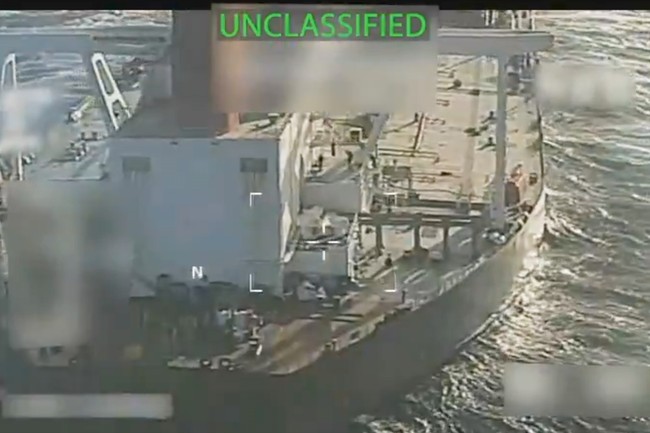
The U.S. seizure of the tanker Skipper has exposed a brazen scheme: the ship was broadcasting false GPS signals while loading millions of barrels of sanctioned Venezuelan and Iranian oil, and U.S. agencies moved in to stop it. Evidence from satellite imagery, on-the-ground photos, and tracking analysis shows a pattern of deliberate deception that undercuts claims of innocent maritime activity. Officials say this vessel played a role in an illicit shipping network tied to hostile foreign actors, and Republicans will view the seizure as a necessary enforcement of American sanctions and maritime security. The case raises practical questions about how to deter the “ghost fleet” tactics that let sanctioned regimes move product and fund bad actors around the globe.
U.S. law enforcement says the tanker was part of an operation that routinely masked its true position by falsifying transponder broadcasts. That kind of GPS spoofing is not harmless; it is a criminal tactic used to hide prohibited shipments, obscure ownership, and evade sanctions aimed at choking off revenue to hostile regimes. From a Republican perspective, enforcing sanctions and disrupting those revenue streams are fundamental tools of national security and economic pressure on adversaries. The Skipper episode demonstrates both the problem and the kind of decisive action that can blunt it.
Investigators matched satellite photos and port images against the vessel’s own reported location and found glaring discrepancies. Those mismatches weren’t minor: imagery showed the ship at Venezuela’s José oil terminal while its transponder claimed it was anchored hundreds of miles away near Guyana and Suriname. Independent trackers also provided on-the-ground photographs documenting cargo operations at Venezuelan facilities, corroborating the satellite analysis. When a vessel uses false signals to hide from the world, it becomes part of what analysts call a dark fleet, and that requires a firm response.
Attorney General Pam Bondi on Wednesday announced that the FBI, Homeland Security Department, and U.S. Coast Guard “executed a seizure warrant for a crude oil tanker used to transport sanctioned oil from Venezuela and Iran.”
Bondi further noted that the tanker “has been sanctioned by the United States due to its involvement in an illicit oil shipping network supporting foreign terrorist organizations.”
The pattern looks systemic: the vessel reportedly carried nearly 13 million barrels of Iranian and Venezuelan oil since 2021, joining a shadowy group of ships that conceal their movements. Analysts say the Skipper moved Iranian crude to China and delivered Iranian oil to Syria in support of the Assad regime, activities that directly funded brutal actors and prolonged conflict. For lawmakers focused on accountability and strength, those are precisely the kinds of transfers sanctions are meant to stop. Letting such trade proceed unchecked means rewarding regimes that threaten U.S. interests and allies.
Tracking firms and reporters pieced together the route and timeline that officials had not publicly detailed, showing the ship loading oil in Venezuela while its location feed claimed otherwise. The routine use of spoofing suggests coordination and technical intent, not accidental error. That makes the vessel more than a shipping anomaly; it looks like a tool in a larger web of illicit trade. Republicans will argue that if we catch one ship, we should be aggressive about catching more and using seized cargo to strengthen U.S. energy security and punish lawbreakers.
A satellite image captured on Nov. 18 shows the tanker docked at the country’s José oil terminal while its transponder showed that it was elsewhere.
The ship’s location was further corroborated by a photograph taken from land as it loaded oil. The image was provided by TankerTrackers.com, a company that monitors global oil shipping.
One practical option on the table is to process and refine seized crude at American facilities, turning an enforcement action into tangible economic benefit. Selling refined products or placing proceeds in escrow for a future legitimate government would punish the illicit actors while supporting American industry and energy workers. That approach also creates a deterrent: if illicit fleets know their cargo can be seized and monetized by the United States, the calculus for running such operations shifts. Republicans favor measures that couple enforcement with economic leverage to advance national interests.
The episode also highlights technological vulnerabilities in maritime tracking systems and the need to harden our detection capabilities. Better satellite monitoring, more public-private coordination with independent trackers, and stepped-up intelligence sharing can reduce the ability of ships to vanish into the dark fleet. The Skipper case offers a playbook: use imagery, boots-on-the-ground photos, and cooperative intelligence to expose spoofing and then act. Doing so sends a clear message: maritime fraud and sanction evasion will be met with coordinated force.
There’s also a legal and political dimension: seizing vessels involved in sanction-busting backs up policy with action. It shows allies and adversaries alike that the United States is serious about enforcing rules that protect regional stability and global markets. Republicans will point to this operation as proof that strong enforcement paired with clear policy objectives yields results. If the United States keeps pressing, the costs for those running illicit oil networks go up.
If more ghost-fleet ships crop up, treating them the same way—interdicting, seizing, and using proceeds lawfully—will keep pressure on those who profit from harmful regimes. The Skipper seizure matters because it exposes a method of evasion and proves the United States can catch and penalize the offenders. For policymakers who favor a robust, results-driven approach, this action is a welcome example of enforcement that advances security and accountability.
Editor’s Note: Thanks to President Trump and his administration’s bold leadership, we are respected on the world stage, and our enemies are being put on notice.


Add comment