
I’ll explain the Alaska Senate contest, describe Mary Peltola’s stance toward outside Democratic help, quote key statements unchanged, assess the political dynamics in Alaska, and note what this means for Senator Dan Sullivan’s reelection chances.
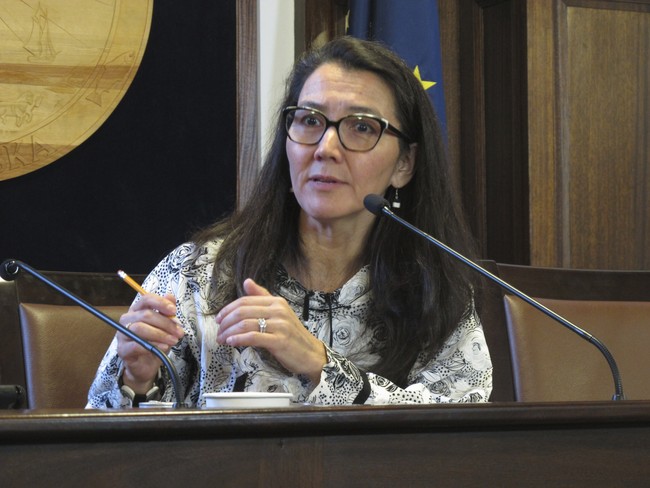
Alaska politics have always had their own flavor, and this race is no exception. Mary Peltola, a Democrat who has won statewide contests before, is running against Republican Senator Dan Sullivan for the U.S. Senate in 2026. What makes this matchup interesting is how Peltola has handled outside support, especially from high-profile national Democrats.
Recently, Peltola pushed back against aid from former Vice President Kamala Harris, signaling a preference for a strictly Alaska-focused campaign. That choice reflects a common calculation here: Alaskans often resent outsiders telling them what to do, and local identity matters in statewide races. Peltola’s campaign framed the message as pride in grassroots Alaskan backing and union endorsements.
Former Vice President and 2024 Democratic Presidential candidate Kamala Harris sent an email to Peltola supporters Wednesday, urging support for Democratic challenger Mary Peltola in the toss-up Alaska U.S. Senate race.
The Peltola campaign says it doesn’t need the help.
“Mary isn’t seeking endorsements from anyone from the Lower 48 – her focus is and always will be Alaska,” a Peltola spokesperson said in a statement. “That’s why she’s proud to have the endorsement of AFGE, the Alaska AFL-CIO, Alaska IBEW Local 1547, and more than 10,000 Alaskans who have signed up to volunteer with the campaign.”
That blockquote contains the campaign’s exact words, and it underlines the point: Peltola is emphasizing local support instead of national celebrity endorsements. From a Republican perspective, that’s smart messaging for Alaskans who value independence and dislike being lectured by coastal elites. It also weakens any narrative that she’s riding a national Democratic machine into Anchorage and beyond.
There’s history here, too. Peltola did not endorse Kamala Harris in 2024, a stance she explained at the time in a way that emphasized working with whoever the president is. The old statement is preserved in public reporting and showed that Peltola prefers a pragmatic, non-ideological posture on the presidential question. That posture now translates into pushing back when a national figure tries to insert herself into the race.
In the 2024 election, Peltola did not endorse Harris.
“Looking at this presidential race, my position is whoever the president is, that is the person that I am interested in working with to help Alaska move forward,” Peltola said July 23, 2024, according to Alaska Public Media reporting. “Whether that president is Donald Trump, or if that president happens to be Kamala Harris … there will be a lot of common ground. There will be a lot of things that we collectively agree on.”
Republican commentators will note that national Democrats struggle in Alaska because of issues like Second Amendment rights and energy policy. Even many Democrats in the state tread carefully around gun policy, because local voters take those rights seriously. Peltola’s avoidance of a flashy national alignment helps her avoid alienating voters who might otherwise defect over cultural or policy questions.
Senator Sullivan’s campaign has used Harris’s outreach to underscore its point that Peltola is aligned with national Democrats on key issues. The Sullivan team argues that the Biden administration’s policies hurt Alaska, and they contend that Peltola and Harris share a team that is out of step with local priorities. That line of attack aims to remind voters of the differences on Arctic energy, fishing, and resource access.
The Sullivan campaign called Harris’s message a union between the two.
“Kamala Harris supported the Biden administration’s disastrous anti-Alaska agenda, which is why Alaskans rejected her by double digits,” Sullivan spokesperson Nate Adams said in a statement. “Alaskans can see exactly whose team Mary Peltola and Kamala Harris are on, and it isn’t Alaska’s.”
Political memory matters in Alaska; voters recall past battles over federal land use, fisheries, and Arctic policy. Republicans argue that Sullivan’s record shows he defends those local interests better than a Democrat tied to national priorities. That argument is likely to resonate with rural voters and many independents who prioritize jobs tied to natural resources.
Beyond policy, personality and presence matter in Alaska. Critics of Peltola argue she was a low-profile representative while serving in Washington, and that perception is now used against her in the campaign. Republicans point to local candidates who stay engaged with communities and contrast them with opponents perceived as distant or inactive.
For now, the race looks competitive but tilted toward incumbents who can claim steady support on local issues. Peltola’s decision to decline outside endorsements is a tactical move meant to maintain Alaskan credibility, but it also removes a certain kind of outside energy and fundraising. That trade-off may define how close this contest becomes before voters head to the polls.

Home-based job that pays more than 12,000 Dollar per month by doing simple tasks on a laptop or mobile device part-time. Last month, I earned 24,863 Dollar from this job by working 4 hours per day online. Very simple jobs to do, and the earnings are insane. Everyone can now make more money online by joining the website listed below…..
𝒋𝒖𝒔𝒕 𝒖𝒔𝒊𝒏𝒈 𝒕𝒉𝒊𝒔 𝒔𝒊𝒕𝒆.. Www.PayAtHome1.Com