
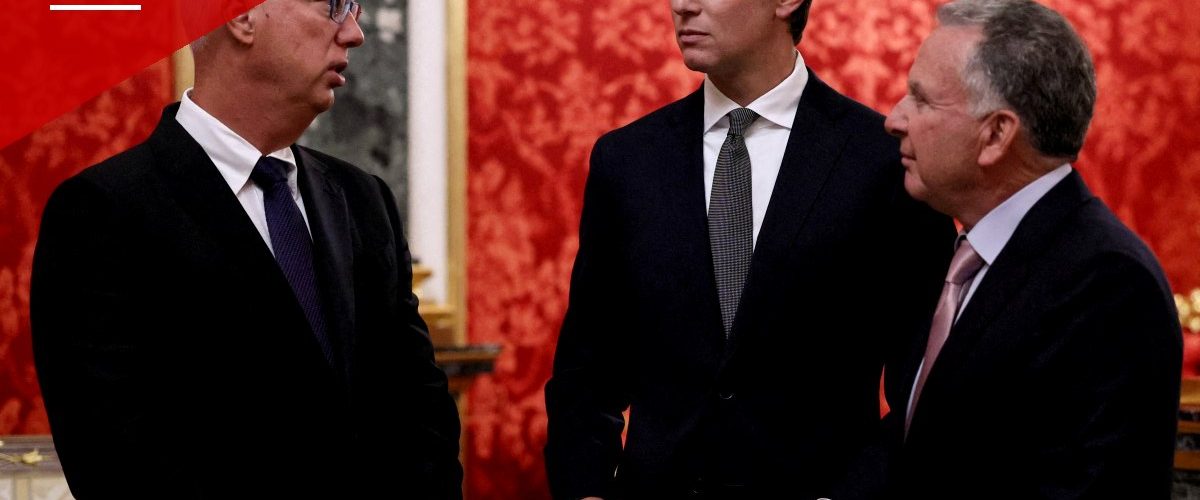
Senior Russian and American officials, including White House Special Envoy Jared Kushner, have discussed bringing a US investor into the Nord Stream gas pipelines that once carried Russian gas to Germany, according to five people with knowledge of the matter cited by Reuters.
The talks reportedly involved Kirill Dmitriev, a close adviser to Russian President Vladimir Putin, and Kushner, President Trump’s son-in-law, who has been working to broker a ceasefire between Russia and Ukraine. Kushner has framed commercial deals as a path to ending the war, arguing that US investors stand to profit from European energy flows once the conflict concludes.
Dmitriev and Kushner have met in both Moscow and New York in recent weeks. Two sources told Reuters that while it is unclear how much Nord Stream came up in those specific meetings, the pipelines remain part of the broader agenda.
A White House official, asked about the discussions, said any agreement would have to be negotiated between Russia and the US International Development Finance Corporation and Treasury Department, and “must benefit United States taxpayers and companies.” The official added there had been “no Nord Stream discussions recently.”
Dmitriev, who has pushed for a resumption of Russian gas sales to Germany, met last month with US Energy and Treasury Department representatives to discuss potential energy initiatives between the two countries.
Sanctions Remain a Major Obstacle
Any restart faces significant legal barriers. The Nord Stream pipelines are currently sanctioned by both the US and the European Union, which makes reopening them illegal under current law. President Trump could waive or soften those sanctions, but a Democratic takeover of Congress in next month’s midterms would make that harder to accomplish.
A US official told Reuters that given these obstacles, a deal is unlikely in the medium term.
Germany and its European allies, who have poured billions of euros into rebuilding their militaries to counter Russia, would strongly resist any reopening of the pipelines. A spokeswoman for Germany’s economy and energy ministry said Nord Stream gas remains sanctioned in Europe, that Germany has already found alternative supplies, and that any reopening would require government approval it does not intend to give.
Before Russia’s February 2022 invasion of Ukraine, Germany sourced more than half its gas from Russia through the two Nord Stream lines. The pipelines were mothballed after Moscow cut supply to Europe, then destroyed in underwater explosions in September 2022.
Deep Mistrust Shadows the Talks
The discussions come amid sharp European suspicion of Moscow’s intentions. Earlier this year, the heads of five European intelligence agencies told Reuters that Russia does not actually want a quick end to the war and is instead using talks with Washington to extract business concessions.
German-Russian relations are especially strained. Berlin, among the largest suppliers of military aid to Ukraine, has accused Russia of waging a sustained campaign of hybrid attacks against it.
Some German lawmakers warn that any such business arrangement would strengthen Moscow’s hand even as it continues the war.
“This threatens to be a dirty deal that will cost Europe dearly,” said Michael Kellner, a German lawmaker who oversaw energy policy in the aftermath of the invasion. “Americans and Russians will share the profits.”
Germany’s governing coalition opposes restarting the pipeline, but Alternative for Germany (AfD), now the country’s most popular party, supports it. Dmitriev is expected to meet with AfD leadership early next year to discuss resuming Russian gas sales.
Ownership Complications
Selling a stake in the pipeline company to a US investor, or restarting gas flows, faces structural hurdles. The company is 51% owned by Russian state energy giant Gazprom, with the remaining 49% split among two German entities, a French firm and a Dutch firm. The German shareholders reportedly want to retain their stakes to preserve German influence if Gazprom ever sells its share.
Days after the Moscow meetings, Kushner told audiences in Kyiv he had spoken with European counterparts about how the war had driven up energy prices, pitching “prosperity agreements” meant to encourage peace by giving “leaders something to look forward to.”
Any gas deal would likely please the Kremlin but divide opinion across Europe. German public sentiment is already split on buying Russian energy, and Poland and the Baltic states, which are especially exposed to Russian pressure, reject any renewed energy ties. One person familiar with Warsaw’s thinking said Poland’s leadership is watching the discussions closely but remains firmly opposed.
A Separate Lukoil Deal
Kushner and Dmitriev have also discussed selling a portfolio of assets owned by Russian energy company Lukoil, including oil refineries and gas stations across Europe and beyond, according to two other people familiar with the matter. Under that plan, a consortium led by the DFC alongside investors from Qatar and the United Arab Emirates would purchase the assets while US authorities lift sanctions on them.
“On Lukoil, Steve (Witkoff) and Jared (Kushner) worked with DFC to negotiate a substantial upfront payment and profits interest for the United States,” a White House official said.
Lukoil and Gazprom did not respond to requests for comment.



Home-based job that pays more than 12,000 Dollar per month by doing simple tasks on a laptop or mobile device part-time. Last month, I earned 24,863 Dollar from this job by working 4 hours per day online. Very simple jobs to do, and the earnings are insane. Everyone can now make more money online by joining the website listed below…..
𝒋𝒖𝒔𝒕 𝒖𝒔𝒊𝒏𝒈 𝒕𝒉𝒊𝒔 𝒔𝒊𝒕𝒆.. Www.PayAtHome1.Com