
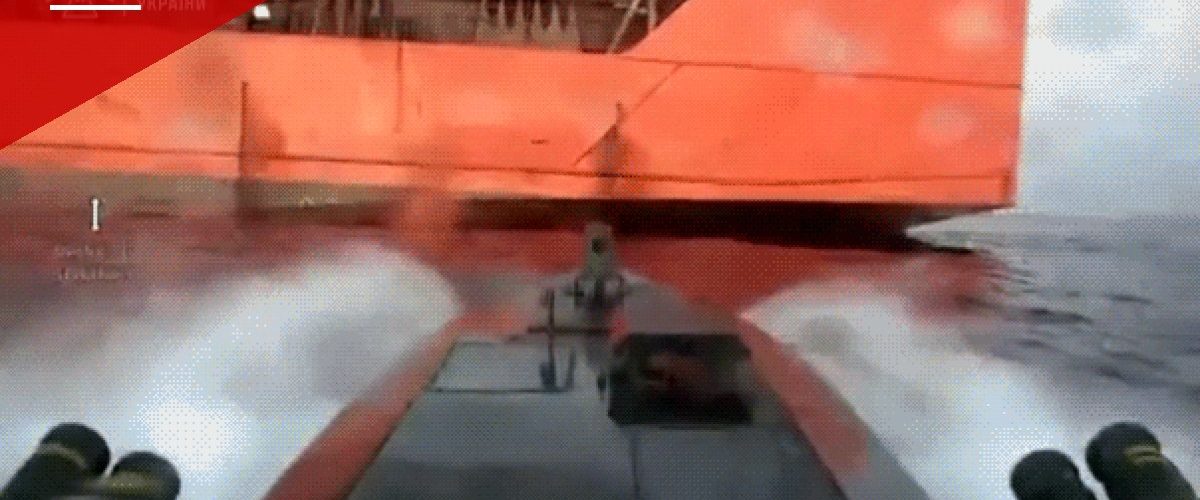
A Russian naval corvette was sunk at a naval base in Benghazi, Libya, in a drone strike that Ukrainian President Volodymyr Zelenskyy says his forces carried out as part of an expanding campaign against Moscow’s military assets far beyond the Black Sea.
Zelenskyy announced the operation early Monday in a post on X, calling it “an exemplary Ukrainian operation in response to Russia’s war.” He said he received detailed briefings on the strike’s progress over two days and confirmed the targets were achieved.
“We continue our operations in designated waters. We are responding to Russia’s aggression. We are developing Ukraine weapons. Glory to Ukraine!”
According to Zelenskyy, Ukrainian forces deployed seven domestically produced naval drones in the strike. The Russian corvette Merkury, commissioned in 2023, was sunk despite what he described as the enemy’s efforts to counter the attack. A Ka-27 combat helicopter aboard was also destroyed. A second target, the Russian dry cargo vessel MV ANGARA, which Ukraine says Russia used to move weapons, was also hit.
Zelenskyy thanked “the warriors of the Security Service of Ukraine and all our Defense Forces of Ukraine who took part in carrying out these tasks.”
Why Benghazi
The strike hit the Merkury while it was docked at Benghazi’s naval base, located in eastern Libya under the control of military commander Khalifa Haftar, whose Libyan National Army has maintained ties with Moscow. The Institute for the Study of War reported the Merkury had been stationed at Benghazi for several days under a cooperation agreement, refueling and resupplying while escorting Russian cargo ships capable of carrying military supplies back to Russia.
Osama Hamad, prime minister of Libya’s eastern-based government, said he has asked the United Nations to investigate “suspicions that the boats had been launched from western Libya” and to determine whether Ukrainian military personnel are operating there. Western Libya is governed by the internationally recognized Government of National Unity in Tripoli, which did not immediately respond to requests for comment.
A widening theater
The Benghazi strike follows other recent incidents in which Ukraine has taken its fight against Russian military assets well outside its own borders, including a separate episode in the Baltic Sea involving the vessel Sparta II, which drifted into Finnish waters before catching fire. Kremlin spokesman Dmitry Peskov described that incident as part of a “dangerous trend of increasing terrorist activity” and called on regional governments to warn Kyiv against such operations.
These operations come as U.S.-backed peace talks between Moscow and Kyiv resumed this month following a nine-month pause. The central sticking point remains Russia’s push to annex occupied Ukrainian territory in the Zaporizhzhia and Kherson regions, which would form a land corridor connecting Russia to Crimea and the Black Sea, in exchange for security guarantees for Ukraine. Zelenskyy has signaled he will not concede that land bridge to Vladimir Putin.
Ukraine also recently struck the Crimean Bridge, timing the attack as President Donald Trump prepared to meet with Putin and China’s Xi Jinping. That summit ultimately produced no movement toward a settlement.
Mykola Bielieskov of the National Institute for Strategic Studies in Kyiv told Reuters the strikes reflect a strategy of “horizontal escalation,” as neither side has been able to force the other’s hand on the battlefield alone.
“Since neither side is able to compel the other to accept terms of settlement through the battlefield only, both try to find new ways to pressure each other.”



Add comment