
The United Kingdom has sharply increased the number of people granted asylum, and that shift is stirring deep concern among conservatives who see it as a policy failure with long-term consequences for social cohesion, security, and political accountability.
The rise in asylum grants is striking: official figures show a jump of more than a third in people granted refuge or permission to stay over a single year. That increase follows already high arrival totals, including tens of thousands crossing by small boat and other clandestine routes. For many on the right, the numbers point to a government that has lost control of its borders and its duty to citizens.
Some commentators put the situation in dramatic terms. “The UK’s government is now doing what Napoleon and Hitler never managed: carrying out a successful invasion of the British Isles.” That language captures the alarm felt by those who view the policy as inviting social strain and cultural displacement. The same reporting noted the Home Office decisions and the overall surge in permissions to stay.
Behind the headlines are real patterns: Eritreans, Sudanese, and Iranians rank among the largest groups receiving initial asylum decisions. The government’s official tallies cover initial grants and do not include successful appeals, which are piled up in a backlog of immigration court cases. That backlog itself complicates any straightforward accounting of how many people will ultimately be allowed to remain.
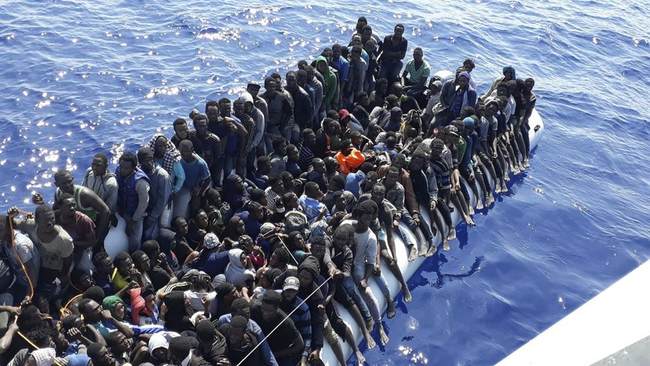
Illegal arrivals were also high in the most recent year, with nearly 46,500 people entering the country without authorization, an increase on the prior year. Most of those were recorded as crossing the Channel by small boat, while others used concealed methods like hiding in vehicles. For conservatives, those statistics are evidence that enforcement and deterrence are both failing.
So the central question for policymakers is blunt: why are these people not being turned around and returned? From a Republican perspective, the answer is a combination of weak enforcement, legal loopholes, and political choices that prioritize access over orderly immigration control. That mix produces a policy that looks less like asylum processing and more like open-door migration without meaningful safeguards.
Political reaction in Britain has included voices trying to rally voters and force tougher measures. Parties outside the governing coalition are pressing for stricter controls and for restoring border integrity. Those efforts reflect a recognition that immigration policy, if mismanaged, becomes an electoral issue as well as a governance one.
Comparisons to U.S. politics are inevitable. Conservatives warn that similar policies at home would have the same effects: overwhelmed systems, backlogs, and communities struggling to absorb rapid demographic shifts. The contrast between a nation that enforces orderly entry and one that allows chaotic flows matters to public safety, social services, and political trust.
Critics on the left frame the debate as one of compassion, arguing for humane treatment and expanded protection. Conservatives accept the need for compassion but insist that humane policy must go hand in hand with control, clear rules, and effective return mechanisms. Without those, compassion can be exploited and the public interest can be sidelined.
The practical consequences are not abstract. Rapid growth in asylum grants strains housing, schools, and health systems already operating near capacity. Local communities face fiscal pressures when central planning fails to match arrivals to resources. That mismatch fuels resentment and undermines social solidarity—the very bonds conservatives say good policy should protect.
Legal and operational fixes exist: faster adjudication, tighter enforcement of existing removal orders, bilateral agreements to return migrants to safe third countries, and clear penalties for illegal entry. Each of these measures reinforces the same principle—sovereignty requires enforceable borders. Conservatives argue that failing to act now makes later correction far harder and more costly.
Political messaging matters too. Voters care about both values and results, and they expect leaders to deliver security and order. If Britain becomes an object lesson in what happens when enforcement yields to permissiveness, it will be a cautionary tale for conservatives campaigning at home. The stakes are the integrity of institutions and the trust of citizens.
The debate will keep playing out in parliaments, courts, and streets, but the data are plain: the number of granted asylum claims has risen sharply, arrivals remain high, and the system is under strain. Republicans say the right response is clear—restore control, streamline decisions, and ensure returns are real—so that compassion does not come at the expense of national cohesion.



Add comment