
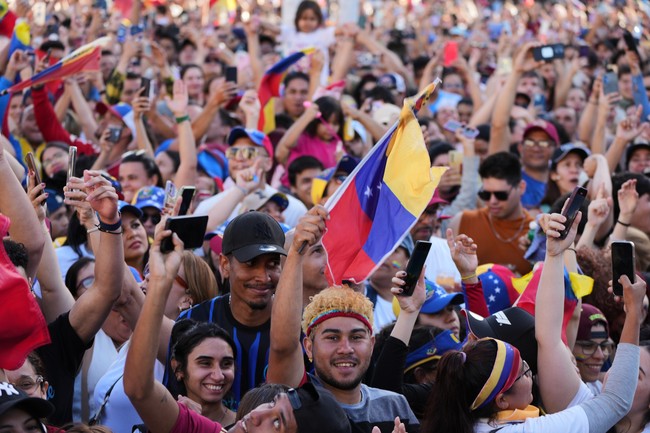
The United States and Venezuela have agreed to restore diplomatic and consular relations, a development signaling a shift in Caracas and a potential opening for stabilization, economic recovery, and a pathway toward elections under an interim government that follows the recent capture of Nicolás Maduro.
The first public hint of the deal came via a White House correspondent and was quickly followed by official statements confirming renewed engagement. This represents a major diplomatic movement after months of upheaval in Venezuela, and it could reshape how the U.S. interacts with the interim authorities now running the country. The announcement focuses on promoting stability and creating conditions for political progress.
At the heart of the U.S. messaging is a clear emphasis on a phased approach: help stabilize the economy, support reconciliation, and encourage processes that could lead to elections. The State Department framed the move as a way to “promote stability, support economic recovery, and advance political reconciliation in Venezuela.” That language repeats the administration’s intent to use diplomacy to shape outcomes without immediately endorsing any permanent political settlement.
The United States and interim authorities in Venezuela have agreed to re-establish diplomatic and consular relations, the U.S. State Department said in a statement on Thursday, adding that it was focused on creating conditions for a peaceful transition to a democratically elected government.
Notably, the statement includes the phrase “peaceful transition to a democratically elected government,” which is the clearest reference so far to elections as the desired end state. There is no timeline attached, and Venezuela’s constitutional mechanics are complicated by the presence of an interim president, Delcy Rodríguez, who was vice president under Maduro and was sworn in after his capture. That complicates any simple trigger for new nationwide elections.
The immediate priority from the U.S. perspective appears to be stabilization rather than an instant electoral calendar. Stabilization means reestablishing diplomatic channels, monitoring political developments closely, and nudging economic recovery through diplomatic pressure and potential engagement. Reopening formal lines of communication also gives the United States leverage and visibility into how the interim government conducts itself.
“This step will facilitate our joint efforts to promote stability, support economic recovery, and advance political reconciliation in Venezuela,” the State Department said.
“Our engagement is focused on helping the Venezuelan people move forward through a phased process that creates the conditions for a peaceful transition to a democratically elected government.”
After months of heightened tensions, the U.S. captured Venezuela’s President Nicolas Maduro in January, setting off a chain of changes in the country, including the swearing-in of interim President Delcy Rodriguez.
The two countries have since gradually resumed bilateral relations.
Resumption of bilateral relations suggests practical steps could follow, such as consular services and possibly embassy reopening, though those moves will depend on how the interim government behaves and the pace of internal reforms. Critics will understandably be wary because Delcy Rodríguez has close ties to the previous Maduro regime, and many key offices still likely hold officials loyal to the old order. Those loyalists could try to entrench power if given the opportunity.
Still, restoring diplomacy signals the United States wants to be present and influential on the ground as Venezuela navigates this transition. U.S. presence can deter backsliding, spotlight human rights and rule-of-law concerns, and support political actors pushing for genuine democratic reform. It also permits closer monitoring of detainees, economic policy, and security arrangements that affect the broader hemisphere.
Another factor adding pressure inside Venezuela is the planned return of opposition figures who have been in exile, including prominent leaders determined to contest power and press for democratic restoration. Their reappearance raises the stakes for the interim government and could catalyze domestic momentum for free elections. External diplomatic engagement in this context increases both scrutiny and opportunity.
From a Republican viewpoint, strong U.S. leadership here is essential: diplomacy combined with resolve can press for accountability while protecting U.S. interests in the region. The goal should be clear—support Venezuelans seeking restoration of democratic governance while keeping a sharp eye on any attempts to consolidate authoritarian control. This restoration of relations is a lever toward that end, not the end itself.
Editor’s Note: Thanks to President Trump and his administration’s bold leadership, we are respected on the world stage, and our enemies are being put on notice.

Add comment