

The country has been roiled by two weeks of mass protests that show no sign of fading, and international reactions are sharpening as leaders signal consequences. Reports suggest shifts in intelligence assessments about the regime’s stability, while voices in Washington emphasize the seriousness of potential responses. This article walks through the protests’ spread, public acts of defiance, political reactions, and the wider strategic picture emerging around the crisis. Embedded footage and sourced clips offer on-the-ground context where they appear.
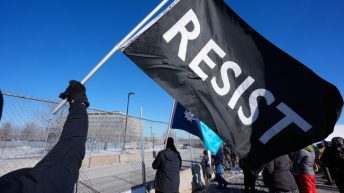
The unrest in Iran has broadened rapidly and morphed into sustained nationwide resistance, with crowds now confronting symbols of state power. Demonstrators have targeted government-associated buildings and infrastructure in several cities, and scenes of open defiance are appearing across regions that once seemed unlikely to rise. The movement’s reach and persistence have surprised many observers and undercut the idea that the demonstrations could be contained quickly.
President Donald Trump has issued blunt warnings to the Iranian leadership, saying that if the regime resorts to killing protesters, it will be hit “very hard.” He clarified that such pressure does not necessarily mean boots on the ground, and said actions would focus on hitting Tehran “where it hurts.” The president characterized the uprisings as people “taking over cities” that surprised many with their scale and boldness.
The administration’s tone is meant to deter lethal crackdowns and to reassure dissidents that their plight is being watched internationally. Trump has suggested striking strategic targets like nuclear facilities if the regime commits grievous abuses, signaling a willingness to use force short of full-scale occupation. Recent high-profile operations elsewhere, such as the seizure of a hostile dictator, have been presented as evidence that Washington can and will act where necessary.
Retired General Jack Keane made a stark assessment on television, arguing that Tehran should take the president seriously given recent U.S. actions and rhetoric. Keane said he had “no insight into what they’re thinking, but I’m listening to what they are saying. And he’s dead serious.” He warned that anyone ignoring that message would be “reckless and irresponsible.”
“I think I would take the president serious,” he replied. “I have no insight into what they’re thinking, but I’m listening to what they are saying. And he’s dead serious.”
“Anybody at this point that doesn’t take President Trump serious when he’s saying something like this, given the last year, is certainly reckless and irresponsible,” he stressed.
Keane also painted a bleak picture of the regime’s position, saying Iran is at its weakest point in decades and faces deep political, economic, and military strains. “Politically, [the Iranian regime] can’t meet the social and political and economic aspirations of the people. Economically, they’re in the tank, to be sure, and with no prospect of recovering,” he said. He noted military setbacks and the erosion of proxy networks as compounding the regime’s vulnerabilities.
“Politically, [the Iranian regime] can’t meet the social and political and economic aspirations of the people. Economically, they’re in the tank, to be sure, and with no prospect of recovering,” Keane added.
“And, militarily, they just lost a war. They’ve lost their platform in Syria. Their proxies are, by and large, decapitated and almost eliminated, to be sure,” he added. “The result of all of that is they are in a fundamentally weak position, and it’s serious in terms of the regime.”
On the ground, bravery is visible in ordinary acts of protest: people are defying curfews and risking harsh penalties to make their voices heard. Reports mention symbolic gestures like burning images of leaders and flouting strict social rules, acts that carry heavy personal risk in a repressive state. Those symbolic acts have a political resonance far beyond their immediate locales, encouraging others to join in.
The regime has responded with threats, arrests, and internet shutdowns aimed at choking off coordination and information flow, but those tactics have not fully stopped the spread of dissent. Authorities claim they have detained armed rioters and warned of severe penalties, including capital punishment for certain offenses linked to unrest. Human rights groups and independent monitors report scores of casualties, including protesters and security personnel, with children among the victims in some accounts.
Despite repression, demonstrations continue, and new images and videos keep emerging that underscore public determination. The willingness of citizens to risk detention and worse to challenge state power suggests a political moment that is difficult to reverse through force alone. Each new act of defiance adds momentum and raises the political stakes for Tehran.
Outside the country, regional intelligence assessments appear to be shifting as officials re-evaluate how fragile the regime may be. Reports from allied services indicate a reassessment of the regime’s resilience, with some analysts now suggesting collapse could be possible under sustained pressure. Official militaries and foreign ministries have been characteristically cautious in public statements, but some silence or refusal to comment has itself been interpreted as meaningful by analysts.
Information controls and propaganda battles are playing out alongside street action, and social media remains a critical source for eyewitness accounts despite periodic shutdowns. Embedded clips and curated footage provide snapshots that help shape international perceptions and policy discussions. As the situation evolves, outside actors will weigh options between diplomatic pressure, sanctions, targeted strikes, and other measures that stop short of occupation.
The political and military calculus is fluid, and global attention will influence how events unfold. For now, the protests continue to define the narrative, and those watching closely are noting how bold public defiance combined with international pressure could force real change. Embedded material here offers further direct views of the unrest and reactions that are shaping this uncertain moment.

Add comment