
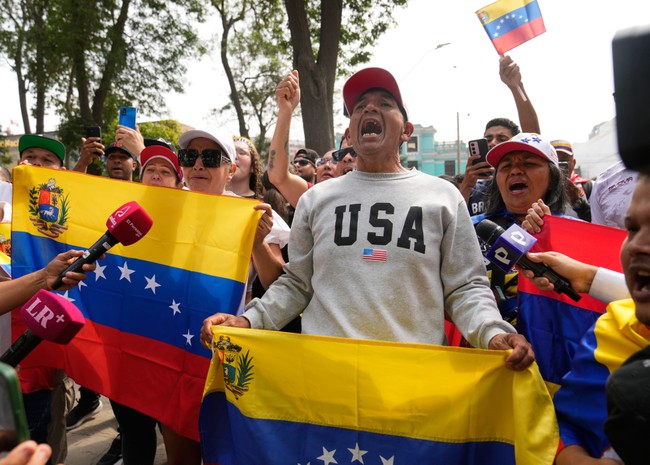
The arrest of Nicolás Maduro by U.S. forces has shifted the conversation from punditry to national security, and this piece examines why removing an illegitimate ruler in Caracas matters for American safety, how Venezuelans and the diaspora see the move, and why it could spark a regional thaw similar to historic democratic shifts elsewhere.
The mainstream media raced to label the operation with familiar headlines: overreach, oil grabs, and constitutional questions. Those takes fell flat as independent outlets and Venezuelan voices poured in, offering a sharper view of what was at stake for Venezuela and the United States. Public reaction from Venezuelan nationals and the diaspora reframed the event as a defensive, strategic action rather than a reckless assault.
One Venezuelan speaker put the point bluntly and directly: “This is a message for my American friends watching the news today in English. There is a serious inaccuracy in the coverage. Venezuela is not undergoing a regime change. Venezuela already has a democratically elected president. Edmundo González. He is the president. Nicolás Maduro is not the president. He never was. He stole the last election and led a criminal organization linked to terrorism and drug trafficking. El Cartel de Los Solis. And today, thanks to the vision and courage of the Secretary of State Marco Rubio, the decisive leadership of President Donald Trump, and the actions of Secretary of War Pete Hegseth, the United States has finally recognized a fundamental truth: Protecting our hemisphere from terrorism, drug cartels, and authoritarian ideologies is a matter of national security for the United States.” That testimony challenges the lazy narrative that the operation equaled imperial meddling.
For years Washington fiddled while criminal networks and foreign adversaries used Caracas as a base of operations. The arrest severs a hub used for drug trafficking, terror links, and money laundering in ways that long-term diplomatic statements never managed. Maduro’s removal is framed as cutting a logistical and financial lifeline that benefited Iran and other adversaries.
The operation also reopened the national debate about American strategic priorities. Conservatives have argued for a return to practical, results-driven foreign policy that defends borders and counters transnational crime. This view holds that decisive action in the hemisphere not only protects allies but directly defends American streets from fentanyl, cartel networks, and terrorist logistics.
The history of U.S. drug and crime policy shows a pattern of half-measures that left communities hollowed out while traffickers adapted and prospered. From the cracks of the 1980s to the fentanyl wave now, policy failures allowed illicit flows to metastasize. The new operation is presented as an attempt to change course, not as some grandiose land grab.
Venezuelan journalist Mariana Atencio reinforced that this arrest is not a classic regime-change script or a crude grab for oil. She said, “This is about us as a nation wanting to come back to the fold of Western democratic nations and to the values that those nations represent, and I believe it is in the interest of the United States and every single American citizen to want that as well. We have tried by every means necessary, including democratic means to get rid of this regime.” Her words suggest the act was aimed at reestablishing democratic norms and regional stability instead of exploitation.
Atencio warned that Maduro’s model of repression and corruption had begun to influence neighboring governments, contributing to instability in Colombia, Mexico, Peru, and beyond. The possibility of a domino effect looms: taking out a central authoritarian figure could break networks of corruption and restore competitive politics across the region. That’s why some in Washington see the move as a strategic investment in a safer hemisphere.
Beyond immediate security benefits, the operation sent a message to foreign patrons who used Venezuela as a sanctuary and a cash conduit. One analyst noted that Iranian drone factories inside Venezuela and complex laundering schemes tied the country to Tehran in dangerous ways. Cutting that relationship complicates adversaries’ plans and raises the political cost of supporting despots who shelter transnational crime.
U.S. lawmakers underscored the criminality tied to Maduro, with commentary stressing his indictment on drug trafficking and narco-terrorism charges. The argument is straightforward: leaders who run or permit drug networks are not just foreign problems, they are threats to American communities. Holding such figures accountable is framed not as politics but as law enforcement and national defense.
Critics will keep calling this operation provocative, while supporters will point to concrete outcomes for security and humanitarian relief. The voices from Venezuela itself—opposition figures, journalists, and everyday citizens—have been blunt about what they want: an end to extortion, a return to normal civic life, and a break from patrons who profit from misery. For a Republican-leaning conservative perspective, decisive action to dismantle criminal regimes in the hemisphere is consistent with protecting American families and restoring order abroad.
How the interim Venezuelan authorities respond matters. They now face a choice between reverting to old trafficking networks or rebuilding state institutions and rejoining the democratic world. The stakes are clear: if the new direction holds, the region could begin a recovery that mirrors other moments when authoritarian cracks opened and democratic reform followed.
Events are still unfolding, and the ultimate outcome will depend on policy follow-through, regional cooperation, and whether the interim government resists old temptations. For now, supporters see the operation as a decisive step toward securing both Venezuelan lives and American national interests.
Add comment