
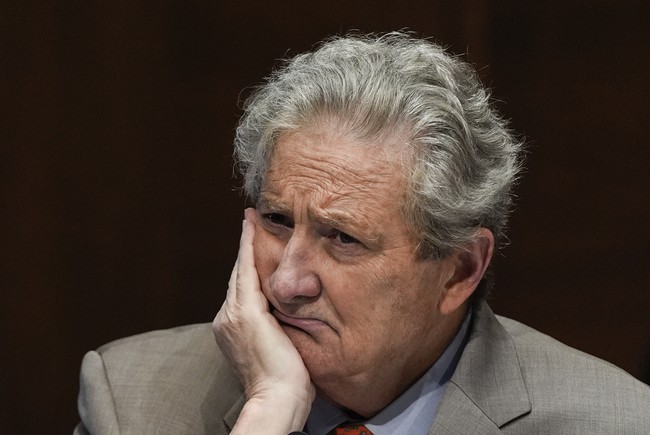
Sen. John Kennedy tore into Kristi Noem over a $220 million DHS ad campaign, highlighted conflicting accounts with President Trump, and detailed how that dispute helped prompt her removal and reassignment while emphasizing the need to keep focusing on border security and deportations.
Kristi Noem’s stint as head of DHS ended after contentious testimony about a pricey ad campaign she approved. The ads drew criticism for appearing political and prominently featuring her, which raised questions about waste and misuse of taxpayer money. Senators pressed on why a state-focused political figure would be front and center on federally funded messaging.
Sen. John Kennedy led the questioning, using plain, sharp language that landed. He framed the debate around stewardship of taxpayer dollars and whether the ads crossed the line into political promotion. Kennedy said the ads looked like campaign material, and he made the point that taxpayers deserve accountability when hundreds of millions are spent.
Kennedy also recounted a phone call with President Trump shortly after the House hearing that he says sealed Noem’s fate. He relayed the president’s insistence that he had no role in approving the ad campaign, and how Trump reacted angrily to the news. That private reaction, Kennedy suggested, made it clear to him that change at DHS was coming.
“He said, ‘Kennedy, I hope you understand that I had nothing to do with this’.
I said I do believe you, Mr. President. He was not happy. It was clear to me after that conversation that the secretary’s time at the department was limited. To be blunt, she was dead as fried chicken.”
After the exchange, President Trump moved quickly, shifting Noem into a special envoy role for “The Shield of Americas” coalition and naming Sen. Markwayne Mullin as her replacement at DHS. The reshuffle avoided a prolonged battle and aimed to keep leadership focused on the department’s core functions. It also sent a message that political optics and stewardship matter within the administration.
Kennedy thanked Noem for specific achievements, noting her work on securing the border and deportations. At the same time, he stressed that leaders must be held responsible when decisions look political or raise contract concerns. The balance is simple: recognize accomplishment but demand proper use of funds and transparency about contract awards.
From a Republican perspective, this episode underscores a broader principle: conservatives can and should hold their own accountable to preserve public trust. When money is spent, taxpayers deserve answers, and when leadership choices create confusion about priorities, those choices should be corrected. That approach protects both conservative policy goals and public confidence in government.
The focus now returns to hot-button items like deportations and border security, where Republicans argue real action matters more than headlines. Kennedy and others argue that DHS must continue to execute migrations operations and removals without being hamstrung by partisan theater. They maintain that threats from abroad and border vulnerabilities require steady, competent leadership at DHS.
Critics on the left, Kennedy suggested, are using congressional maneuvers and funding fights to block effective enforcement and distract from national security priorities. He warned that such tactics have consequences beyond immigration agencies, potentially undermining broader security work at a critical time. Republicans see a need to push forward on enforcement while guarding against political missteps inside the department.
Financially, ICE and related operations retain resources from recent conservative-backed legislation, which supporters say has helped bolster enforcement. Kennedy pointed to progress made under Noem compared to the administrations of Joe Biden and Barack Obama, claiming steeper enforcement and more removals. The expectation is that Mullin will continue to prioritize deportations and fortify border protections.
Finally, leadership changes like this are framed by Republicans as an example of course-correction rather than chaos. When issues arise, a president willing to act sends a signal that results matter above personalities. The priority remains a secure border, effective deportation processes, and making sure federal dollars are used for public safety rather than political promotion.

Add comment