
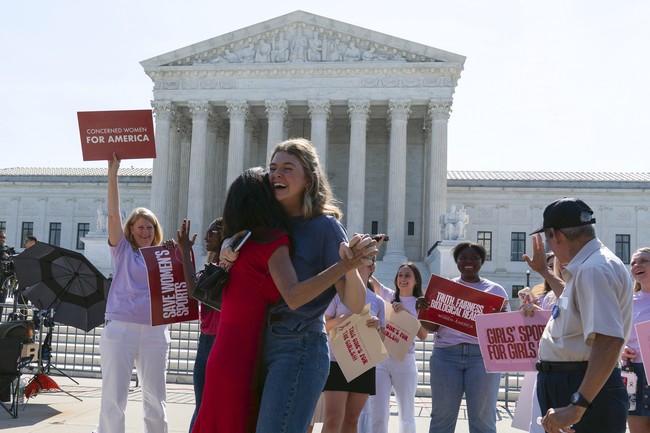
The Supreme Court’s rulings in Little v. Hecox and West Virginia v. B.P.J. defend the basic idea that girls’ and women’s sports should be for biological females, and that decision matters more for everyday girls than the headline about birthright citizenship. This piece explains why the sports rulings are a lasting victory for fairness and safety, how advocates and affected athletes reacted, and why lawmakers still have work to do to lock in protections. It highlights key quotes from the Court and from advocates while centering the voices of girls who faced real harms. The takeaway is that protecting sex-based sports categories will shape youth athletics and Title IX enforcement for years to come.
The ruling recognizes inherent physical differences between males and females and hands states the authority to protect female-only athletic competitions. Justice Brett Kavanaugh wrote: “The Court concludes that separate sports teams for biological males and biological females are reasonable given the inherent physical differences between the sexes. In assessing the reasonableness of the regulations, the Court must recognize the distinctiveness of competitive sports—and the safety and competitive fairness issues that can arise when females are forced to compete against males. In recent years, 27 States and various sports-governing bodies have all drawn the same line.” That language restores clarity to Title IX’s purpose: equitable opportunities for women and girls in sports.
From a Republican perspective, this outcome is common sense backed by law. The alternative—letting gender identity override biological sex in competitive athletics—would undermine decades of progress for female athletes. The Court’s decision prevents the immediate domino effect of chaos many warned about, where advantages rooted in biology could erase competitive equity, threaten safety, and strip scholarships and podiums from women who trained for years on a level playing field.
Advocates and organizations who filed briefs and brought attention to the cases hailed the decision as a defense of women’s rights and safety, with some noting horrific specific incidents that drove the urgency. One brief quoted in the coverage stated: “It is not discrimination to keep males out of female athletics to ensure a fair and safe competitive playing field for women and girls—the very people Title IX was enacted to protect.” That argument reframes the debate away from ideology and toward the concrete protections Title IX intended.
The human stories put a face on the legal stakes. Athletes like Riley Gaines, Paula Scanlan, Mary Kate Marshall, Ella Frei, and Payton McNabb shared experiences where competing against biological males changed outcomes, jeopardized safety, or cost opportunities. These testimonials are not abstract; they are accounts of lost scholarships, bruised bodies, and emotional trauma that rally public support for sex-based sports categories. The Court’s ruling acknowledges those harms and gives states tools to prevent them.
https://x.com/JesusOseteDOJ/status/2071958238346596669
Some defendants in these cases presented stark examples: dominance in events, championship wins, and locker-room incidents that amplified concerns about fairness and safety. Kristen Waggoner commented on behalf of advocacy groups, saying, “This is a victory for every girl who refused to stay quiet in the face of injustice. Men cannot be women, and no drug erases the male athletic advantage. I’m grateful to Attorneys General Raúl Labrador and JB McCuskey and our clients for their courage.” Those words underscore a central claim of the ruling: biology matters for competitive sports.
Legal scholars and conservative commentators welcomed Justice Gorsuch’s concurrence that emphasized interpreting statutory terms by their original meaning. As noted in coverage, Gorsuch observed, “We read the word ‘sex’ in Title VII to refer to biological sex.” That textualist stance resonates with lawmakers who prefer clear statutory language and feel courts should not reshape policy on their own. It also points toward a legislative path if further clarity is desired.
Still, the fight is not entirely over. While the Court gives states authority, many places remain on the sidelines and could enact policies that ignore biology. The ruling increases pressure on state legislatures and school systems to act, and it challenges activists who have pursued policies that collapsed sex categories into identity labels. Policymakers sympathetic to the ruling now face decisions: codify protections, tighten definitions, and ensure enforcement mechanisms preserve competitive fairness for girls.
The decision also reframes public debate. It shifts the conversation from abstract rights language to measurable outcomes: who wins, who gets hurt, and who keeps opportunities. For voters and families, that concrete framing makes the stakes easier to understand and gives political advocates a clear platform to push for laws that safeguard girls’ sports. From a Republican angle, this is about preserving institutions and rules that serve women’s advancement.
Moving forward, protecting female athletic categories will require lawmakers to write durable statutes that mirror the Court’s logic and close loopholes that allow competitors to exploit identity-based rules. The ruling is a major step, but it creates a moment when legislatures can translate court guidance into lasting statute. For parents, coaches, and female athletes, that legislative work is essential to turn a court victory into everyday protections on the field and in the pool.

Add comment