
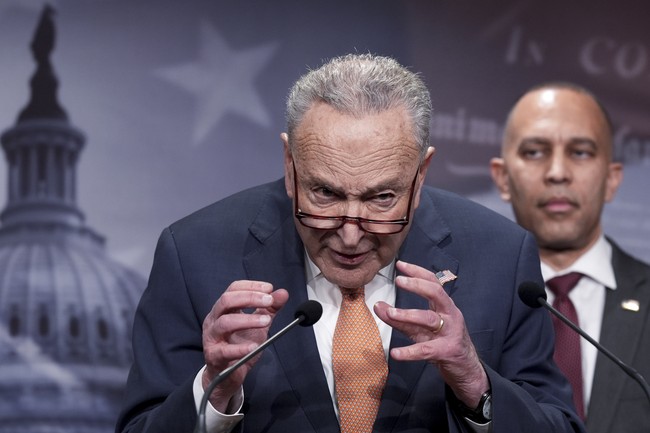
The Democratic National Committee, Senate Minority Leader Chuck Schumer, House Minority Leader Hakeem Jeffries, and related campaign organizations sued to block an executive order from President Trump that tightens mail-in voting procedures, touching off a heated legal fight over voter eligibility, citizenship verification, and ballot tracking.
The plaintiffs challenge an executive action that directs federal agencies to verify U.S. citizenship using Social Security and DHS data, instructs the Postal Service to limit absentee ballot mailings to approved state lists, and calls for unique barcodes to track ballots. Their filing frames the order as an attempt to “rewrite election rules for his own perceived partisan advantage.” That direct allegation sets the tone for a courtroom clash that will play out before the midterms.
Supporters of the order argue it addresses a commonsense problem: ensuring only citizens vote in federal elections and that ballots are traceable to prevent fraud. “The right to vote in Federal elections is reserved exclusively for citizens of the United States under the Constitution and Federal law,” the administration states in its public messaging. That phrasing underlines the administration’s claim that citizenship verification is not partisan but constitutional.
The legal challenge responds quickly and forcefully, calling the move an overreach and invoking constitutional guards against concentrated power. “Our Constitution’s Framers anticipated this kind of desire for absolute power. They recognized the menace it would pose to ordered liberty and the ways in which it would corrode self-government like an acid,” the complaint reads. Those words are designed to mobilize courts and public opinion against what the plaintiffs call an encroachment on state-run election rules.
The White House frames its executive order as filling a void left by legislative gridlock after Senate Republicans failed to pass the SAVE America Act. Administration spokespeople say action was necessary because Congress did not act, and they emphasize promises to implement new controls before the midterm elections. That timeline has opponents worried the issue will be litigated on an accelerated schedule with immediate political consequences.
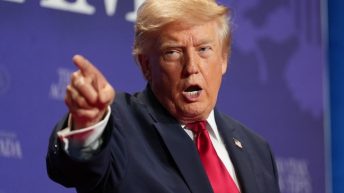
President Trump has been explicit about the stakes and about the political backdrop, asserting that reforms like voter ID and citizenship verification are essential to prevent electoral theft. “The Democrats refuse to vote for Voter I.D., or Citizenship. The reason is very simple — They want to continue to cheat in Elections,” he wrote on social media. His statements underline the partisan volley this dispute has already become.
The administration also pledged to articulate a legal argument supporting use of executive authority to protect federal elections when Congress does not act. “There will be Voter I.D. for the Midterm Elections, whether approved by Congress or not!” the president promised. That line signals an executive strategy to press forward regardless of congressional acquiescence, inviting constitutional questions about separation of powers.
Critics counter that federal meddling in ballot distribution and verification intrudes on states’ primary role in administering elections. They worry about unilateral changes to long-established procedures and the potential for uneven application across states. Those concerns form the backbone of the lawsuit, which seeks to block the order before it can be implemented.
Proponents respond that verification of voter eligibility and tracking of absentee ballots are basic safeguards any competent election system should have. They emphasize practical measures — matching citizenship data, ensuring ballots are mailed only to verified registrants, and assigning scannable barcodes — as straightforward fixes. To them, the controversy is less about mechanics and more about whether anyone opposes preventing fraud.
The case will hinge on competing views of federal power, state authority, and how courts weigh urgent electoral integrity claims against long-standing administrative practices. Media outlets and opinion makers on both sides will interpret the filings and statements to stoke public sentiment ahead of court dates. Meanwhile, the average voter will see headlines and may decide this is another reminder of how contested election administration has become.
Outside the courtroom, the rhetoric has already escalated, with warnings about dramatic political changes if control shifts and claims that one side wants to alter the judiciary or expand federal control. Those warnings are aimed at energizing bases and shaping the narrative around what the order represents. Whatever the outcome, the litigation will set a precedent for how far an administration can go to reshape election-related processes unilaterally.
Legal scholars will watch how judges balance the constitutional text, precedents on federalism, and practical concerns about protecting the franchise. The dispute raises urgent questions about who gets to decide election rules in a highly polarized environment and how quickly executive actions can be reviewed when they touch on voting. The courts will have a major role in resolving whether this approach to mail-in ballot integrity survives legal scrutiny and moves forward before the midterms.

Add comment