
I’ll contrast competing views of America at its 250th birthday, call out the left’s revisionism, highlight President Trump’s Mount Rushmore message, explain Marco Rubio’s argument about what the Founders prized, and defend the idea that our republic is anchored in fixed principles that made us exceptional.
On this 250th anniversary of our birth as a nation, the debate over what America means has never been louder. Some voices treat our history as a problem set to be blamed for present injustices, while others insist our founding principles remain the core reason men and women still risk everything to come here. That clash matters because it shapes how we teach, govern, and defend the country going forward.
There are loud critics on the far left who push a narrative that America is primarily a story of failures and oppression, and that its institutions are essentially fraudulent. One dramatic example was a public figure who sat behind George Washington’s desk and used the moment to lecture the nation on its sins. That kind of performance treats our past as a stage for moral indictment rather than a foundation for renewal.
https://x.com/FoxNews/status/2073060314828910627
President Donald Trump delivered a Mount Rushmore speech that leaned the other way, emphasizing national pride and the preservation of liberty. He warned that if we abandon our commitments, the political winds could blow toward socialism or Communism, and history shows those systems crush freedom. The warning is blunt: if nothing is held sacred, the experiment of ordered liberty is at risk.
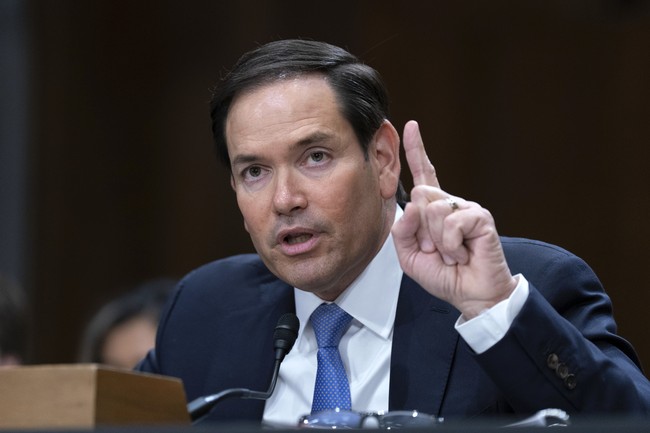
Marco Rubio added something important to the conversation with a concise video that focused on what our Founders actually treasured. He argued that what the Founders had created was more precious than wealth and more valuable than safety or life itself. That claim reframes the debate from one about identity grievances to one about constitutional inheritance and duty to sustain it.
Rubio quoted the Founders’ link to history as heirs to “the whole expanse of Western memory stretching from Athens and Rome to the Magna Carta and Jamestown and Plymouth Rock.” Those are not empty references; they point to a chain of ideas about law, rights, and limited government that produced the modern world. Emphasizing that lineage isn’t boasting; it’s recognizing the intellectual reserves that make self-government possible.
He also stressed that the Constitution is not an “abstraction.” That’s a critical correction to the critics who reduce American liberty to slogans and moral platitudes. “Many failed states have borrowed the words of rights and liberties. But a Constitution is only as strong as the people it belongs to,” Rubio warned, reminding us that institutions require citizens who defend them.
When some opponents insist America has always fallen short of its ideals and therefore the whole project is suspect, they ignore the actual record of nations that lacked our institutions. If America were merely an “idea” with no durable practice of law and rights, it would attract neither immigrants nor allies, and it would not have led the fight against totalitarian threats in two World Wars and the cold conflict with communism. Pointing out flaws is necessary, but erasing the achievements would be dishonest.
The practical takeaway from Rubio’s message is simple: to keep liberty we must teach, live, and defend those principles that made us free. That includes honoring the constitutional framework and recognizing that rights are protected by people as much as by documents. If a nation stops believing in its founding truths, those truths will erode under political pressure and social experiments that prize power over principle.
Republicans who worry about the future see this moment as a call to action, not a chance to gloat. Holding firm to the rule of law, to individual rights, and to a republic of limited government is what protects prosperity and national security. Many on the left would trade those protections for centralized control in the name of fairness, but centralization tends to concentrate power and reduce freedom.
“This is the greatest nation on Earth,” Rubio concluded, and that line matters because patriotism rooted in principle is distinct from nationalism rooted in mythology. Saying America is great without acknowledging its founders’ work is meaningless, and denying the work altogether sacrifices the very reasons people fight to defend it. The 250th birthday should be a reminder that preserving a free society depends on citizens who understand history and choose liberty every day.


Add comment