
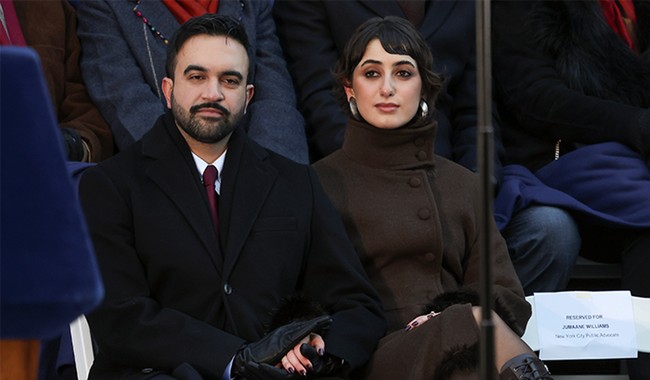
The mayor of New York City, Zohran Mamdani, skipped the annual Israel Day Parade after announcing he would not attend, and his absence set off sharp criticism from Jewish leaders and many city residents who expect their mayor to show up for a large, longstanding civic celebration.
Mamdani’s no-show was not a small matter of schedule conflict; for decades the mayoral presence at the parade has been a public tradition. This year, tens of thousands gathered and the city’s Jewish community watched as the mayor stayed away, reinforcing concerns among critics that he is uninterested in a major part of New York’s civic fabric.
The controversy takes place against a backdrop of the mayor’s prior inflammatory comments that many have called antisemitic. That history gave the absence added bite, turning a decision about an event into a signal about where the mayor stands on the city’s Jewish residents and on Israel. In a town where visibility from elected leaders matters, absence communicates loud and clear.
At a recent news conference Mamdani summed up his stance plainly: “I said on the campaign trail that I wouldn’t be attending the parade, and I’ve made my views on the Israeli government abundantly clear.” Those words landed publicly and predictably, amplifying the sense among critics that he is taking a deliberate, confrontational posture rather than offering bridge-building gestures.
Not everyone in municipal leadership agreed with that calculus. NYPD Commissioner Jessica Tisch, who attended the parade, offered a contrasting public posture when she said, “It is the mayor’s decision not to march, and it is my decision to march proudly.” Her presence underscored a split in messaging from City Hall, and it made clear that some leaders believe visible support for the parade matters to public safety and to preserving civic unity.
Rabbi Marc Schneier, a longtime Jewish communal leader, called the mayor’s absence “a slap in the face to all Jewish New Yorkers.” His rebuke expressed how many observers felt: a mayor who declines to appear at a major ethnic and cultural event risks alienating voters and undermining the sense that City Hall respects every neighborhood and tradition. The criticism spilled onto social media and into opinion pages, where leaders urged the mayor to consider how his choices affect public trust.
Public reaction also invoked the recent spike in antisemitic incidents around the country and the heightened anxiety in Jewish communities since last October. That context matters because civic rituals like the Israel Day Parade serve not just as celebrations but as affirmations of belonging and resilience. When a mayor declines to attend, it can be read as indifference at a moment when many residents are seeking visible solidarity from elected officials.
We need to be loud and clear. In the @NYDailyNews, I say what’s on everyone’s mind: stay home, @NYCMayor
No one wants you at the Celebrate Israel Parade anyway. We don’t want you, your rhetoric, and your diatribe to ruin our proud day.
https://x.com/BryanLeibFL/status/2061181889080180838
Remember how he is a “mayor for all New Yorkers.” Well, except anyone who believes Jews have an indigenous right to our homeland.
The Jewish people are at the top of their game, at this moment, in this city, in this country, despite an unprecedented surge of Antisemitism. There is a post-October 7 surge of pride and deeper engagement in Jewish life, characterized by increased enrollment in schools, camps, and synagogues.
Read my full op-ed.
Jewish pride’s Israel parade: Mamdani isn’t wanted and should stay away
Beyond raw emotion, the episode feeds a broader political narrative about city governance under Mamdani. Critics comparing his style to predecessors say the mayor’s choices reflect an ideological tilt that clashes with norms of showing up for civic occasions. Those comparisons are political, yes, but they also reflect voter expectations about the ceremonial duties and public responsibilities of an executive office.
Some New Yorkers have publicly said they miss prior mayors whose administration they perceived as more pragmatic and less provocative. Nostalgia for past leadership is common after a sharp shift, and it plays out in conversations about competence, priorities, and whether City Hall is focused on unity or sharp ideological distinction.
This story is small in the scheme of municipal governance but large in symbolic value. Skipping an event like the Israel Day Parade is not merely a scheduling choice; it becomes an act that communicates intent, respect, and alliance. For a city as diverse and tradition-rich as New York, symbolic choices matter as much as policy moves when it comes to the rhythms of civic life.
At the core, the debate is about representation and visibility. New Yorkers expect their mayor to be present at major communal moments, especially ones involving communities that face real threats and need civic affirmation. When the mayor chooses otherwise, it prompts questions about priorities, about who feels seen by City Hall, and about whether leadership will act to bind the city together or push it apart.


Add comment