
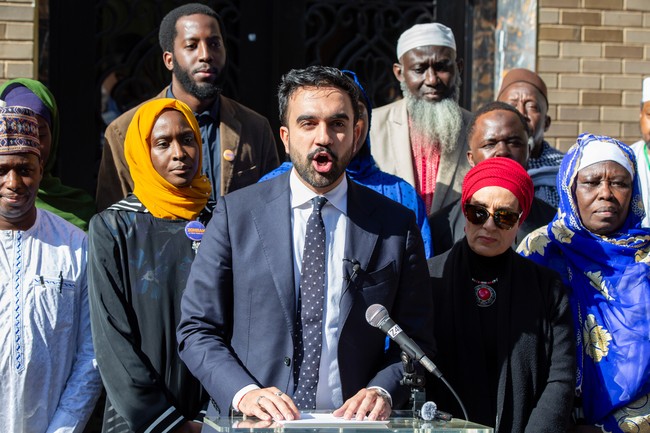
I’ll explain why Mayor Zohran Mamdani’s decision to host Columbia activist Mahmoud Khalil at Gracie Mansion matters, outline how the event was framed publicly, examine the recent Oct. 7 social-media controversy in his household, and describe the political signal sent when the city’s official residence becomes a platform for a polarizing figure.
New York City’s mayor invited Mahmoud Khalil and his family to Gracie Mansion for an iftar marking the anniversary of Khalil’s detention by federal authorities. The invitation was not kept private; the mayor publicly presented the gathering in a way that cast Khalil as a figure harmed by government action. That public framing turned a personal dinner into a political moment tied to a national debate over protest and public safety.
In his post about the event, Mamdani described Khalil’s experience as marked by both hardship and courage, and he framed Khalil’s detention as punishment for exercising constitutional rights. The mayor wrote, “For Mahmoud Khalil, this past year has been marked by profound hardship and by profound courage.” That choice of language elevates the activist to something more than a constituent — it signals moral approval.
“For Mahmoud Khalil, this past year has been marked by profound hardship and by profound courage.”
Mamdani went on to depict Khalil’s months in federal custody as retaliation for protest, asserting that Khalil was held “for exercising his First Amendment rights in protesting the ongoing genocide in Palestine.” That framing leaves little room for nuance about the nature of the protests or any related legal matters. It also ties the mayor’s office directly to a polarizing international conflict.
“All of this for exercising his First Amendment rights in protesting the ongoing genocide in Palestine.”
By ending his message with “Mahmoud is a New Yorker, and he belongs in New York City,” the mayor moved from sympathy to affirmation of belonging and legitimacy. Those words, presented from Gracie Mansion, read as political validation more than private hospitality. When the official residence hosts and publicizes such a guest, the optics reflect on the office itself, not merely the individual who occupies it.
“Mahmoud is a New Yorker, and he belongs in New York City.”
Hosting controversial activists is part of political life, but context matters. Gracie Mansion is the symbol of municipal authority, not a neutral living room, and inviting a high-profile protester there with a public statement changes the meaning. A mayor’s public spotlight on a figure linked to campus unrest elevates the political stakes for communities already worried about safety and civil order.
Khalil became prominent during the wave of pro-Palestinian demonstrations that spread from Columbia University after Hamas’s Oct. 7 attack on Israel. Those protests often crossed lines from policy critique to actions that many students and community members found intimidating. Jewish students reported harassment and encampments created tense, even hostile, environments on campuses nationwide during that period.
Days before the Gracie Mansion dinner, controversy hit Mamdani’s household when screenshots circulated showing his wife liking posts that appeared to praise the Oct. 7 attacks as they were unfolding. Some of those posts framed the violence as resistance and used the language of “decolonization” while Hamas militants were committing mass murder and abducting civilians. That timing made the Gracie Mansion invitation politically combustible.
When critics pressed Mamdani, he publicly condemned any celebration of civilian murder, saying, “Any demonstration that makes light of the murder of civilians or celebrates the killing of innocent people is wrong and has no place in our city.” He also said he could not control his wife’s social media and emphasized separate online presences. Those statements did not erase concerns that the mayor’s household had been linked to social posts praising violence, nor did they remove the optics of hosting a protest-linked activist at the mayoral residence.
“Any demonstration that makes light of the murder of civilians or celebrates the killing of innocent people is wrong and has no place in our city.”
For Jewish New Yorkers and many others still processing the aftermath of Oct. 7 and the spike in antisemitic incidents since, the mayor’s public embrace of this particular guest reads as a political signal. It looks less like outreach and more like a statement about where the mayor stands when the lines between protest, law enforcement, and community safety are under debate. That matters in a city still trying to heal and keep streets and campuses secure.
At a time when city leadership is expected to navigate volatile national flash points with care, choosing to spotlight a figure tied to recent campus unrest from the official mayoral residence is bound to intensify mistrust. Whether viewed as solidarity or provocation, the act of staging and publicizing such an event at Gracie Mansion sends a clear message about which voices the mayor elevates from the hall of the office itself.
Add comment