
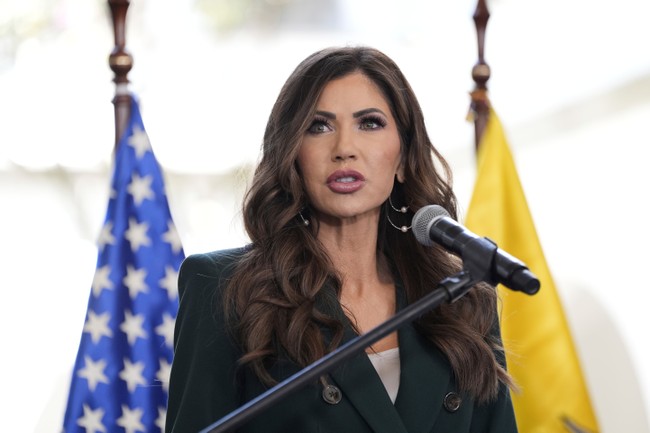
Kristi Noem faced a House Homeland Security hearing where Democrats pressed her over immigration and National Guard deployments, and she was met by angry demonstrators afterward; testimony raised alarms about tens of thousands of people admitted under the prior administration with suspected terror ties, and the exit confrontation — featuring shouted accusations and a tense interaction with a grieving mother — underscored the sharp divide surrounding enforcement and public safety.
The hearing focused on wide-ranging global threats and border security, with Noem outlining the Department of Homeland Security’s priorities and the need for firm policies. Lawmakers questioned her on immigration policies and the controversial National Guard detail to Washington, D.C., turning routine oversight into a heated exchange. Comments from some members minimized the gravity of recent attacks, which only intensified tensions on the panel.
Representatives brought up the deaths of service members and linked those tragedies to gaps in vetting procedures, pointing to individuals admitted under the previous administration’s policies. The National Counterterrorism Center director testified that about 18,000 people admitted earlier were suspected or known to have ties to terrorism, a figure that alarmed members on both sides and framed much of the committee’s debate. That statistic alone became a central point as legislators argued over accountability and future vetting measures.
Noem and allies defended stronger border controls and criticized efforts to portray enforcement actions as political attacks on law enforcement. They argued that law and order, including deportations in certain cases, are necessary to protect communities and honor victims. At the same time, Democrats accused the administration of using aggressive rhetoric and policies that harm immigrant families and civil liberties.
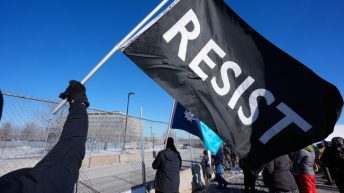
When Noem exited the hearing room, protesters rushed close enough to create a chaotic scene, yelling directly at her while she held her grandchild and hugged a woman whose son was killed in a violent incident. Security allowed the crowd to approach much nearer than some thought prudent, and the confrontation went viral because of its rawness and emotional charge. Witnesses described protesters shouting inflammatory labels and accusations in a moment that mixed political theater with personal grief.
Demonstrators hurled barbed phrases like “You are the modern SS and Gestapo!” and accused her of “using a baby as a political tool” while standing less than arm’s length from the child and the grieving mother. That juxtaposition — activists invoking extreme rhetoric while the family at the center tried to connect — struck many observers as grotesquely tone-deaf. The incident made clear how protest tactics can overshadow the core issues and alienate potential supporters.
Other protesters adopted theatrical approaches, dressing in religious garb and shouting scripted lines to dramatize their point. One individual, styled like a bishop, declared that the “Power of Christ compels you” while brandishing a colorful sign. This blend of costumes, slogans, and targeted confrontation created a spectacle that some called performative and counterproductive to serious policy debate.
The protesters’ behavior prompted debate about appropriate limits on demonstrations at official proceedings and whether security should have intervened sooner to maintain distance. Critics argued that allowing such close, hostile demonstrations near vulnerable individuals crossed a line of decency and safety. Supporters of the activists maintained that public officials must face robust public scrutiny and protests wherever they appear.
The episode also highlighted how political narratives around immigration are shaped not only in hearings and briefings but in hallway confrontations and viral clips. For officials arguing for stricter enforcement, scenes like this reinforce their claims that the debate has become unmoored from common sense and public safety concerns. For opponents, the visuals show ordinary people driven to dramatic action by policies they view as cruel or unjust.
Beyond the spectacle, the hearing revealed substantive policy questions that will likely dominate future oversight: how to vet entrants effectively, how many potentially dangerous individuals have been allowed in recent years, and what methods Congress and the executive branch will adopt to prevent similar lapses. Those concrete issues are what kept many policymakers focused on the stakes rather than the shouting matches at the exit.
The clash outside the committee room will be remembered as another instance where political theater collided with personal tragedy, and where protest tactics risked undermining the very causes they sought to advance. Both the testimony about admitted individuals with suspected terror links and the emotionally charged exit scene will feed into ongoing debates about border security, enforcement priorities, and how public officials engage with a polarized electorate.

Add comment