
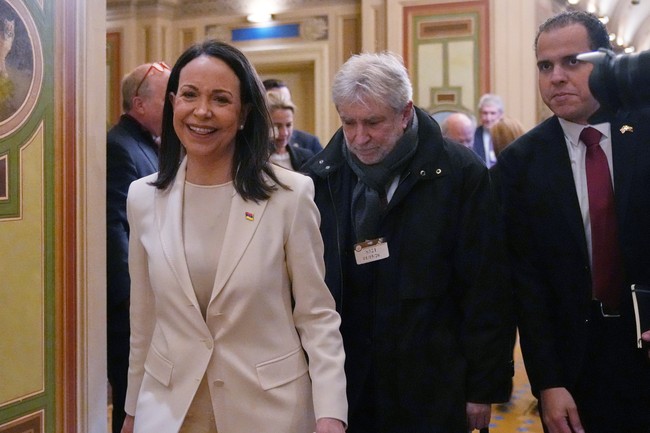
Checklist: Provide background on María Corina Machado’s return plans; explain the political context after Maduro’s removal; highlight Machado’s goals for honest government and elections; include her exact quoted statement; preserve the embedded media token.
María Corina Machado is preparing for a high-stakes return to Venezuela with a clear mission: rebuild a country shattered by years of authoritarian rule and economic collapse. As a Nobel Peace Prize laureate and a leading figure in the opposition, she brings visibility, credibility, and a sharp political purpose. Her public statements and actions make it plain she intends to push for a complete break from the old regime, not a half-measure or cosmetic reform.
The fall of Nicolás Maduro or his inner circle opened a window of opportunity that many in Venezuela and abroad are watching closely. For conservatives who believe in strong, principled leadership, Machado represents a candidate who will press for rule of law, property rights, and free markets as the foundation of recovery. That matters because rebuilding will require not just new officials but an entire change in how power functions and how public resources are managed.
Economic recovery is one of the core tasks Machado has named, and it will be enormous. Years of expropriation, corruption, and mismanagement left infrastructure and institutions in ruins, and fixing that will need disciplined economic policy and a commitment to attracting private investment. Machado and her allies argue the only durable path back to prosperity is transparent governance, respect for contracts, and predictable rules that restore confidence for Venezuelan entrepreneurs and foreign partners alike.
Justice and accountability are central to the political plan, and they are politically popular in a country that remembers repression. Machado has been explicit about the need to dismantle the instruments of political violence and to ensure that those responsible for abuses face consequences. That insistence on accountability is not about vengeance; it is about creating a baseline of security and trust so citizens can participate in a normal political life without fear.
“The regime that is in Venezuela today has the same nature; they are the ones who have tortured, persecuted, imprisoned, disappeared, murdered, expropriated and lied,” Machado said in the video. “They want to buy time so that nothing changes. But everything changed. And now, they must follow instructions to move forward with the dismantling of the repression, the economic recovery of our country, and advance towards the transition.”
That quote captures both the moral clarity Machado brings and the urgency she feels. She frames the task as structural: dismantle repression, kick-start economic recovery, and move toward an orderly transition to full democracy. That sequence requires not only domestic political will but secure conditions where free and honest elections can take place.
International support will be a crucial variable in the recovery, and Machado has not shied away from seeking constructive help from allies. Conservative policymakers who value American leadership abroad see this as an opportunity to back a government that will restore order, defend Western values, and resist malign influence from hostile regimes. The assistance most useful will be targeted, accountable, and tied to measurable benchmarks in governance and human rights.
Rebuilding state institutions is as important as fixing roads and utilities. Machado’s agenda signals an emphasis on renewing public services like health and education, reforming the judiciary, and professionalizing security forces so they protect citizens instead of oppressing them. Those are long-term projects that require professional managers, transparent budgets, and systems that prevent the old cycles of corruption from reappearing.
Political reconciliation will also matter, even as accountability proceeds. Machado’s public posture mixes firmness with an invitation to citizens tired of crisis to join a national effort. Conservatives who prefer limited government can still support policies that empower civil society, strengthen local governance, and create space for private initiative. That balance aims to give Venezuelans both justice and a pathway to a freer, more prosperous future.
Venezuela’s recovery will not be quick, and there will be setbacks. But having a leader who insists on clean elections and honest institutions changes the odds in favor of long-term success. Machado’s return is being watched by Venezuelans eager for change and by international observers who hope a credible transition can be secured and sustained. Her emphasis on dismantling repressive structures and rebuilding the economy is the sort of pragmatic, principled approach that supporters on the right will rally around.
As the situation unfolds, the pieces that matter are clear: political will, institutional reform, economic stabilization, and transparent international cooperation. Machado’s statements and plans mark a clear contrast with the past and set an agenda focused on rebuilding civic life. If those elements come together, Venezuela has a chance to recover from years of decline and start a new chapter based on liberty and accountability.

Add comment