
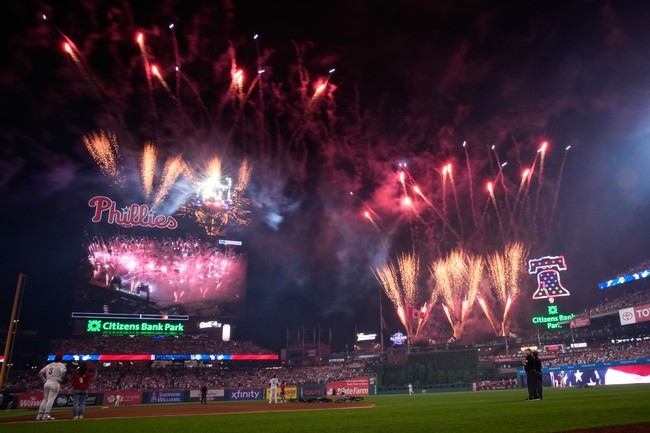
The 2026 MLB All-Star Game paid a heartfelt tribute to America’s 250th birthday that blended nostalgia, big emotions, and a simple celebration of baseball as a common thread. The on-field moments with kids, the music of Ray Charles singing “America the Beautiful,” and the fireworks felt like a reminder that, for a few minutes, the sport can unite people beyond politics. This piece looks at the ceremony, the personal memories it evoked, and why that brief, pure patriotism landed with so many fans.
Recent seasons have seen professional leagues mix sports with political and social messages, and many fans have grown tired of the culture clashes. That backdrop made the All-Star Game tribute stand out: it didn’t preach or posture, it simply honored a milestone and the game itself. For viewers who’ve felt alienated by sports turning into platforms for every issue, the segment offered something refreshingly straightforward.
https://x.com/MLB/status/2077187820175741041
The tribute opened with children appearing through field doors and rolling onto Citizens Bank Park on bicycles, a sight that echoed older, simpler ballpark moments. Those images brought to mind real memories of fans and families filing into parks across decades, including the writer’s father walking to Sportsman’s Park in St. Louis in the 1940s. The nod to childhood wonder made the show feel intimate and authentic rather than staged for controversy.
When the stadium dimmed and Ray Charles began singing “America the Beautiful,” the tone changed in a way that felt genuine and powerful. As one family member remembered, “No one could groove like Ray.” The music, the lights, and the players standing with sparklers created a theatrical but touching scene that felt more about shared history than headline-seeking provocation.
The sequence that followed focused on human moments instead of grand statements: players walked out to meet the kids, crouched to chat, and shared a few minutes of coaching and encouragement. Angels slugger Mike Trout took a youngster through a bat swing, while another player demonstrated how to hold a ball, small lessons that will become lifelong memories. Those exchanges were quiet and personal, the sort of unembellished interactions that stick with a kid long after the fireworks fade.
There’s a question for critics who might see such displays as exclusionary: do the international stars who play in MLB not understand or appreciate the American symbols on display? The answer is obvious to anyone who watches the game closely; players from Venezuela, the Dominican Republic, and elsewhere come to the United States because they see the value of this tradition. That shared appreciation underlined how baseball can function as a cultural bridge rather than a battleground.
The finale delivered a dramatic fireworks display that lit the stadium and drew loud cheers from the crowd, following the emotional pull of the music and the intimacy of the kid-player moments. For many in attendance and at home, it felt like a rare pause from the noise of daily life, with baseball positioned as the backdrop for national pride. Watching players stand with kids on the grass, the spectacle was less about showmanship and more about connection.
As a lifelong Cardinals fan, there’s always a little partisan pride when the National League doesn’t come out on top, but that feeling was small compared to the ceremony’s overall impact. The tribute managed to feel both personal and civic, honoring a 250-year milestone without turning into a lecture. It was a reminder that baseball’s rituals—simple, communal, and steeped in memory—can still produce goosebumps.
Moments like these matter because they’re rare: sports programming that prioritizes shared culture over controversy and gives kids a chance to meet their heroes. The All-Star Game’s tribute didn’t erase the broader debates about sports and politics, but it did offer a different image of what a league can present to the nation. For those who want to see baseball as a unifying tradition, the ceremony offered a clear, emotional example.



Add comment