
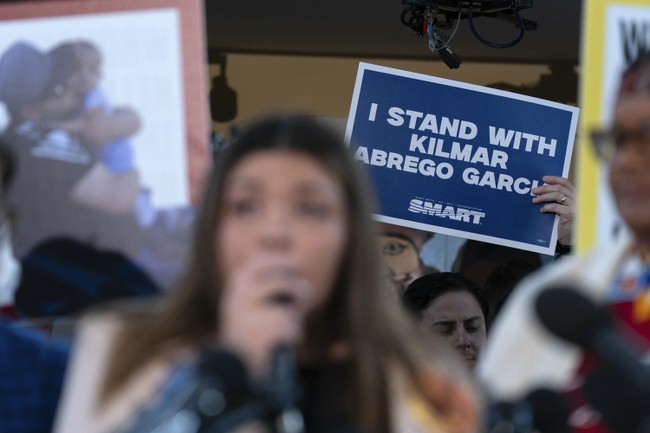
A federal judge in Maryland has decided that Immigration and Customs Enforcement (ICE) cannot arrest Kilmar Abrego Garcia, an accused MS-13 gang member, if he’s released on bail. Abrego Garcia is facing serious federal human trafficking charges in Tennessee. Judge Paula Xinis has also put a stop to any immediate deportation plans, stating that the Trump administration must give “sufficient notice” before any action.
Fox News correspondent Bill Melugin shared this development, highlighting Judge Xinis’s order. The judge has implemented a 72-hour pause on any deportation efforts without proper notice and due process. Abrego Garcia, a Salvadoran illegal alien with alleged ties to MS-13, is in a Tennessee jail as they decide if he should be released before his trial.
The government intended to place him in ICE custody if he was released, but Judge Xinis has blocked this move. Her order, as shared by Melugin, directs that Abrego Garcia be returned to his ICE Order of Supervision in Baltimore. If deportation proceedings begin, he and his legal team must be notified at least 72 hours in advance.
Bill Melugin responded to comments about the allegations of Abrego Garcia’s domestic violence, noting that his wife has filed multiple protective orders against him. She has documented her experiences in court filings, claiming she feared for her safety. These allegations are significant, given the ongoing legal proceedings.
The Maryland judge’s involvement in this case stems from Abrego Garcia’s previous residency in the state. His lawyers argue that she has jurisdiction, though the government disagrees. Meanwhile, in Tennessee, the legal battle continues as Abrego Garcia remains in custody.
If he secures bail, he could be free until his trial, provided Judge Xinis’s ruling remains in effect. There’s no indication yet of an appeal from the Trump administration or any other entity. Tricia McLaughlin from the Department of Homeland Security criticized the Maryland judge’s decision on social media.
She expressed frustration over the ruling, calling it “lawless and insane” for impeding ICE’s efforts. Meanwhile, judges in Tennessee are also deliberating related matters. Judge Waverly Crenshaw recently denied the government’s request to revoke Abrego Garcia’s release order.
This matter has been sent to Magistrate Judge Barbara Holmes, who has granted a 30-day stay on the release order. Abrego Garcia had requested this delay, fearing he might be transferred to immigration authorities. The government agreed to this stay, meaning he remains in custody for now.
As the legal proceedings continue, the situation remains complex. Both state and federal judges are involved, making it a multifaceted case. The intersection of immigration laws and criminal charges adds to the intricacy of the situation.
This case has drawn attention due to its implications on immigration enforcement. It highlights the ongoing debate over how to handle individuals with serious charges who are also undocumented. The legal back-and-forth reflects the challenges authorities face in such matters.
Supporters of stricter immigration policies argue that cases like these demonstrate the need for robust enforcement. They believe that allowing individuals like Abrego Garcia to remain in the country poses a threat to public safety. The debate over immigration and law enforcement continues to be a hot-button issue.
While the legal process unfolds, the public watches closely. The case has sparked discussions about judicial authority and immigration policy. With both state and federal courts involved, the outcome could have broader implications.
Critics of the Maryland judge’s decision argue it undermines ICE’s ability to perform its duties. They see it as an overreach that disrupts federal enforcement efforts. Supporters of the ruling argue for due process and fair treatment for all individuals, regardless of their status.
This case serves as a reminder of the ongoing political and legal battles over immigration. The differing perspectives highlight the complexities of the issue. As the situation develops, it remains a point of contention among policymakers and the public alike.
Here is his proper notification when you walk out of jail or court house you will be arrested immediately and deported or charged with federal criminal charges. Now he and everyone knows intent. Asshole judges. The should be charged with federal obstruction charges. They need to be kicked out of our country.
Simple solution–deport the judge with Kilmar Abrego Garcia. They can hold hands on the way to GITMO. Human trafficking–nice way of saying slavery. W hy doesn’t this judge stand up for veterans and the homeless in the same way? They at least are citizens.
I get paid over $130 1 to 3 hours working from home with 2 kids at home. I never thought I’d be able to do it but my best friend earns over $27k a month doing this and she convinced me to try. The potential with this is endless.
Heress———–>shorturl.at/sxV12
where is the me too movement supporting the woman of domestic violence they should be pressuring this judge
Here is his proper notification when you walk out of jail or court house you will be arrested immediately and deported or charged with federal criminal charges. Now he and everyone knows intent. Asshole judges. The should be charged with federal obstruction charges. They need to be kicked out of our country.
where is the me too movement supporting the woman of domestic violence they should be pressuring this judge
Now it’s time to deport these corrupt criminal judges. They are not what Americans want protecting illegals criminals. These judges should be charged with obstruction of the constitution.
Our own law leaders became corrupt criminals.