
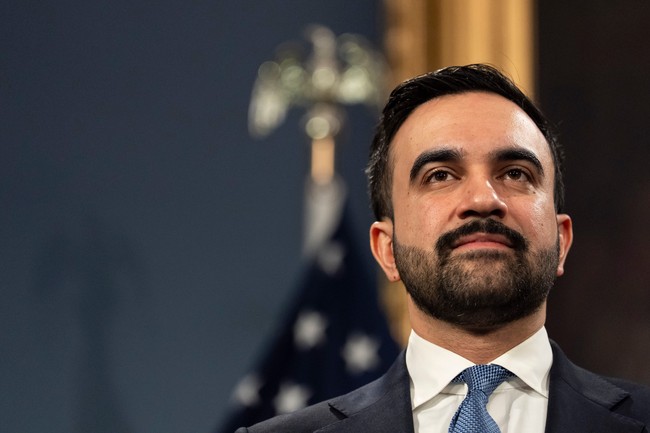
I’ll take apart Mayor Zohran Mamdani’s canceled free-bus pledge, show why the plan was unrealistic, report the conservative reactions that followed, and sketch what this means for New York’s tax base and future policy fights.
New York’s mayor promised free city buses and then admitted the plan can’t be funded this year. That admission highlighted how lofty campaign promises crash into budget realities once officials actually look at numbers. The retreat is already being used by critics to argue that socialist ideas break down under the weight of practical governance.
The mayor’s proposal relied heavily on taxing high earners to make up the gap, a common refrain among candidates promising expansive social services. But those same tax policies can push taxpayers and businesses to relocate, shrinking the revenue base that such programs depend on. When folks with mobility decide the city is no longer worth the cost, you can’t just write bigger checks to replace them.
Conservative commentators were swift and sharp in their responses after the concession. Many framed the withdrawal as proof that campaign slogans about free services were never serious policy options. That kind of public mockery matters politically because it reinforces voter skepticism about grand promises that lack fiscal grounding.
New York City Mayor Zohran Mamdani is facing backlash online after admitting that his campaign pledge to make city buses free is hitting funding roadblocks.
Social policy choices in big cities ripple through housing, jobs, and municipal finances in ways that are easy to miss on the campaign trail. If a policy narrows the tax base, it forces either spending cuts, higher taxes on whoever’s left, or broken promises. For a city like New York, which depends on a mix of resident, commuter, and corporate contributions, shrinking one segment can unravel multiple programs.
Conservatives were quick to react to a Politico interview where the mayor acknowledged that one of his most hotly discussed campaign promises wouldn’t be fulfilled this year as his administration works to gain support from lawmakers in Albany.
“It won’t ever happen. It was a high-profile promise that won’t ever happen. It wasn’t really meant to,” wrote conservative media host Jason Rantz.
“Turns out socialist slogans don’t survive contact with reality,” National Republican Congressional Committee Press Secretary Mike Marinella
“Hahahahahahahahahaha. You got played, NYC,” , a conservative writer, on X.
https://x.com/jasonrantz/status/2041950587189915860?s=20
“Mamdani lied about free buses — and basically everything else in his campaign,” wrote Tim Young, a media fellow at The Heritage Foundation, . “And the idiots of New York fell for it,” he added.
“Socialism is like a toxic ex: big promises upfront, disappointment later,” conservative media outlet Prager U . “Just ask New York about those free buses.”
It’s easy to scoff at a failed promise, but the underlying issue is structural: how do cities pay for services without driving away the taxpayers needed to fund them? Solutions require honest budgeting, realistic revenue projections, and an eye toward competitiveness with other states. Otherwise, policy experiments that sound good in speeches become unfunded liabilities on city balance sheets.
If wealthy residents and businesses continue to leave, the remaining population faces harsher choices: higher taxes, reduced services, or both. That squeeze fuels political polarization and can lead to an unstable policy environment where administrations announce big new programs one term and reverse them the next. Predictable, sustainable policy is rare when funding depends on narrow or volatile revenue sources.
Expect this episode to be used as a cautionary tale by opponents of similar proposals elsewhere. Campaign pledges that hinge on taxing a shrinking group of high earners don’t translate well into long-term municipal strategy. Critics will point to this retreat as evidence that grand promises without clear funding mechanisms are politically and fiscally dangerous.
The public reaction and conservative commentary will keep the story alive, and the mayor’s next moves will matter for both governance and electoral politics. For now, the free-bus idea is on ice, and the debate over urban taxation, migration, and service commitments is only getting started.
“It won’t ever happen. It was a high-profile promise that won’t ever happen. It wasn’t really meant to,” wrote conservative media host Jason Rantz.


Add comment