
I’ll outline why Iran’s threats matter, assess the realistic risks to U.S. forces and carriers, note how Iranians on the ground view their future, and explain why pressure from the United States and allies is justified. The piece focuses on Tehran’s recent rhetoric, military posture, and the consequences for regional stability, written from a direct Republican perspective favoring firm action. It preserves key quoted material exactly as stated and keeps the tone clear and pointed. No extraneous links or crediting remain; the embed token from the original is preserved at the end.
Iran’s leadership has a long record of posturing when pressured, and the latest round of threats fits that pattern. When cornered economically or militarily, Tehran tends to lash out with loud warnings, hoping to deter action and rally domestic support. Those warnings now include explicit mentions of U.S. bases and aircraft carriers as potential targets, which is a test of resolve more than a new capability.
Iran threatened Thursday to instantly strike U.S. bases and aircraft carriers in response to any attack, after President Donald Trump warned time was running out for Tehran and the EU blacklisted its Revolutionary Guards as a terror group.
As Brussels and Washington dialled up their own rhetoric and Iran issued stark threats, UN chief Antonio Guterres called for nuclear negotiations to “avoid a crisis that could have devastating consequences in the region”.
Those quoted statements show both the threat and the diplomatic counterplay. The EU’s designation and the Trump administration’s warnings are squeezing Tehran, and the regime’s response is predictably bellicose. That environment raises the risk of miscalculation, which is exactly why deterrence and clear capability demonstration matter now more than ever.
An Iranian military spokesman warned Tehran’s response to any U.S. action would not be limited — as it was in June last year when American planes and missiles briefly joined Israel’s short air war against Iran — but would be a decisive response “delivered instantly”.
Brigadier General Mohammad Akraminia told state television U..S. aircraft carriers have “serious vulnerabilities” and that numerous American bases in the Gulf region are “within the range of our medium-range missiles”.
Let’s be blunt: Iran’s missile inventories and proxy networks are dangerous, but they are not an existential threat to U.S. carrier strike groups in the way Tehran boasts. Aircraft carriers are heavily defended assets with layered anti-air and missile defenses, and the men and women who sail them train constantly for these scenarios. That said, ignoring Tehran’s rhetoric would be foolish; their proxies and missile forces can and do threaten personnel and bases in the region.
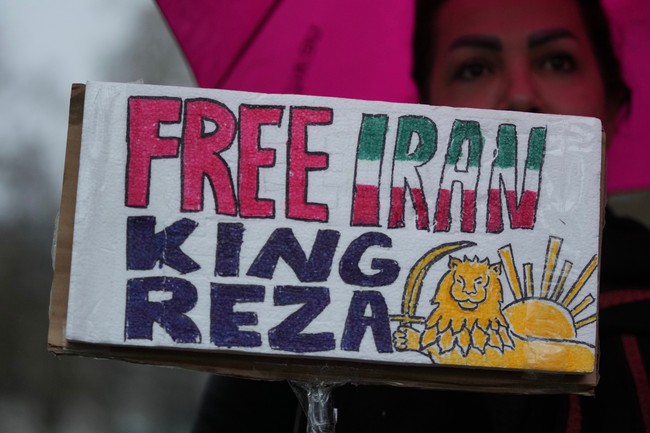
The regime’s bravado has a domestic audience too, and that matters. Ordinary Iranians face crushing economic pain and political repression, and the regime’s threats are partly a diversion. People in Tehran and other cities watch and wonder whether confrontation will bring change or simply more suffering, and that uncertainty fuels both fear and a quiet desire for something different.
In Tehran on Thursday, citizens expressed grim resignation.
“I think the war is inevitable and a change must happen. It can be for worse, or better. I am not sure,” said a 29-year-old waitress, speaking on condition of anonymity for fear of reprisals.
“I am not in favour of war. I just want something to happen that would result in something better.”
Another 29-year-old woman, an unemployed resident of an upscale neighbourhood in northern Tehran, told AFP: “I believe that life has highs and lows and we are now at the lowest point.
“Neither the economic situation, nor our livelihood is good. It is the lowest for me.”
Those quoted voices matter because they remind us who the real victims are: the Iranian people, not the regime’s clerics and commanders. U.S. policy should target the regime and its terrorist apparatus, not the population struggling under theocracy. Applying pressure to degrade Iran’s capacity to fund and direct proxies is both strategic and moral.
From a Republican standpoint, strength and clarity win. Diplomatic tools matter, but they work alongside credible military readiness. If deterrence fails, a calibrated, decisive response that protects U.S. forces and eliminates key threats will be on the table. Weakness only invites escalation and leaves allies exposed.
Operationally, commanders in the Middle East will remain on high alert, and that should reassure Americans at home. Bases and personnel deserve robust protection, and the administration has shown a willingness to demonstrate power when necessary. That posture reduces the chance Iran tests us successfully.
Ultimately, Tehran’s bluster may reflect panic more than power. When an adversary starts naming targets and promising instant retaliation, it often means they are worried about losing leverage. That is the moment for disciplined pressure, unwavering support for allies, and efforts to help ordinary Iranians reclaim a freer future.



Add comment