
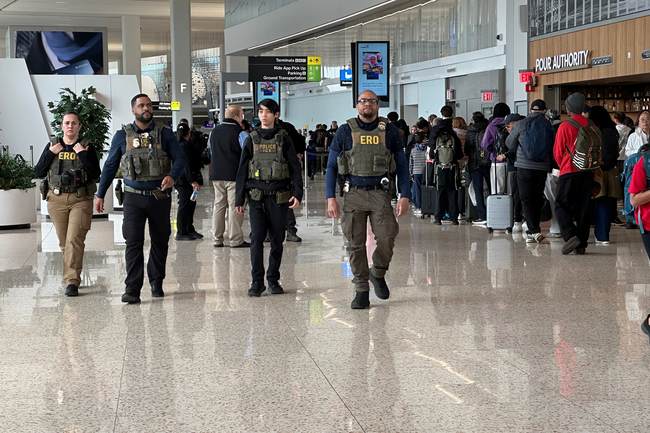
The government shutdown debate has thrown federal roles into the spotlight, and a recent incident at a major airport shows how frontline officers can act as first responders in a crisis. An ICE agent working alongside TSA staff helped revive an unresponsive one-year-old in a Precheck line at JFK, an episode that complicates attempts to paint immigration officers solely as political villains. This article walks through what happened at the checkpoint, official descriptions of the rescue, and the wider political context driving the airport deployment controversy.
Senate Minority Leader Chuck Schumer condemned placing ICE agents in airports during the partial shutdown, calling the practice “really disturbing” and warning it could create trouble. House Minority Leader Hakeem Jeffries escalated the rhetoric further, suggesting ICE could “brutalize or in some instances kill” passengers, a claim that fed public alarm. Those statements set the stage for the backlash when an ICE agent actually saved a child’s life in a crowded security line.
The chaotic scene unfolded in a TSA Precheck lane when a father suddenly found his child limp and not breathing, and nearby passengers reacted with panic. An ICE agent, assigned to assist TSA operations, heard the commotion and ran to the child, taking decisive action under pressure. Video of the incident shows the father handing over his son and the agent immediately beginning life-saving measures before emergency medical services arrived.
Video shows the boy’s father panicking as the boy goes limp in his arms, before the ICE agent runs over to help. DHS says the ICE agent assessed the boy, performed the Heimlich maneuver on him, and he began breathing again and made a full recovery.
The Department of Homeland Security provided a detailed account of the response, emphasizing that the officer’s quick assessment and Heimlich maneuver restored the child’s breathing in seconds. CCTV footage reportedly captures the father scrambling and calling for help while the officer moved with urgency to secure the boy’s airway. Emergency medical technicians then arrived to further evaluate the child, who was later cleared as healthy enough to fly.
In DHS’s words, the event began when “a one-year-old child became unresponsive in the arms of his father, unable to breathe for almost two minutes,” and panic swept the area. The officer at his post “heard the screams from the father and other passengers and sprinted to the scene,” took the child, and performed the Heimlich maneuver until the child started breathing again. EMS personnel arrived and reassessed the child, confirming recovery and fitness to travel.
WASHINGTON – On March 25, 2026, an Immigrations and Customs Enforcement (ICE) agent helping to support Transportation Security Administration (TSA) operations at John F. Kennedy International Airport in New York jumped into action to help save the life of a one-year-old child experiencing a medical emergency.
The heroic actions of this officer began when a one-year-old child became unresponsive in the arms of his father, unable to breathe for almost two minutes. CCTV review shows a passenger in a TSA Precheck line holding his one-year-old in his arms when the child’s arms go lifeless; panic ensues, and the father is seen scrambling around the area, and calling for help.
Republicans and many travelers have argued that keeping federal personnel at busy transit hubs during operational disruptions is sensible, especially when medical emergencies and security incidents occur. Critics on the left have pushed a narrative that federal immigration officers at airports pose a threat to civilians, but this case demonstrates a practical, lifesaving role beyond immigration enforcement. It’s a reminder that public safety duties often cross agency lines, and personnel deployed temporarily can still perform critical assistance.
Democratic calls to defund or restrict ICE presence at airports are framed as concerns for passenger safety and civil liberties, but they also risk removing immediate help from crowded terminals when seconds matter. The father in this incident faced the worst kind of fear when his child stopped breathing, and a trained federal officer was the person who bridged the gap until paramedics arrived. That on-the-spot response prevented a tragedy and highlights why decisions about deployments should be judged on real outcomes, not just rhetoric.
Accusations that officers are “enemies of the state” or comparable to secret police inflame public sentiment and shape funding negotiations, but they don’t change the fact that those on duty are people who can and do act to save lives. Lawmakers should weigh operational realities and human consequences when debating DHS funding and personnel assignments, rather than relying on exaggerated claims. The JFK incident is a concrete example of why practical capability matters in public safety discussions.
Editor’s Note: Democrats are fanning the flames and raising the rhetoric by comparing ICE to the Gestapo, fascists, and secret police.



I’m making over $17k a month working part time. I kept hearing other people tell me how much money they can make online so I decided to look into it. Well, it was all true and has totally changed my life. This is what I do,
HERE →→→→→→→→→→ PayAtHome1.Com