
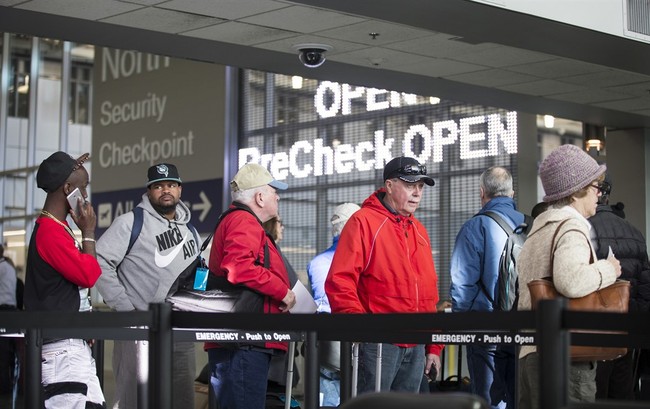
The former TSA agent’s account from Minneapolis–St. Paul describes repeated incidents of suitcases stuffed with cash and carry-ons filled with passports passing through checkpoints, a pattern she now links to large-scale fraud centered in the Somali community and allegedly overlooked by officials; her testimony raises questions about airport oversight, law enforcement response, and political accountability in Minnesota.
A former TSA agent who worked at Minneapolis–St. Paul International Airport between 2016 and 2021 says she repeatedly saw the same behavior at checkpoints, and only now recognizes it as part of a broader fraud scheme. She recalls an unmistakable pattern: Somali men traveling in pairs, suitcases opened in private screening rooms, and stacks of cash inside. These encounters, she says, happened so often it stopped feeling like random coincidence and looked like an organized operation.
“Since all this fraud came out, the connection’s been made,” Jaksa told Collin. “I didn’t feel good about it then, and now it certainly all makes sense.” That blunt admission underlines how frontline workers can be first to notice systemic problems, then feel ignored when no action follows. Her time in the airport trenches left her convinced the problem was not rare or isolated but frequent enough to demand a full accounting.
Jaksa reported seeing “suitcases filled with millions of dollars cash. And the couriers were always Somali men traveling in pairs. And they got through the checkpoint.” She said the process was routine: bag pulled aside, brought to a private screening room, suitcase opened to reveal stacks of bills, then law enforcement would arrive to document the scene. The agent believes there must be a paper trail—identification photos, ticket records, and airport cameras—that would confirm how much cash moved through the facility.
So, it certainly seemed like it happened every week. The suitcases came in, and it was always, the MO was always two Somalian men, traveling in pairs. Sometimes they both had suitcases. And, so, the process was as a TSA agent, we would pull the bag, then we would bring them to a private screening room. And we would open the suitcase and make sure that that’s all there was, which was stacks of cash. And a LEO would come, and maybe question them, and for sure take a picture of their identification and I’m assuming their plane ticket, I’m not sure. So, there is a trail out there, between that, it has to be documented somewhere. And all the cameras in the airport, I would imagine that if they’d like to find all this cash, they should start at the airport. Because in the five years I was there, I believe a billion dollars went through the airport.
She estimated that during her five years on the job she saw what could amount to as much as one billion dollars moving through the airport in cash. If accurate, that figure implies an industrial-scale flow of funds that would be hard to hide from crosscheck systems and surveillance. The agent insists the documentation has to exist somewhere and that investigators should begin with airport records and camera footage to trace the money.
It wasn’t only cash that alarmed her. Jaksa also observed a carry-on filled with brand-new passports getting through security without obstruction, and she still wonders where those documents ended up. “There was another instance, again, a Somali man, that had a carry-on luggage filled with brand-new passports. And he was allowed to get through the checkpoint. So, where he went with all those passports is anybody’s guess.” That detail suggests potential identity fraud or trafficking of documents on top of the alleged cash movements.
There was another instance, again, a Somali man, that had a carry-on luggage filled with brand-new passports. And he was allowed to get through the checkpoint. So, where he went with all those passports is anybody’s guess.
Jaksa said her frustration came from watching the pattern repeat with apparent indifference from supervisors and officials. “[U]ncomfortable because at the time it seemed so lackadaisical that these people could get through the airport with all that cash. Time, after time, after time, it wasn’t a one-time thing…” She felt then, as she does now, that the lax handling of those incidents deserves scrutiny and accountability.
[U]ncomfortable because at the time it seemed so lackadaisical that these people could get through the airport with all that cash. Time, after time, after time, it wasn’t a one-time thing…
It is so frustrating. It was frustrating when I was a TSA agent, and it’s certainly frustrating now watching the state’s administration doing what they’re doing.
From a Republican perspective, the claim points to failures at multiple levels: security protocols, law enforcement follow-up, and political leadership in Minnesota. Jaksa specifically named state leaders, saying they should “resign in shame” and pointed fingers at those who oversee public safety and immigration policy. If investigations corroborate her recollections, political consequences will likely follow and demand a candid review of oversight and enforcement practices.
Critics who defend the community have framed swift investigations as targeting a group, but the former TSA agent and other prosecutors point to criminal acts documented in court that complicate that defense. One high-profile trial included an attempt to bribe a juror in cash, showing the brazenness of some who allegedly tried to influence outcomes. These episodes reinforce why straightforward, tough investigations must proceed regardless of political sensitivities.
Questions now center on what federal agencies and transportation officials will do next and whether airport footage, identification logs, and law enforcement records will be reviewed. The former agent’s claims offer an actionable starting point: trace the documented moments when cash and passports moved through security, interview involved personnel, and cross-reference camera records. The public deserves to see if those documented trails lead to broader networks or systemic gaps in enforcement.
The Alpha News interview that brought these observations to light remains available and includes the agent explaining why she now sees a pattern she initially found unsettling. Lawmakers and investigators will have to decide how far to push this thread, but the account from a former insider shows why such leads should not be dismissed lightly.
As this story develops, embedded video and interview material provide on-the-record detail from the former agent and investigators, offering direct evidence for anyone who wants to review what she witnessed.



Add comment