
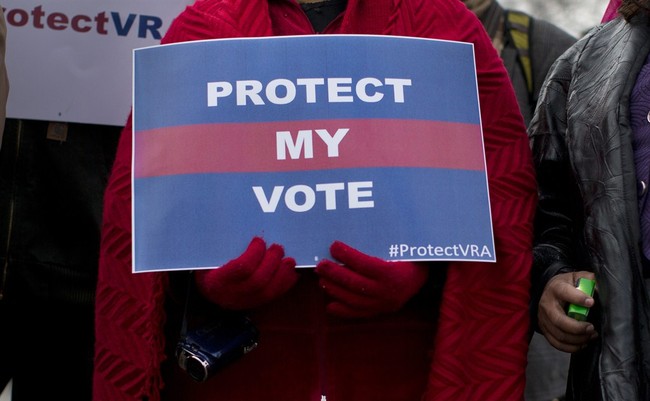
The Alabama redistricting fight reignited after a three-judge federal panel reinstated an injunction against the state’s 2023 congressional map, blocking a legislature-approved plan and a scheduled special election; this piece explains the legal back-and-forth, the panel’s reasoning in light of the Supreme Court’s recent Voting Rights Act decision, and the political reactions from Alabama conservatives who see federal overreach undermining state authority and voter choice.
The panel’s move came after Alabama had already acted to implement new maps following a Supreme Court decision that narrowed Section 2 challenges under the Voting Rights Act. State lawmakers voted to use the revised maps and set a special election, but the district court said the prior finding of intentional racial discrimination required the injunction to be reinstated. The judges argued that preventing what they call vote dilution and protecting Black opportunity districts justified their decision, even as the Supreme Court’s recent ruling suggested a different legal landscape.
The district court emphasized avoiding chaos in upcoming 2026 elections, though opponents say that concern rings hollow after repeated legal interventions. The judges wrote they could not “require Alabamians to cast their votes in the 2026 elections under a districting plan tainted by intentional race-based discrimination.” They ordered the Secretary to continue using a race-blind map, citing continuity in electoral systems and candidate filings. That conclusion conflicts with the direction the Supreme Court appeared to set in its Callais decision.
A three-judge panel on Tuesday blocked Alabama Republicans’ congressional map that would’ve given the party a potential pickup opportunity in the midterms.
The judges ruled the Supreme Court’s recent blockbuster decision narrowing the Voting Rights Act does not impact their finding that the map intentionally discriminates against Black voters in violation of the Constitution.
It means Alabama cannot use its design this year unless Republican leaders appeal directly to the Supreme Court and succeed.
Reading the panel’s 102-page order shows they doubled down on prior findings that the 2023 plan was intentionally discriminatory. The judges concluded their earlier analysis remained valid even after the Supreme Court’s changes to Section 2 law. From the state’s perspective, that is a dramatic mismatch between the high court’s doctrinal shift and a federal district court clinging to an earlier determination of intent.
After that exacting review, we conclude that a preliminary injunction must issue. Ultimately, we cannot see our way clear to requiring Alabamians to cast their votes in the 2026 elections under a districting plan tainted by intentional race-based discrimination. And under the unusual circumstances of this case, we conclude that a limited order requiring the Secretary to continue using this Court’s race-blind map will not disrupt Alabama’s elections (all candidates ran under the race-blind map until fifteen days ago, and all voters remain districted under the race-blind map in electoral computer systems.
Republican leaders and conservative commentators argue this is judicial activism that overrides the will of Alabama voters and their elected representatives. They note that state lawmakers acted promptly after the Supreme Court’s decision to draw maps they believe comply with constitutional limits while preserving effective representation across communities. From that viewpoint, the panel’s injunction substitutes a federal court’s policy preferences for the prerogatives of the state legislature. That tension is at the heart of why this dispute doesn’t look likely to end without another trip to the Supreme Court.
The panel insists that protecting Black voting opportunity is the sole basis for their decision and points to the state’s southern districts as their focus. But recent primary results are cited by critics as evidence that Black voters in Alabama are finding opportunities across the state without relying on the exact configuration the judges demanded. Examples from both a northern Republican district and a majority-Black southern district saw incumbents replaced by Black newcomers, suggesting competitive dynamics exist outside the contested map design.
We do not lightly intrude in state affairs, but our previous review of the undisputed evidence left us in no doubt that Alabama’s legislatively enacted plan (the “2023 Plan”) intentionally discriminated based on race in violation of the Constitution. Our re-examination in light of Callais yields the same conclusion.
We again cannot understand the 2023 Plan as anything other than intentionally discriminatory. When the Legislature enacted the 2023 Plan, it made a calculated, purposeful decision to refuse to provide the remedy for discriminatory vote dilution that our order (affirmed by the Supreme Court) required. The Legislature well knew that a plan without an additional Black-opportunity district would dilute Black Alabamians’ opportunity to participate in the political process, and it intentionally enacted that very plan.
Alabama Republican voices say the injunction undermines state sovereignty and chills voter choice. Representative and Senate candidate Barry Moore called out activist judges for what he described as rewriting the Constitution and imposing outside politics on Alabama. Conservative defenders of the legislature view the state’s redrawing as a lawful exercise of authority that should be respected unless the Supreme Court explicitly says otherwise.
Legal observers note that unless the state appeals and wins at the Supreme Court, the district court’s order will stand for now and the contested plan will remain blocked. That outcome creates a complicated practical picture for candidates, election officials, and voters as deadlines approach and administration must continue under the court’s race-blind map. The immediate impact is procedural: which map governs ballots, candidate filings, and the special election schedule set by the state.
The dispute raises broader questions about how post-Callais litigation will play out nationwide when lower courts face prior findings of discriminatory intent. Conservatives warn that allowing district courts to treat intent findings as immune to doctrinal shifts from the Supreme Court invites inconsistent federal intervention in state political processes. The legal battle ahead will test whether the high court’s clarifications about Section 2 will displace entrenched lower-court rulings in cases where intent was previously found.
This story remains in flux as appeals and timing considerations develop, and the next legal steps will determine whether Alabama can implement the maps its legislature approved or must continue under the court-ordered plan for now. The conflict highlights tensions between federal judges protecting voting-rights theories and state officials defending the authority to design districts and manage elections for their citizens.



Add comment