
House Democrats erupted into a public blame game after two defecting members sided with Republicans on a narrow procedural vote that paved the way for a House resolution condemning socialism, leaving leadership scrambling and old-guard figures criticizing the caucus’ handling of internal dissent.
On Tuesday night the House saw an unusual break: Reps. Jared Golden and Marie Gluesenkamp Perez voted with the Republican majority on a procedural rule, a move that offset five GOP hardliners and produced a 210-208 result. That rule cleared the way for a package that included a vote to condemn socialism “in all its forms,” specifically naming the Democratic Socialists of America, and the House later approved the resolution 220-192. In stark terms, 192 Democrats voted against denouncing socialism.
Procedural rule votes rarely attract cross-party support from the minority, which is why Golden and Gluesenkamp Perez’s decision jolted the Democratic Caucus. Their yes votes were tied to district-level priorities: Golden said his backing secured a bill for Maine lobstermen, while Gluesenkamp Perez cited protections for working waterfronts in her swing district.
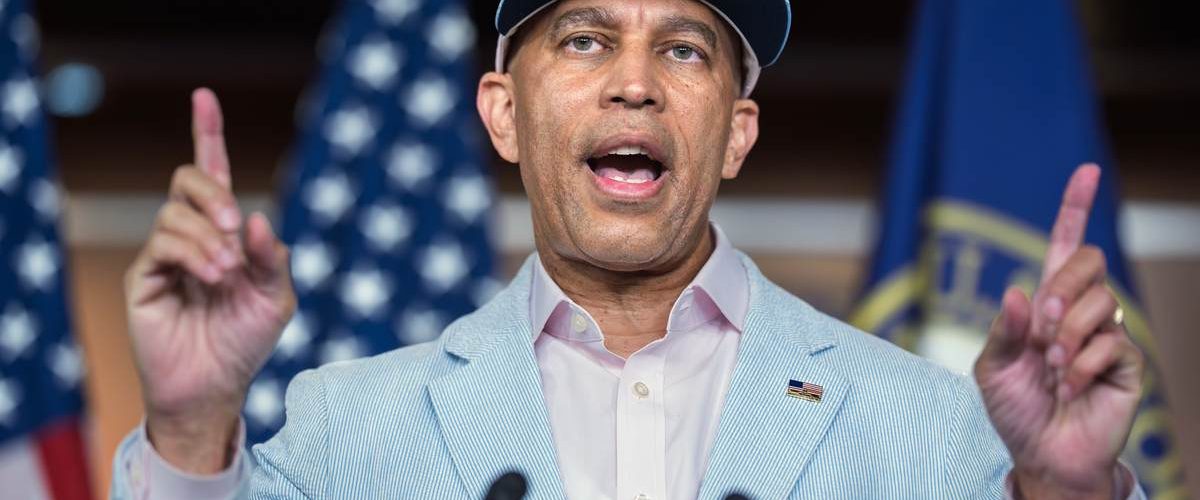
The two members clearly weighed local interests over caucus unity, and that created immediate turmoil inside Democratic leadership. Minority Leader Hakeem Jeffries described the votes as “a significant breach of trust” and insisted reporters should take questions to Whip Katherine Clark, signaling both anger and an attempt to shift accountability inside the leadership ranks.
“The decision by two of our colleagues to blindside the entire House Democratic Caucus and join with the Republican majority to pass a procedural rule on the brink of failing represents a significant breach of trust,” Jeffries said, according to . “It necessitates a serious response, and we have asked the Committee on Caucus Rules to take this up in short order.”
Leadership moved quickly to refer Golden and Gluesenkamp Perez to the Committee on Caucus Rules, and chatter already surfaced about stripping committee assignments as a punitive example. For Republicans observing this, the chaos is confirmation that internal Democratic divisions are real and widening, with moderates squeezed between radicals and party discipline.
The public signal from Democratic leaders was unmistakable: break with leadership on a rule vote, even to move a bill for your own district, and you will be punished. That clarity of consequence is part warning and part enforcement, aimed squarely at anyone tempted to prioritize local wins over caucus cohesion.
But the pushback did not stop at committee referrals. Former Speaker Nancy Pelosi stepped into the fray, contrasting her time in charge with the current turmoil and making clear she viewed such defections as unacceptable. Her reaction underscored how the episode has become a showdown over who controls the message and the discipline inside the party.
“Voting for the rule is something that I, as Speaker, we never — we didn’t even consider that anybody would do that,” she told reporters. “We never had that problem. So I’m disappointed that they did that.”
Pelosi’s comments landed as both rebuke and reminder that past leaders could enforce unity in ways newer leadership apparently has not. That contrast feeds a narrative favored on the right: Democrats are unraveling under pressure from more radical elements, while leadership struggles to keep a fractious caucus aligned.
https://x.com/JakeSherman/status/2094945747712024948?ref_src=twsrc%5Etfw
From a Republican perspective the episode is politically useful. It highlights divisions over socialism and exposes the tension between district-level representation and national party obedience. Republicans can point to tangible consequences for Democrats who either court or resist the socialist wing, depending on what plays best with their districts.
Golden is retiring and therefore may have had fewer political restraints in taking a vote tied to his district. Gluesenkamp Perez represents a swing district and made a pragmatic calculation to help her constituents. Both choices leave Democratic leaders with the dilemma of punishing members who voted for local needs while risking further public splits.
The broader takeaway for conservative observers is straightforward: Democrats are fighting a battle with themselves over ideology and control, and Republicans can exploit those fissures. The socialist insurgency inside the party is real, and attempts to discipline moderates who resist that tide are generating a very visible meltdown on the Hill.
As this plays out, expect more public finger-pointing inside the Democratic Caucus, more leadership defensiveness, and continued opportunities for Republicans to frame the story as proof that Democrats cannot manage their own house while pushing radical agendas.



Add comment