
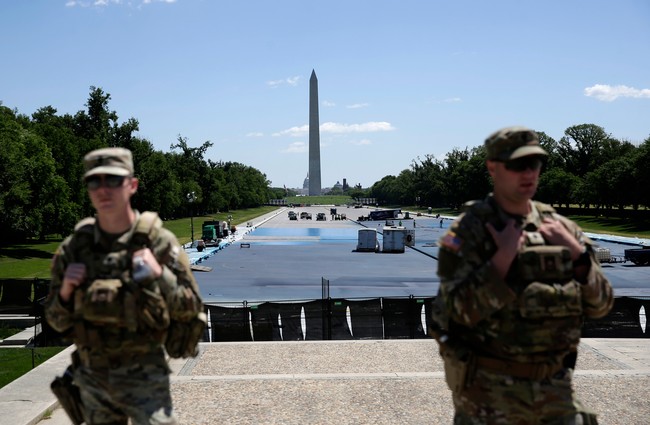
The restored Lincoln Memorial Reflecting Pool was deliberately damaged and defaced, Interior Secretary Doug Burgum promised full prosecution for the perpetrators, authorities have made multiple arrests and citations, and the incident has sparked anger over political vandalism ahead of America’s 250th celebration.
The attack on the Reflecting Pool was not a random prank; investigators say the damage runs roughly 350 feet along the pool’s liner and appears to have been made with a box cutter. That scale of destruction required a serious repair effort and delayed preparations tied to the national celebration. People who treasure these public sites saw the act as a direct affront to the monuments and to taxpayers who fund their upkeep.
Interior Secretary Doug Burgum made a forceful public statement, insisting the vandals will face consequences. He said, “When people are attacking it [the Reflecting Pool], it is like an attack on our country.” Those are blunt words from a cabinet official who frames the monuments as shared national property that must be defended under the law.
Burgum did not mince words about the legal response, declaring “These are our most sacred monuments, and they [the perpetrators] are gonna be prosecuted to the full extent of the law.” Authorities reported multiple police reports and citations tied to the incident, and as of the latest updates the number of arrests has grown to seven. That level of enforcement signals a clear intent to bring criminal charges and to deter similar political vandalism.
Photographs circulated after the incident show anti-Trump markings left near the cuts, including the number “8647,” which many interpreted as a political message. The presence of slogans and symbols turned a criminal act into a political statement, which complicates the public reaction. For many, it crossed the line from protest into property destruction that no responsible citizen should accept.
There is a bigger issue here than the cost of repairs. This wasn’t merely mischief; it was targeted damage to a landmark that has just undergone restoration in time for the nation’s 250th anniversary. Restoring public assets takes time and money, and damaging them deliberately is an attack on shared heritage and civic pride. The timing, ahead of a major national holiday, made the act especially provocative.
Observers on the right view the pattern as part of a broader trend where destructive tactics are tied to a certain political culture. The article argues that “Most of us on the right build; we don’t destroy. But the left? The left destroys, not just properties, but institutions.” That line expresses the belief that political violence and vandalism are too often tolerated or excused when they align with a particular ideology.
Many Americans expect the law to be equal and firm, regardless of the political message behind crimes. Burgum emphasized that vandalism of a historic site is akin to defacing a memorial to Lincoln and other national symbols. “The Reflecting Pool [is] part of the 1922 Lincoln Memorial,” he said, and he compared cutting the liner to throwing paint on Lincoln’s statue in legal terms.
The reaction from conservatives centers on accountability and consequence. There is a call to pursue maximum penalties so that those who would damage public property learn that political grievances do not justify criminal acts. The hope expressed by some is that strong prosecutions will deter imitators and protect public spaces from future attacks.
There is also frustration at what many see as uneven cultural condemnation when politically motivated destruction occurs. The piece argues that this pattern—targeted attacks followed by lenient responses or equivocal condemnations—erodes public confidence in norms that once protected monuments and civic life. Protecting those norms requires both legal action and a cultural recommitment to preserving shared national treasures.
Public officials have moved quickly to investigate and pursue charges, and citizens on all sides should want a fair legal outcome that upholds the rule of law. While individuals are free to protest, deliberate physical destruction of public property crosses a line that democratic societies must not tolerate. The forthcoming prosecutions will test whether the justice system treats this case with the seriousness many people demand.



Add comment